
Types of Teachers: A Complete Guide to Teaching Roles, Specializations, and Classroom Careers
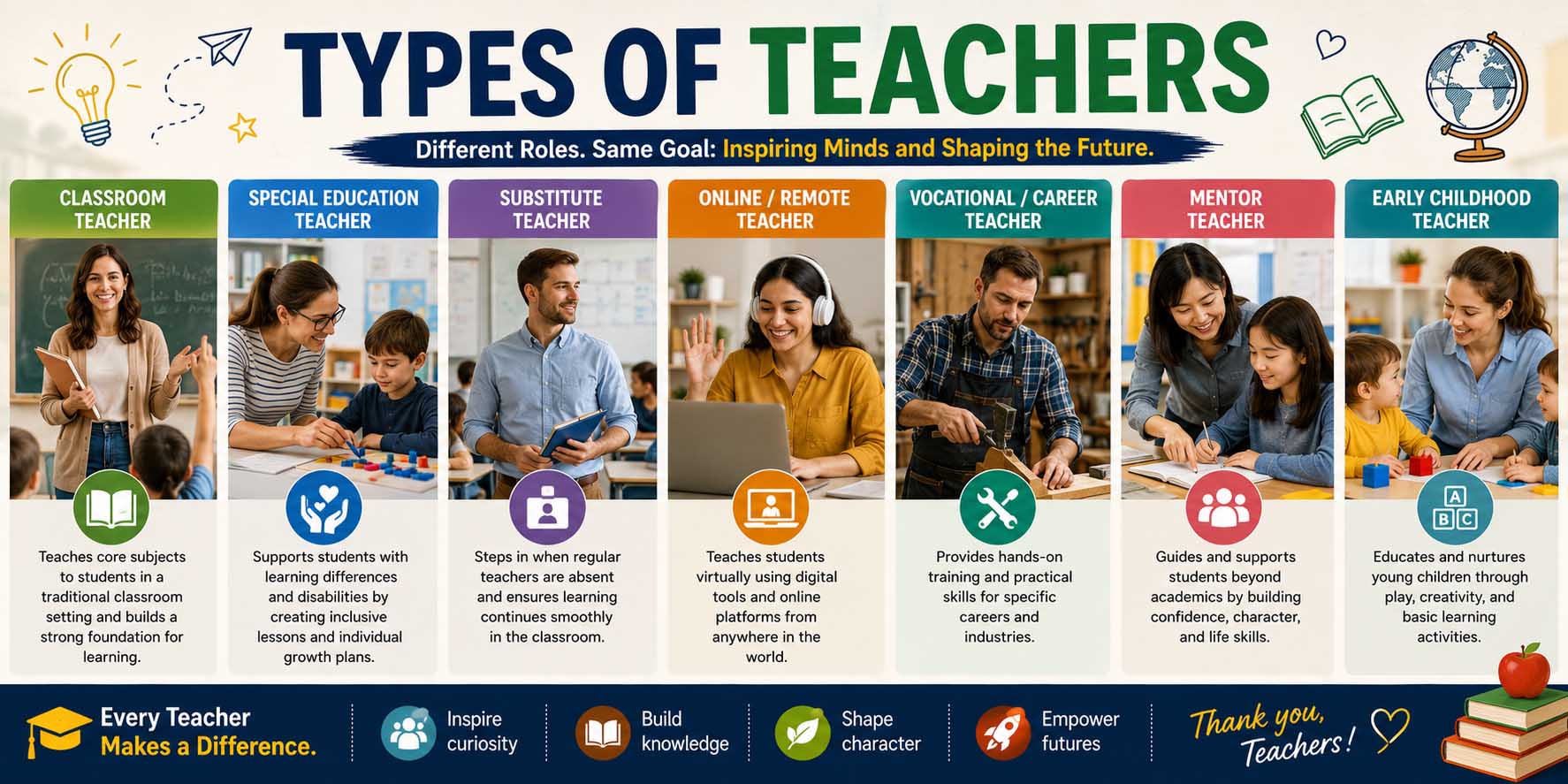
Types of Teachers: A Complete Guide to Teaching Roles, Specializations, and Classroom Careers
Choosing a teaching career—or simply understanding how schools work—often begins with learning about the types of teachers found in today’s education system. While every teacher shares the goal of helping students learn, their responsibilities, classroom environments, and areas of expertise can be very different.
Some teachers work with young children learning to read, while others prepare high school students for college or specialize in supporting learners with unique educational needs. This guide explains the most common teaching roles, what they do, and how each contributes to student success.
What Are the Different Types of Teachers?
The different types of teachers can be grouped by the age of their students, the subjects they teach, or the educational support they provide.
Here is a quick overview.
| Teacher Type | Primary Focus |
|---|---|
| Preschool Teacher | Early childhood development |
| Elementary Teacher | Multiple core subjects |
| Middle School Teacher | Subject-specific instruction |
| High School Teacher | Advanced subject knowledge |
| Special Education Teacher | Individual learning support |
| ESL Teacher | English language learners |
| College Professor | Higher education |
| Online Teacher | Virtual instruction |
| Career and Technical Teacher | Job-specific skills |
| Substitute Teacher | Temporary classroom coverage |
Each role requires different qualifications, teaching methods, and classroom strategies.
Elementary School Teachers
Elementary teachers usually work with students from kindergarten through fifth or sixth grade, depending on the school system.
They often teach several subjects, including:
- Reading
- Writing
- Mathematics
- Science
- Social studies
Beyond academics, elementary teachers help students develop social skills, classroom routines, and confidence.
Many classrooms also include Social Emotional Learning Activities that help children build communication, empathy, and self-management skills alongside academic learning.
Middle School Teachers
Middle school teachers usually specialize in one or two subjects while working with students during early adolescence.
Common subjects include:
- English
- Mathematics
- Science
- History
- Foreign languages
These years often involve helping students transition from one primary classroom to rotating between multiple teachers.
High School Teachers
High school teachers prepare students for graduation, higher education, or careers.
Their responsibilities often include:
- Teaching specialized subjects
- Preparing students for standardized exams
- Advising extracurricular activities
- Writing recommendation letters
- Supporting career planning
Because the curriculum becomes more advanced, high school teachers typically focus on a single subject area.
Types of Special Education Teachers
Among the most rewarding teaching careers are the types of special education teachers who support students with diverse learning needs.
Special education teachers may work with learners who have:
- Learning disabilities
- Autism spectrum disorder
- Hearing impairments
- Visual impairments
- Physical disabilities
- Emotional or behavioral challenges
Many develop individualized education plans (IEPs) and collaborate closely with classroom teachers, specialists, and families.
English as a Second Language (ESL) Teachers
ESL teachers help students improve their English skills while supporting academic success.
Lessons often focus on:
- Vocabulary
- Pronunciation
- Reading
- Writing
- Listening
- Conversation
These teachers frequently work with students from many cultural and language backgrounds.
Preschool Teachers
Preschool teachers introduce young children to structured learning through play-based instruction.
Typical classroom activities include:
- Storytime
- Music
- Art
- Counting
- Letter recognition
- Social interaction
Early childhood education lays the foundation for future academic success.
College Professors
Professors teach at colleges and universities.
Unlike K–12 teachers, they often combine teaching with:
- Research
- Academic publishing
- Advising
- Curriculum development
College instructors may specialize in highly focused academic fields.
Career and Technical Education Teachers
Career and technical education (CTE) teachers prepare students for specific professions.
Programs may include:
- Automotive technology
- Culinary arts
- Healthcare
- Information technology
- Construction
- Business
Students gain practical skills alongside classroom instruction.
Online Teachers
Technology has expanded opportunities for virtual learning.
Online teachers may work in:
- Virtual schools
- Colleges
- Professional training programs
- Language learning platforms
They rely heavily on digital tools, video conferencing, discussion boards, and online assessments.
Types of Teachers Personality
Many people wonder about the types of teachers personality that succeed in education.
While every educator is unique, successful teachers often share several qualities.
Common characteristics include:
- Patience
- Curiosity
- Organization
- Adaptability
- Empathy
- Strong communication
- Creativity
- Problem-solving
Different personalities can thrive in teaching as long as they remain committed to helping students learn.
Types of Professional Development for Teachers
Learning doesn’t stop after becoming a teacher.
Schools encourage ongoing growth through various types of professional development for teachers.
Examples include:
- Workshops
- Conferences
- Online courses
- Peer observations
- Mentoring
- Graduate degrees
- Curriculum training
- Classroom technology sessions
Professional development helps educators stay current with teaching methods, curriculum updates, and educational research.
Where Teachers Work
Teaching opportunities extend beyond traditional public schools.
Educators may work in:
- Public schools
- Private schools
- International schools
- Charter schools
- Online schools
- Tutoring centers
- Community colleges
- Universities
Families comparing school options sometimes explore topics such as difference between charter and public school before deciding which learning environment best fits their child.
Teaching Strategies Used Across Classrooms
Although teaching styles differ, many educators use similar instructional methods.
These include:
- Group discussions
- Project-based learning
- Guided practice
- Independent work
- Cooperative learning
- Formative assessments
Teachers choose strategies based on student age, subject, and learning goals.
Supporting Different Learning Needs
Modern classrooms include students with a wide variety of strengths and learning styles.
Teachers often adapt instruction by:
- Using visual aids
- Offering hands-on activities
- Providing extra practice
- Adjusting assignments
- Encouraging peer collaboration
For younger readers, understanding what is phonological awareness is especially valuable because it explains one of the foundational skills teachers develop during early reading instruction.
Choosing the Right Teaching Career
If you’re considering becoming a teacher, ask yourself:
- Which age group do I enjoy working with?
- Do I prefer one subject or several?
- Am I interested in special education?
- Would I enjoy online instruction?
- Do I like mentoring older students?
Answering these questions helps narrow your career path.
Skills Every Teacher Needs
Regardless of specialization, effective teachers develop several essential skills.
These include:
- Classroom management
- Communication
- Time management
- Flexibility
- Leadership
- Organization
- Critical thinking
- Collaboration
These abilities improve with experience and continued professional learning.
Common Misconceptions About Teachers
Several myths surround the teaching profession.
All Teachers Teach the Same Way
Every classroom is different.
Teachers adapt lessons based on student needs, subject matter, and school resources.
Teaching Is Only About Delivering Lessons
Teachers also:
- Plan instruction
- Grade assignments
- Meet with families
- Attend training
- Support student wellbeing
- Manage classrooms
Their work extends far beyond classroom lectures.
Every Teacher Follows the Same Career Path
Some educators become:
- Instructional coaches
- School counselors
- Curriculum specialists
- Principals
- University instructors
Teaching offers many opportunities for career growth.
Different School Environments
Teachers also work in schools with unique educational missions.
For example, understanding What Is a Magnet School helps explain why some teachers specialize in programs centered on science, arts, technology, or other focused areas.
Likewise, educators working in residential education may encounter settings described in What Is Boarding School, where teaching responsibilities often extend beyond the traditional school day.
Frequently Asked Questions
What are the main types of teachers?
The most common categories include preschool, elementary, middle school, high school, special education, ESL, college, online, career and technical, and substitute teachers.
Which teaching role is best?
There isn’t a single best option. The right role depends on your interests, subject expertise, and the age group you enjoy working with.
Do all teachers need the same qualifications?
No. Certification requirements vary depending on the country, state, school level, and teaching specialty.
Can teachers change specialties?
Yes. Many educators earn additional certifications that allow them to teach different grade levels or subject areas.
Is teaching a good long-term career?
For many people, teaching offers meaningful work, opportunities for growth, and the chance to make a lasting difference in students’ lives.
Finding the Teaching Path That Fits You
The world of education includes many different teaching roles, each serving students in unique ways. Whether someone works with preschoolers discovering letters, teenagers preparing for college, or learners who need specialized support, every teacher contributes to building knowledge, confidence, and lifelong skills.
If you’re exploring education as a career, take time to learn about different classroom environments, teaching specialties, and certification pathways. Understanding the many types of teachers can help you choose a role that matches your interests, strengths, and long-term goals.