
What Is a Magnet School? A Complete Guide for Students and Parents
What Is a Magnet School? A Complete Guide for Students and Parents
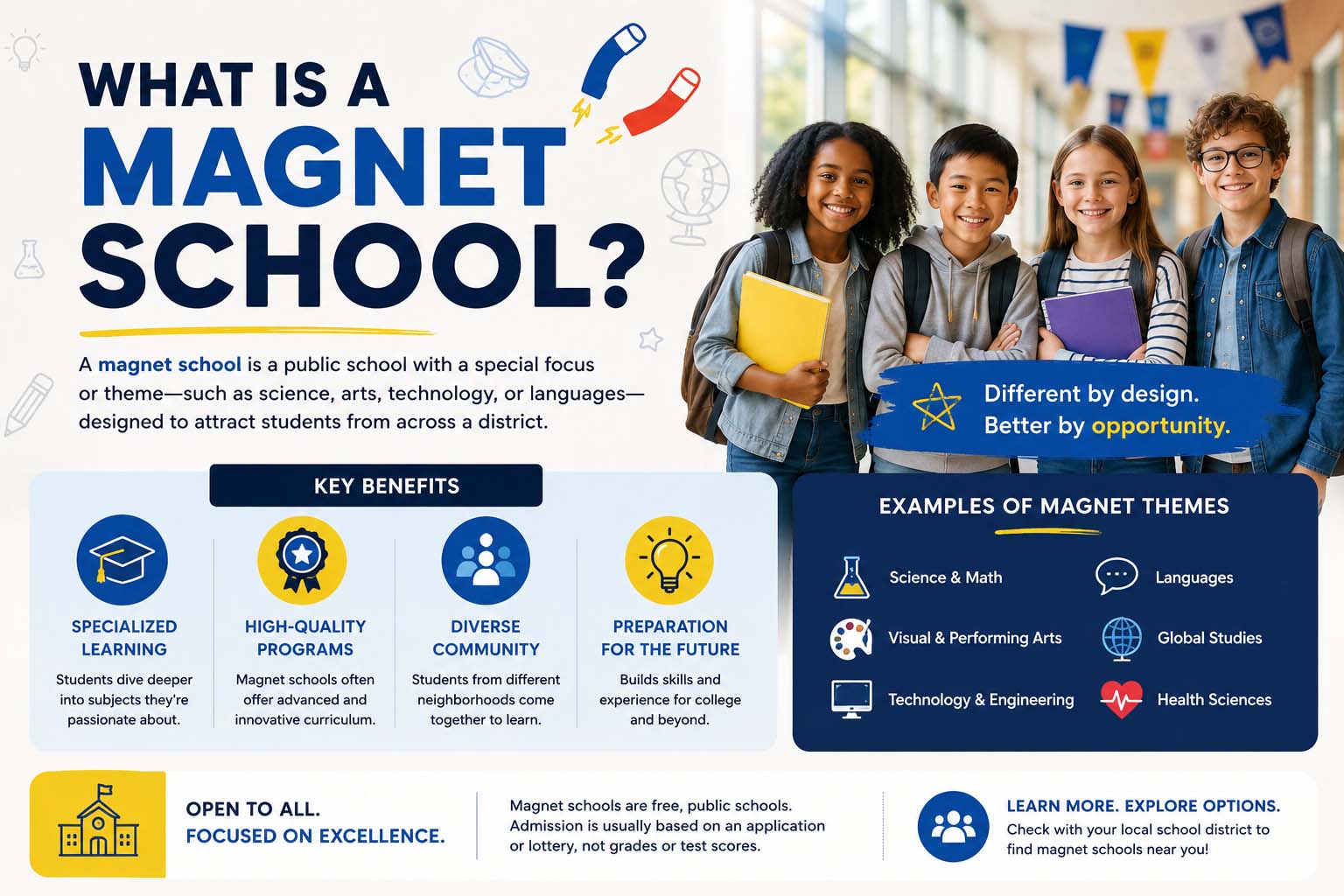
A what is a magnet school is a public school that offers specialized programs in areas such as science, technology, arts, or languages. These schools often attract students from different neighborhoods and focus on specific subjects or learning styles.
So, what is a magnet school?
A magnet school is a public that offers specialized educational programs focused on specific subjects, interests, or career pathways. These schools are designed to attract students from various neighborhoods, districts, or communities rather than only serving local residents.
Magnet schools often focus on areas such as:
- Science and technology
- Engineering
- Mathematics (STEM)
- Performing arts
- Visual arts
- International studies
- Language immersion
- Medical sciences
Their goal is to provide students with unique learning opportunities while promoting educational diversity.
What Is a Magnet School Definition?
If you’re looking for a simple explanation, the what is a magnet school definition can be summarized as follows:
A is a publicly funded \that offers specialized academic programs and allows students from different geographic areas to apply for admission.
Unlike standard public schools, magnet schools emphasize particular educational themes or subjects that attract students with similar interests and goals.
The term “magnet” refers to the school’s ability to attract students from outside its normal attendance boundaries.
How Does a Magnet School Work?
Magnet schools operate differently from traditional public schools.
Instead of automatically enrolling students based on their home address, magnet schools often require an application process.
Typical steps include:
Step 1: Research Programs
Families explore available magnet schools and determine which programs match a student’s interests.
Step 2: Submit an Application
Most schools require students to apply during a specific enrollment period.
Step 3: Review Process
Depending on the school, admission may involve:
- Lottery systems
- Academic requirements
- Auditions
- Portfolio reviews
- Entrance assessments
Step 4: Enrollment
Accepted students can enroll regardless of whether they live in the immediate neighborhood.
What Is a Public Magnet School?
Many parents ask, what is a public magnet school?
A public magnet school is funded by government education systems, just like traditional public schools.
This means:
- Tuition is usually free
- Schools follow state educational standards
- Students receive public education benefits
However, magnet schools differ because they offer specialized programs and may accept students from multiple districts.
This combination of public funding and specialized education makes magnet schools attractive to many families.
What Is a Magnet High School?
A common question among older students is, what is a magnet high school?
A magnet high is a secondary that provides advanced learning opportunities in specific academic or career-focused area
Examples may include:
STEM Magnet High Schools
Focused on:
- Science
- Technology
- Engineering
- Mathematics
Arts Magnet High Schools
Focused on:
- Music
- Dance
- Theater
- Visual arts
Career and Technical Magnet Schools
Students interested in advanced education after high school may also benefit from learning about graduate options such as What Is a Master’s Degree? when planning long-term career pathways.
Focused on:
- Healthcare
- Information technology
- Business
- Engineering careers
These programs help students develop specialized skills before entering college or the workforce.
Benefits of Magnet Schools
Magnet schools offer several educational advantages.
Specialized Learning Opportunities
Students can study subjects they are passionate about in greater depth.
Academic Challenge
Many magnet programs provide advanced coursework and enrichment opportunities.
College Preparation
Students interested in planning their future education early may also explore opportunities like What Is Dual Enrollment to understand how some learners earn college credits while still in high school.
Specialized programs often strengthen college applications by demonstrating focused academic interests.
Diverse Learning Environment
Students from different backgrounds and communities learn together.Many schools also support student development through programs like Social Emotional Learning Activities, which help learners build communication, confidence, and interpersonal skills.
Career Exploration
Exploring different academic pathways through magnet programs can also help students decide What Should I Major In when preparing for future college and career goals.
Career-themed magnet programs allow students to gain early exposure to potential professions.
Examples of Magnet School Programs
Magnet schools come in many forms.
STEM Programs
Students explore:
- Robotics
- Computer science
- Engineering projects
- Advanced mathematics
Performing Arts Programs
Students may receive training in:
- Acting
- Singing
- Dance
- Music performance
Language Immersion Programs
Instruction may be delivered partially or fully in another language.
Examples include:
- Spanish immersion
- French immersion
- Mandarin immersion
Medical and Health Science Programs
Students interested in healthcare careers may study:
- Human anatomy
- Medical terminology
- Health sciences
Magnet School vs Traditional Public School
| Feature | Magnet School | Traditional Public School |
|---|---|---|
| Specialized Programs | Yes | Usually Limited |
| Application Required | Often Yes | Usually No |
| Student Selection | Application or Lottery | Residence-Based |
| School Theme | Specialized | General Curriculum |
| Geographic Boundaries | Flexible | Neighborhood-Based |
This comparison helps families understand the unique opportunities magnet schools provide.
What Is a Magnet School vs Charter School?
Another common question is what is a magnet school vs charter school?
Although both offer alternatives to traditional public schools, there are important differences.
Magnet School
- Publicly funded
- Operated by school districts
- Specialized academic themes
- Usually free to attend
Charter School
- Publicly funded
- Operates under a charter agreement
- Greater operational flexibility
- May use unique teaching approaches
Similarities
Both often provide:
- School choice options
- Innovative programs
- Alternative educational experiences
Differences
schools generally remain part of traditional public systems, while charter schools operate independently under approved charters.
How to Choose the Right Magnet School
Finding the right program requires careful planning.
Identify Student Interests
Consider:
- Academic strengths
- Career goals
- Personal passions
Review School Performance
Research:
- Graduation rates
- Academic achievements
- Student outcomes
Visit the School
Open houses and campus tours provide valuable insights.
Understand Admission Requirements
Some magnet schools require:
- Applications
- Auditions
- Academic records
Preparing early can improve admission opportunities.
Who Should Consider a Magnet School?
Magnet schools may be ideal for students who:
- Enjoy specialized subjects
- Seek academic challenges
- Want advanced learning opportunities
- Have clear career interests
- Prefer focused educational environments
Common Misconceptions About Magnet Schools
Magnet Schools Are Private Schools
False. Most magnet schools are public schools funded by government education systems.
Only Top Students Can Attend
Not always.
Magnet Schools Focus Only on Academics
Many programs also emphasize creativity, leadership, arts, and career development.
FAQ
What is a magnet school?
A school is a public that offers specialized educational programs designed to attract students from various geographic areas.
Are magnet schools free?
Yes. Most public magnet schools do not charge tuition.
What is a public magnet school?
It is a publicly funded school that provides specialized programs while remaining part of the public education system.
What is a magnet high school?
A high school offers specialized academic or career-focused programs for secondary students.
What is a magnet school vs charter school?
schools operate within public districts, while charter schools function independently under charter agreements.
Are magnet schools better than traditional schools?
Not necessarily. The best choice depends on a student’s interests, learning style, and educational goals.
Conclusion
Understanding what is a magnet school can help students and families make informed educational decisions. Magnet schools provide specialized learning opportunities, diverse academic programs, and pathways that support college and career readiness. Whether a student is interested in science, technology, arts, languages, or healthcare, magnet schools offer focused educational experiences that go beyond traditional classroom instruction.