
How Long Do Background Checks Take? A Clear Timeline for Students and Job Seekers
How Long Do Background Checks Take? A Clear Timeline for Students and Job Seekers
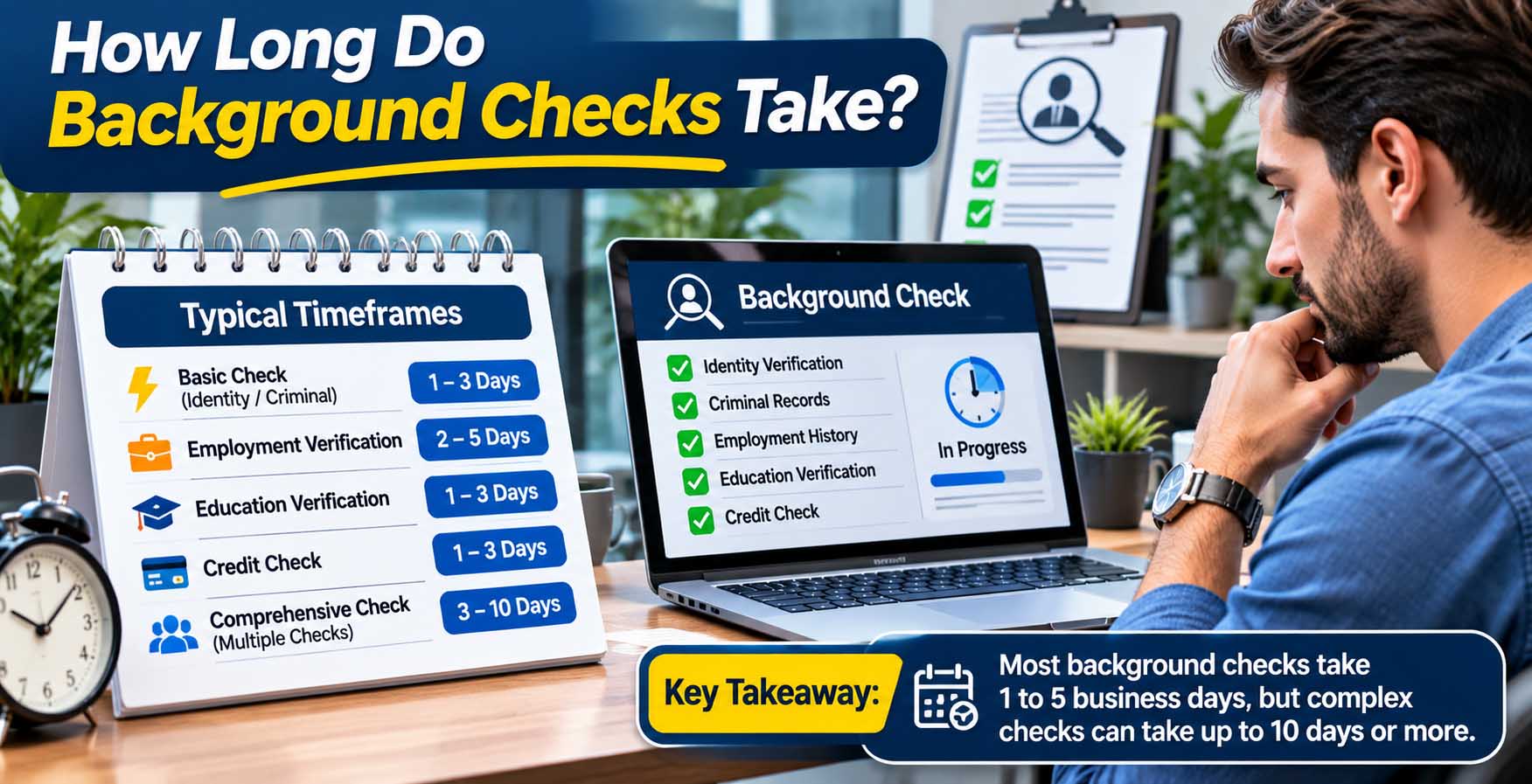
You aced the interview, got a conditional offer and now the employer says, “We just need to run your background check.” So, how long do background checks take? In most cases, a standard check finishes in about two to five business days. However, some checks wrap up in a single day, while others take a few weeks.
In this guide, you will learn what a background check looks at, typical timelines for each part, why delays happen and how to keep things moving. Also, you will find tips for students applying for internships, campus jobs and programs that require screening.
How Long Do Background Checks Take? The Quick Answer
Here is a simple overview before we break it down:
- Basic checks: Often 1–3 business days.
- Standard job screenings: Usually 2–5 business days.
- Checks with many parts or locations: Sometimes 1–2 weeks or more.
- Government or security clearance checks: These can take months.
So, if you have not heard anything after a few days, that is usually normal. Still, if a week passes, it is fine to send a polite follow-up.
What a Background Check Looks At
Not every check is the same. Instead, employers and schools choose the pieces that fit the role. Common parts include:
- Identity check: Confirms your name and Social Security number.
- Criminal record search: Looks at county, state or federal court records.
- Employment verification: Confirms past job titles and dates.
- Education verification: Confirms degrees, diplomas and attendance.
- Driving record: Needed for jobs that involve driving.
- Drug test: Common in healthcare, transportation and some other fields.
- Credit check: Sometimes used for finance-related jobs, where state law allows.
Because each part runs separately, the slowest piece usually decides how long the whole process takes.
How Long Do Background Checks Take for Jobs?
Most employers use a third-party screening company. Then, that company gathers records, checks details and sends a report back. For most applicants, employment background checks take about two to five business days from start to finish.
Typical Timeline by Check Type
Here is roughly how long each part tends to take. Keep in mind that times vary by company, location and time of year.
- Identity and Social Security trace: Usually minutes to one day.
- County criminal search: Often 1–3 business days, but longer where courts still search records by hand.
- Statewide or national database search: Usually 1–3 business days.
- Employment verification: Often 2–5 business days, depending on how fast past employers respond.
- Education verification: Typically 2–5 business days, although school breaks can slow it down.
- Drug test results: Often 1–3 business days, but longer if a sample needs extra lab testing.
- Driving record: Usually 1–2 business days.
So, job background checks with only a criminal search can finish fast. On the other hand, checks that include several past employers and schools usually take longer.
How Long Do Criminal Background Checks Take?
Criminal checks are often the trickiest part. Generally, database searches return results within a day or two. However, if a possible match shows up, the screening company usually confirms it at the actual courthouse. As a result, that step can add several days.
Also, some counties still require a clerk to search records in person. Meanwhile, others have fast online systems. That is why two people applying for the same job can wait very different amounts of time.
Fingerprint-based checks, often used for teachers, healthcare workers and childcare staff, go through state and federal agencies. Usually, these take anywhere from a few days to a few weeks.
If you have an old conviction, it helps to understand your options before you apply. For example, our guide on What Is a Pardon explains how pardons work and how they may affect your record.
Why Background Checks Take So Long Sometimes
Several things can slow the process down:
- Missing or wrong information: A typo in your name, birth date or Social Security number can stall everything.
- Many past addresses: Each county you lived in may need a separate search.
- Slow responses: Former employers or schools may take days to reply.
- Holidays and weekends: Courts and offices close, so work pauses.
- International records: Checks in other countries often take one to several weeks.
- Name matches: Common names can lead to extra checks to rule out the wrong person.
Also, accuracy on your application matters. If your resume lists the wrong dates or job titles, verification may take longer. Along with listing Good Skills to Put on a Resume, double-check every date and school name before you apply.
Background Checks for Students
Students face background checks more often than many people expect. For example, you might need one for:
- Internships at hospitals, schools, government offices or banks.
- Student teaching or tutoring roles with children.
- Nursing, medical and other clinical programs.
- On-campus jobs, especially those with access to money or private records.
- Study abroad or volunteer programs.
Because many internships have tight start dates, plan ahead. In fact, our guide on how to get an internship includes timing tips so screening does not delay your first day.
Also, programs like nursing often require fingerprinting through a specific vendor. So, schedule it as soon as you get instructions, since appointment slots can fill up.
Step-by-Step: What Happens During the Process
- Consent: First, you sign a form allowing the employer or school to run the check.
- Information request: Next, you provide details like past addresses, schools and employers.
- Searches begin: Then, the screening company runs database, court and verification searches.
- Review: After that, the company compiles a report and sends it to the employer.
- Decision: Finally, the employer reviews the report and confirms your offer or contacts you with questions.
How to Speed Things Up
While you cannot control courthouses, you can avoid common delays:
- Fill out forms quickly: The clock usually starts only after you submit consent.
- Double-check details: Make sure names, dates and ID numbers match your documents.
- List all past names: Include maiden names or nicknames used on official records.
- Give accurate contact info: Provide current phone numbers and emails for past employers.
- Keep copies of diplomas: They can help if a school is slow to respond.
- Check your email and spam folder: Screening companies often send follow-up requests.
Know Your Rights
In the U.S., employers must get your written permission before using a screening company to check your background. Also, if they decide not to hire you because of something in the report, they must give you a copy of it and a summary of your rights. You can read the details in the FTC’s guide to employer background checks.
Therefore, if you spot a mistake in your report, you can dispute it with the screening company. Meanwhile, tell the employer you are fixing the error so they understand the delay.
Common Mistakes to Avoid
- Waiting days to sign the consent form.
- Guessing employment dates instead of checking them.
- Leaving out past addresses or former names.
- Assuming silence means bad news.
- Quitting a current job before the check is fully cleared.
Frequently Asked Questions
How long do background checks take after a job offer?
Usually, they take about two to five business days after you submit your consent form. Still, some roles need longer checks.
Does no news mean bad news?
Not at all. In fact, most delays come from slow records or missing details, not from problems with your background.
Can I check my own background first?
Yes. For example, you can request your own court records or use a reputable screening service. That way, you can spot errors early.
How long do results stay valid?
It depends on the employer or program. Many ask for a new check if you switch jobs or if the last one is more than a year old.
Key Takeaways: How Long Background Checks Take
To sum up, most screenings finish in two to five business days, while criminal court searches, international records and fingerprint checks can take longer. Usually, delays come from missing details, slow responses or holidays.
So, submit your forms quickly, double-check every detail and follow up politely after a week. While you wait, keep building your skills and planning your next move with smart career advancement strategies.