
What Are Examples of Effective Team Dynamics? A Student-Friendly Guide
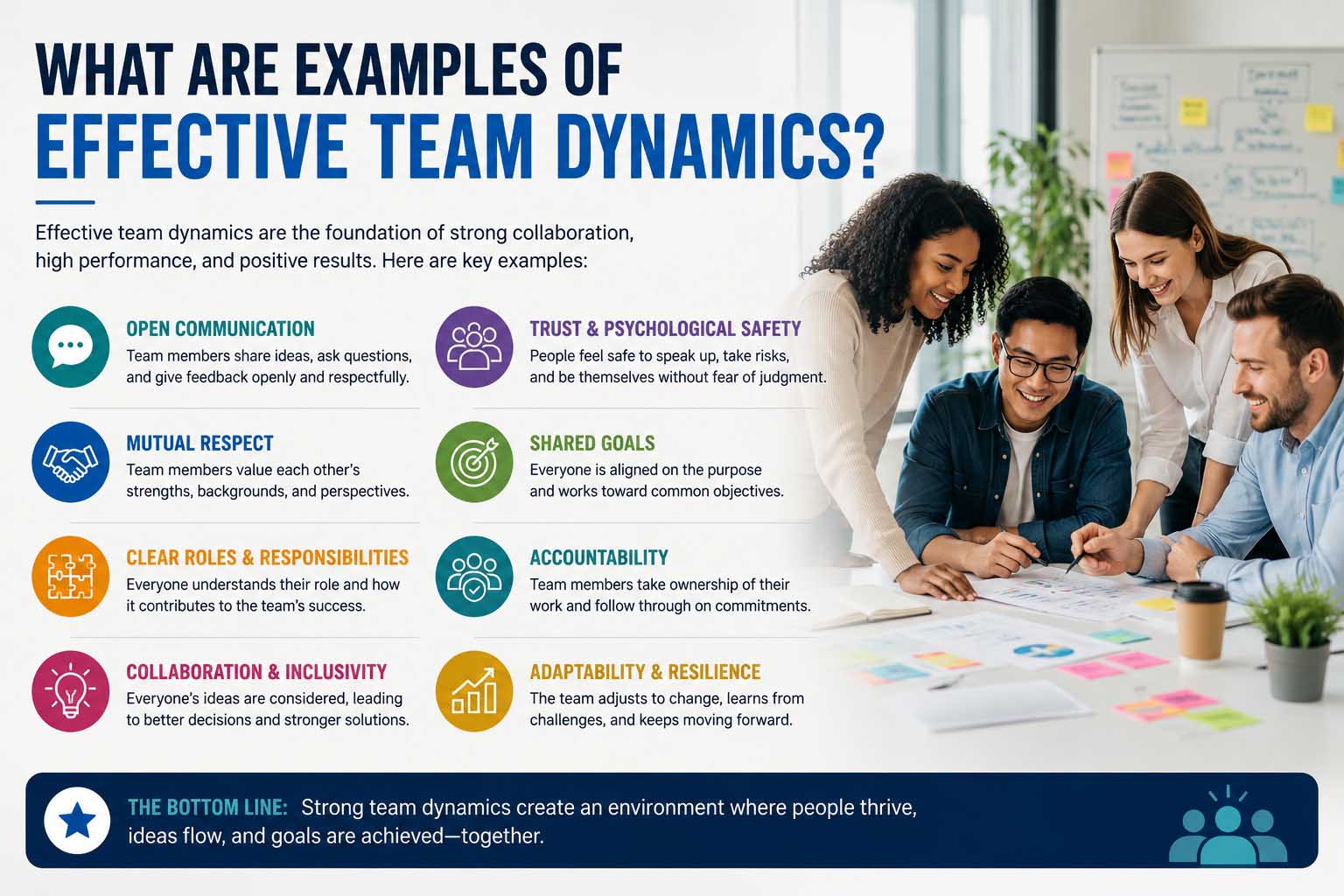
What Are Examples of Effective Team Dynamics? A Student-Friendly Guide
If you’ve ever wondered what are examples of effective team dynamics, you’re not alone. Whether you’re working on a classroom project, preparing for a CPR certification, or collaborating in the workplace, strong team dynamics help people work together efficiently toward a shared goal.
Effective team dynamics go beyond simply putting people in the same group. They involve communication, trust, leadership, accountability, and mutual respect. When these elements come together, teams solve problems faster, reduce misunderstandings, and achieve better results.
This guide explains what are the examples of effective team dynamics, why they matter, where you’ll encounter them in education and professional settings, and how you can develop these skills yourself.
What Are Effective Team Dynamics?
Effective team dynamics describe the way team members interact, communicate, and cooperate while working toward a common objective.
Healthy team dynamics create an environment where everyone understands their role, contributes ideas, supports others, and handles challenges constructively.
These skills are valuable in:
- School group assignments
- Science labs
- Sports teams
- Student organizations
- Healthcare training
- Business projects
- Emergency response situations
Because teamwork is a skill that employers consistently value, learning it early supports long-term career advancement strategies and prepares students for collaborative workplaces.
Why Strong Team Dynamics Matter
Successful teams don’t happen by chance.
They develop habits that improve collaboration over time.
Benefits of effective team dynamics include:
- Better communication
- Faster decision-making
- Increased trust
- Fewer conflicts
- Higher productivity
- Improved creativity
- Stronger problem-solving
- Better learning outcomes
Students who participate in effective teams often gain confidence while improving leadership and communication skills that extend beyond the classroom.
What Are Examples of Effective Team Dynamics?
The best way to understand teamwork is through real examples.
The table below summarizes some of the most important team dynamics.
| Team Dynamic | Why It Matters | Example |
|---|---|---|
| Clear communication | Prevents misunderstandings | Sharing updates during a group project |
| Defined roles | Reduces confusion | One member researches while another presents |
| Active listening | Encourages better ideas | Allowing everyone to finish speaking |
| Mutual respect | Builds trust | Valuing different opinions |
| Accountability | Keeps projects on track | Completing assigned tasks on time |
| Adaptability | Helps solve problems | Adjusting plans after unexpected challenges |
| Constructive feedback | Improves performance | Suggesting improvements respectfully |
| Shared goals | Aligns team efforts | Everyone working toward the same project deadline |
Examples of Effective Team Dynamics in Everyday Learning
Clear Communication
Strong communication is the foundation of every successful team.
Members share information openly, ask questions when needed, and confirm that everyone understands the plan.
For example, during a classroom presentation, each student explains their progress so the entire group stays organized.
Clearly Defined Roles
Effective teams assign responsibilities based on strengths.
One student may collect research.
Another designs slides.
Someone else practices the presentation.
Because everyone understands their responsibilities, work progresses more smoothly.
Mutual Trust
Trust allows teammates to rely on one another.
Instead of checking every small task, members believe others will complete their work responsibly.
Trust grows through consistency, honesty, and reliability.
Active Listening
Listening carefully is just as valuable as speaking.
Rather than interrupting, effective teams allow everyone to contribute ideas before making decisions.
Active listening also reduces misunderstandings and helps quieter members participate.
Accountability
Every member should accept responsibility for their assigned work.
When someone misses deadlines or avoids tasks, the entire team feels the impact.
Accountability keeps projects moving forward.
Respectful Conflict Resolution
Disagreements happen in every team.
Successful teams don’t avoid conflict—they manage it respectfully.
Instead of criticizing individuals, members focus on solving the problem together.
Positive Leadership
Good leaders organize rather than control.
They encourage participation, assign responsibilities fairly, and help resolve disagreements.
Leadership can also shift depending on the situation.
For example, the student with the strongest research skills may lead one stage of a project, while another student leads the final presentation.
What Are Examples of Effective Team Dynamics in CPR?
Many students preparing for emergency response courses ask what are examples of effective team dynamics in CPR.
CPR teams rely on teamwork because every second matters during an emergency.
Examples include:
- Clear verbal communication
- Closed-loop communication
- Role assignment
- Mutual support
- Situational awareness
- Respectful leadership
- Continuous reassessment
For instance, one rescuer performs chest compressions while another prepares the automated external defibrillator (AED). A third team member manages ventilation, and the team leader coordinates each action.
Because everyone communicates clearly, unnecessary delays are minimized.
What Are Examples of Effective Team Dynamics BLS?
Students taking Basic Life Support often search for what are examples of effective team dynamics BLS.
The same teamwork principles apply.
Key BLS dynamics include:
- Knowing each team member’s role
- Communicating clearly
- Sharing information immediately
- Monitoring each other’s performance
- Offering assistance when needed
- Respecting leadership while speaking up about safety concerns
Healthcare teams frequently practice these skills through simulations before treating real patients.
These exercises help improve confidence while reducing mistakes during emergencies.
Team Dynamics in the Classroom
Group assignments provide excellent opportunities to practice teamwork.
Imagine four students creating a science presentation.
One student researches the topic.
Another designs visual aids.
A third prepares speaking notes.
The final student organizes the presentation schedule.
Because responsibilities are shared, the workload becomes manageable, and every member contributes.
Teachers often use activities similar to Morning Meeting Questions to encourage communication and help students become more comfortable working together before larger projects begin.
How Effective Team Dynamics Improve Academic Success
Students sometimes focus only on individual grades.
However, teamwork develops valuable academic skills.
Working with others helps students:
- Explain ideas more clearly
- Listen to different viewpoints
- Improve problem-solving
- Build leadership confidence
- Strengthen communication
- Practice time management
These experiences prepare students for college, internships, and future careers where collaboration is expected.
Many employers also value teamwork alongside technical knowledge. In fact, communication, collaboration, and leadership are consistently listed among the Good Skills to Put on a Resume because they demonstrate an ability to work effectively with others.
Characteristics of High-Performing Teams
Although every successful team looks different, most share several common traits.
They:
- Communicate openly.
- Respect everyone’s contributions.
- Solve problems together.
- Adapt when plans change.
- Celebrate shared achievements.
- Learn from mistakes instead of assigning blame.
- Stay focused on common goals.
These habits help create a positive environment where every member feels comfortable participating.
How to Build Effective Team Dynamics Step by Step
Strong teamwork doesn’t happen automatically. It develops through consistent habits and shared responsibility. Whether you’re working on a classroom assignment, a volunteer project, or a workplace task, these steps can help.
Step 1: Set a Clear Goal
Every team should begin with a shared objective.
For example, instead of saying, “Let’s finish the project,” agree on something specific such as, “We’ll complete the research by Wednesday and rehearse our presentation on Friday.”
When everyone understands the destination, it’s easier to stay focused.
Step 2: Assign Roles Based on Strengths
Think about what each team member does well.
Someone who enjoys writing can prepare the report, while another person with strong speaking skills may present the final project. Matching responsibilities to strengths improves both quality and confidence.
Step 3: Create a Communication Plan
Decide how your team will stay connected.
You might use email, a messaging app, shared documents, or regular meetings. Establishing communication expectations early prevents confusion later.
Step 4: Encourage Participation
Every voice matters.
Invite quieter team members to share ideas and make space for different perspectives. Teams often produce better solutions when everyone contributes.
Step 5: Review Progress Regularly
Check in throughout the project instead of waiting until the deadline.
Short progress updates help identify problems early and give the team time to adjust.
Common Mistakes That Hurt Team Dynamics
Even motivated teams face challenges. Recognizing common mistakes makes them easier to avoid.
Poor Communication
When team members assume everyone understands the plan, misunderstandings quickly develop.
Instead, confirm responsibilities and deadlines regularly.
Unclear Responsibilities
If nobody knows who owns each task, important work may be duplicated—or forgotten completely.
Simple task lists can solve this problem.
Ignoring Conflict
Disagreements are normal.
Avoiding them usually makes the situation worse. Address issues respectfully and focus on finding practical solutions.
Unequal Participation
Sometimes one person completes most of the work while others contribute very little.
Setting clear expectations from the beginning helps create a fair workload.
Lack of Feedback
Constructive feedback allows teams to improve throughout a project rather than discovering mistakes at the end.
Practical Examples of Effective Team Dynamics
Example 1: Science Fair Project
A group of four students is assigned to build a model demonstrating renewable energy.
One student researches solar panels.
Another builds the display.
A third prepares presentation slides.
The fourth practices answering judges’ questions.
They meet twice each week, discuss progress openly, and adjust deadlines when unexpected problems arise. Their communication and accountability allow them to finish ahead of schedule.
Example 2: Student Debate Team
Each participant researches a different part of the topic.
Before the debate, teammates review one another’s arguments and suggest improvements without criticizing each other personally.
Because everyone shares feedback respectfully, the final presentation becomes much stronger.
Example 3: Healthcare Simulation
During a CPR practice scenario, every participant knows their responsibility before the simulation begins.
One student performs chest compressions.
Another manages ventilation.
A third prepares emergency equipment.
The team leader communicates clearly and checks that every instruction has been completed.
This example shows why what are examples of effective team dynamics in CPR and what are examples of effective team dynamics BLS are common questions in healthcare education. Teamwork directly affects patient care and emergency response efficiency.
How Team Dynamics Prepare You for Future Careers
Teamwork isn’t only useful in school.
Nearly every profession depends on collaboration.
Engineers work in design teams.
Teachers cooperate with colleagues.
Healthcare professionals coordinate patient care.
Business employees solve problems together every day.
Developing teamwork now prepares you for future opportunities. Strong collaboration skills also improve leadership potential and workplace confidence.
Employers often look for applicants who demonstrate communication, adaptability, and cooperation alongside technical abilities.
Another valuable workplace skill is Commercial Awareness, which helps employees understand how teamwork contributes to broader organizational goals, customer satisfaction, and business success.
Study Tips for Improving Teamwork Skills
Like any skill, teamwork improves with practice.
Try these strategies:
- Volunteer for group assignments.
- Practice active listening before responding.
- Ask teammates for feedback.
- Accept constructive criticism positively.
- Keep track of your responsibilities.
- Support teammates who need help.
- Celebrate group successes together.
Small improvements made consistently often lead to stronger collaboration over time.
Quick Checklist for Effective Team Dynamics
Before beginning your next group project, ask yourself:
- Does everyone understand the goal?
- Have responsibilities been assigned clearly?
- Is there a communication plan?
- Does everyone have an opportunity to contribute?
- Are deadlines realistic?
- Is feedback encouraged?
- Does the team solve disagreements respectfully?
- Are members supporting one another?
If you answer “yes” to most of these questions, your team already has a strong foundation.
Frequently Asked Questions
What are examples of effective team dynamics?
Examples include clear communication, active listening, mutual trust, accountability, defined roles, constructive feedback, adaptability, respectful conflict resolution, and shared goals.
Why are team dynamics important?
Good team dynamics improve productivity, reduce misunderstandings, strengthen relationships, and help groups achieve better outcomes.
What are examples of effective team dynamics in CPR?
Examples include assigning roles, using closed-loop communication, maintaining situational awareness, providing mutual support, and following clear leadership during emergencies.
What are examples of effective team dynamics BLS?
Basic Life Support teams demonstrate effective dynamics by communicating clearly, supporting teammates, monitoring performance, accepting feedback, and coordinating patient care efficiently.
Can students improve teamwork skills?
Absolutely. Participating in group projects, listening actively, communicating respectfully, and accepting responsibility are excellent ways to strengthen teamwork over time.
Key Takeaways for Students
Understanding what are examples of effective team dynamics is about more than completing group assignments. These skills help students communicate better, solve problems more effectively, and prepare for future academic and professional success.
Whether you’re working on a classroom presentation, participating in a sports team, practicing emergency response, or preparing for your first job, strong team dynamics make collaboration more productive and enjoyable.
Start by communicating clearly, respecting different ideas, and accepting responsibility for your role. Over time, these habits become natural and help you build stronger relationships wherever teamwork is required.:::writing