
What Is Boarding School? A Complete Guide to Student Life and Education
What Is Boarding School? A Complete Guide to Student Life and Education
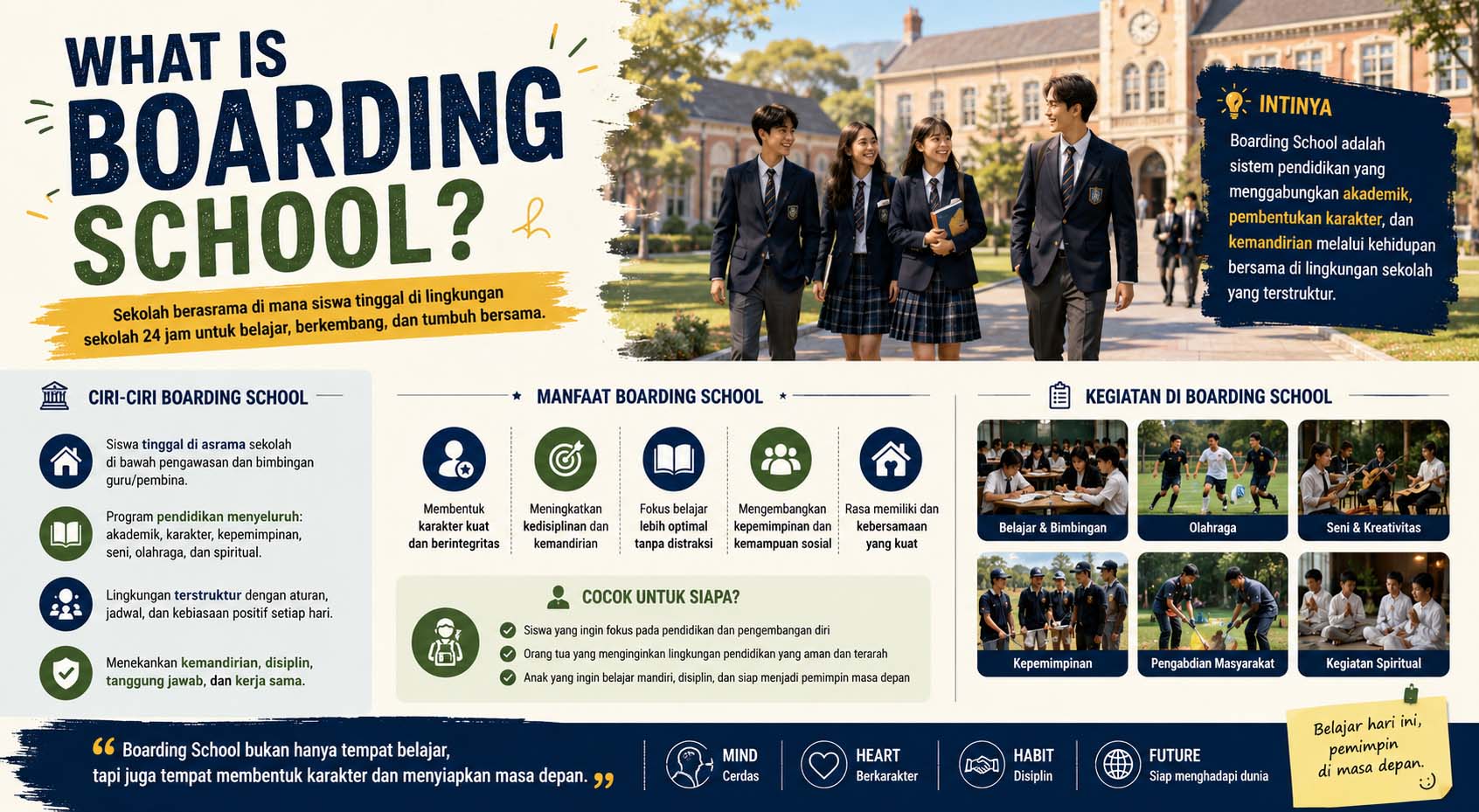
Many students and parents ask what is boarding school and how it differs from a traditional day school. A boarding school is an educational institution where students attend classes and live at or near the school during the academic term. This model combines academics, residential life, extracurricular activities, and student support within one educational environment.
Boarding schools operate in many countries and serve students of different ages. Some focus on academic achievement, while others offer specialized programs in sports, arts, leadership, science, or other areas. Because students live away from home, the experience can also help them develop independence, responsibility, and time-management skills.
However, boarding education does not suit every student. Families should consider the school’s academic program, residential environment, student support, costs, location, and the student’s readiness before making a decision.
What Is Boarding School?
A boarding school combines education with residential accommodation. Students attend classes during the day and live at the school during designated parts of the academic year.
Unlike most day schools, boarding schools typically provide accommodation, meals, supervised study periods, extracurricular activities, and residential support. Depending on school policy, students may return home during holidays, school breaks, or some weekends.
Residential staff members, teachers, advisers, coaches, and other professionals can form part of a student’s support network. The Association of Boarding Schools provides information about boarding education and residential school life
However, schools differ considerably. Therefore, parents should review the policies and programs of each institution rather than assuming that every boarding school follows the same model.
Families considering boarding education often think about long-term academic goals as well. Questions like What Should I Major In can help students begin considering their future education while they are still in school.
Daily Life in a Boarding School
Daily life usually follows a structured schedule. Students may wake up at a set time, eat breakfast, attend classes, participate in sports or clubs, complete homework, and follow evening routines.
However, the exact schedule varies between schools. Some institutions maintain highly structured routines, while others provide students with greater flexibility and free time.
Residential life is one of the biggest differences between boarding and day schools. Students may share rooms, dormitories, common areas, and other facilities with classmates. As a result, they learn to cooperate with others and manage shared spaces.
In addition, many schools offer activities such as music, art, athletics, debate, drama, robotics, and student leadership. These opportunities allow students to develop interests outside the classroom.
Students may initially experience homesickness as they adjust to living away from their families. However, access to friends, residential staff, teachers, and other support can help them adapt to their new environment.
Maintaining academic progress also matters, so understanding What Is a Passing Grade can help students understand basic academic expectations.
Why Families Choose Boarding Education
Families consider boarding schools for many different reasons. For some, academic opportunities are the main attraction. Others value the structured environment, extracurricular programs, residential experience, or opportunities for greater independence.
Students who live in areas with limited educational options may also consider boarding schools elsewhere. Meanwhile, international students may choose residential education to experience another country’s academic system and culture.
Specialized programs provide another reason. For example, some schools emphasize athletics, performing arts, STEM subjects, languages, or particular educational approaches.
In addition, living away from home requires students to manage routines and responsibilities with less direct parental supervision. As a result, they can develop practical skills that may help when they later move to college or begin living independently.
As students prepare for higher education, they may also explore topics such as What Is Rolling Admission to better understand different college application processes.
Boarding School vs. Day School
The main difference between the two models is where students live.
Day-school students normally return home after classes and activities. In contrast, boarding students live within the school’s residential community during the periods specified by the institution.
This difference affects more than accommodation. Boarding students may eat meals together, participate in evening activities, complete supervised study sessions, and spend weekends with classmates.
Day schools, on the other hand, allow students to remain closely connected to their normal home routines and local communities.
Neither model is automatically better. Instead, the right choice depends on the student’s personality, academic needs, family circumstances, and readiness for residential life.
Boarding Schools and Behavioral Support
Some people associate boarding education with students who have behavioral problems. However, traditional boarding schools primarily provide academic education within a residential setting.
Some institutions or programs may offer therapeutic or behavioral support for students with specific needs. These programs can differ significantly from traditional academic boarding schools.
Therefore, parents looking for behavioral or therapeutic support should carefully examine a school’s qualifications, services, staff credentials, safeguarding practices, and educational approach.
Likewise, families should not assume that students attend boarding school because of bad behavior. Many students choose residential schools because of academics, sports, arts, cultural opportunities, or personal preferences.
Benefits of Boarding School
One potential benefit is access to a structured learning environment. Students live close to classrooms, study spaces, teachers, activities, and other educational resources.
Another benefit can be greater independence. Students need to manage personal responsibilities, schoolwork, activities, and relationships while living away from home.
Boarding schools can also create strong communities because students spend significant time together. As a result, friendships can develop through classes, activities, meals, residential life, and shared experiences.
In addition, many schools provide extracurricular opportunities that allow students to explore interests beyond academics.
Students who plan to continue their education after earning a bachelor’s degree may eventually ask What Is a Master’s Degree, making strong study habits and long-term academic planning useful throughout their education.
Challenges Students May Face
Boarding education also has potential disadvantages.
First, living away from family can be difficult, particularly for younger students or those who have never spent long periods away from home. Homesickness may occur during the adjustment period.
Second, students must adapt to shared living spaces, schedules, school rules, and expectations. Although this structure can help some students, others may prefer greater personal flexibility.
Cost can also affect a family’s decision. Tuition, accommodation, meals, activities, travel, and other expenses may contribute to the overall price of attendance.
Finally, the quality and culture of boarding schools vary. Therefore, families should research individual institutions carefully rather than choosing a school based only on reputation.
Who May Benefit From Boarding School?
Boarding school may suit students who enjoy structured environments and feel comfortable becoming more independent.
For example, a student may benefit if a particular school offers academic subjects, sports, arts, or other programs that are unavailable locally. Likewise, some students appreciate living within a close school community.
However, families should consider the student’s emotional readiness as well as academic ability. A student who performs well academically may still need time before feeling comfortable living away from home.
Parents and students should discuss expectations together. Visiting the school, speaking with current students and staff, reviewing residential policies, and learning about available support can make the decision easier.
What to Consider Before Choosing a School
Academic quality matters, but it should not be the only consideration.
First, examine the curriculum and determine whether it matches the student’s interests and future plans. Next, review residential arrangements, supervision, health services, counseling, extracurricular activities, and student support.
Families should also understand costs and financial-aid options. In addition, consider how often students can return home and what transportation arrangements they may need.
School culture matters as well. Students will spend a large part of their lives within the community, so they should feel comfortable with its expectations, values, rules, and social environment.
Finally, ask detailed questions before enrolling. A well-known school may not necessarily be the best match for every student.
Common Questions About Boarding Education
Do Students Live at School All Year?
Not necessarily. Residential schedules depend on the institution. Students commonly return home during designated holidays and longer school breaks, while weekend arrangements can vary.
Are Boarding Schools Only for Wealthy Families?
No. Costs vary significantly, and some schools provide financial aid or scholarships. However, families should check each institution directly for current tuition and financial-assistance policies.
Is Boarding School Only for Students With Behavioral Problems?
No. Traditional boarding schools primarily provide academic education combined with residential life. Specialized therapeutic or behavioral programs represent a different category and may serve students with particular support needs.
Can Boarding Students Contact Their Families?
Yes. Schools generally provide opportunities for students to communicate with their families, although individual rules and schedules vary.
What Activities Can Students Join?
Available activities depend on the school. Common options can include sports, music, drama, art, debate, clubs, student leadership, and academic enrichment programs.
Conclusion
Understanding what is boarding school helps parents and students decide whether residential education matches their needs and goals. These schools combine classroom learning with accommodation, activities, structured routines, and a residential community.
For some students, the experience can provide academic opportunities, independence, friendships, and personal development. However, living away from home can also bring challenges such as homesickness, shared living arrangements, structured schedules, and additional costs.
Therefore, families should evaluate each school individually and consider both academic quality and residential life. The best choice depends on the student’s educational goals, personality, maturity, support needs, and readiness to live away from home.