
Types of Doctorate Degrees: A Complete Guide for Students
Types of Doctorate Degrees: A Complete Guide for Students
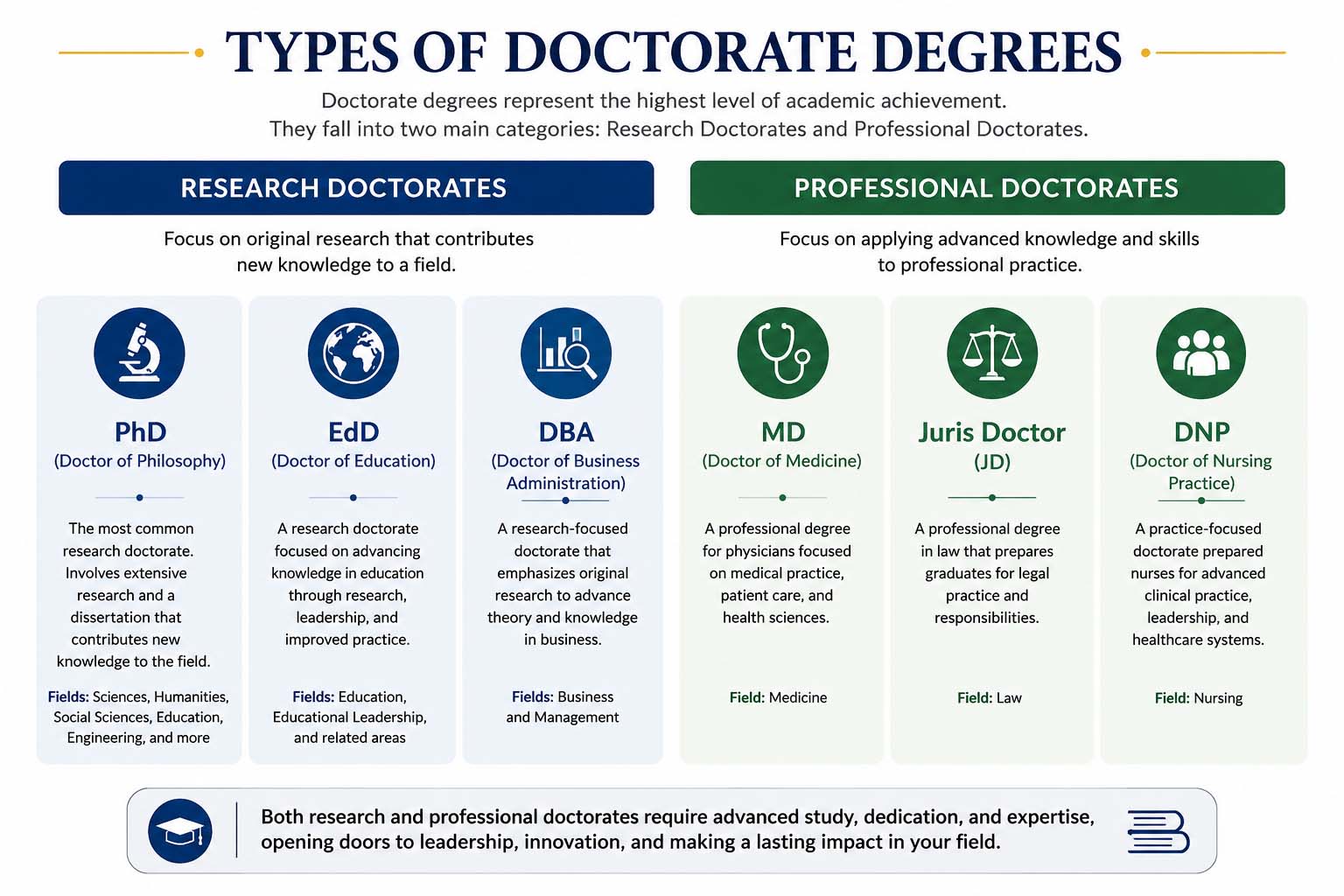
If you’re considering the highest level of academic study, you’ve probably wondered about the different types of doctorate degrees available. Doctoral programs aren’t all the same. Some focus on research and teaching, while others prepare graduates for professional practice in medicine, law, education, business, or healthcare.
Understanding the available options can help you choose a degree that matches your interests, career goals, and long-term plans. Whether you’re aiming for academia, leadership, clinical practice, or specialized research, knowing how doctoral programs differ is an important first step.
What Are Types of Doctorate Degrees?
The phrase types of doctorate degrees refers to the various doctoral-level qualifications awarded by colleges and universities.
A doctorate is the highest academic credential in most fields of study. Depending on the program, students may complete advanced coursework, original research, clinical training, internships, comprehensive exams, or a dissertation.
Many students begin exploring doctoral programs after earning What Is a Master’s Degree?, although some universities also offer direct-entry doctoral pathways for qualified applicants.
Why Students Choose a Doctorate
Pursuing a doctorate is a major commitment, but it offers several benefits.
Students often choose doctoral study to:
- Become experts in a specific field
- Qualify for university teaching positions
- Conduct original research
- Advance into leadership roles
- Increase earning potential
- Expand professional knowledge
- Improve career opportunities
Although earning a doctorate requires years of dedication, many graduates find the experience rewarding both personally and professionally.
What Are the Different Types of Doctorate Degrees?
When people ask what are the different types of doctorate degrees, they’re usually referring to two broad categories:
- Research doctorates
- Professional doctorates
Research doctorates focus on creating new knowledge through original research.
Professional doctorates emphasize applying advanced knowledge to real-world careers.
Within those categories are many specialized degrees designed for different industries and professions.
Common Types of Doctorate Degrees
Below are some of the most widely recognized doctoral degrees.
| Degree | Primary Focus | Typical Career |
|---|---|---|
| PhD | Research | Professor, Researcher, Scientist |
| EdD | Educational leadership | School Administrator, Superintendent |
| DBA | Business leadership | Executive, Consultant |
| MD | Medicine | Physician |
| JD | Law | Attorney |
| PsyD | Clinical psychology | Licensed Psychologist |
| DNP | Nursing practice | Advanced Practice Nurse |
Each degree serves a different purpose, so choosing the right one depends on your career objectives.
PhD (Doctor of Philosophy)
The PhD is one of the most recognized research doctorates in the world.
Universities award PhDs in fields such as engineering, biology, psychology, education, history, business, and computer science.
Students typically:
- Complete advanced coursework
- Pass qualifying examinations
- Conduct original research
- Write and defend a dissertation
Graduates often pursue careers in universities, government agencies, research institutions, or private industry.
Professional Doctorates
Professional doctorates prepare students to apply advanced knowledge directly in their careers instead of focusing primarily on academic research.
These programs often include practical training, internships, clinical experiences, or applied projects.
Popular professional doctorates include:
- Doctor of Business Administration (DBA)
- Doctor of Education (EdD)
- Doctor of Nursing Practice (DNP)
- Doctor of Pharmacy (PharmD)
- Doctor of Physical Therapy (DPT)
Each program is designed around the needs of a specific profession.
Types of Doctorate Degrees in Medicine
Many students researching healthcare ask about the types of doctorate degrees in medicine.
Medical education includes several advanced professional degrees.
Doctor of Medicine (MD)
The MD prepares students to become licensed physicians.
Programs combine classroom learning, laboratory instruction, and extensive clinical rotations before graduates complete residency training.
Doctor of Osteopathic Medicine (DO)
The DO degree prepares physicians similarly to the MD while also emphasizing the body’s musculoskeletal system and preventive care.
Both MD and DO graduates can diagnose illnesses, prescribe medication, and practice medicine after meeting licensing requirements.
Other Healthcare Doctorates
Healthcare also includes several other doctoral-level qualifications, including:
- Doctor of Dental Surgery (DDS)
- Doctor of Dental Medicine (DMD)
- Doctor of Pharmacy (PharmD)
- Doctor of Veterinary Medicine (DVM)
- Doctor of Nursing Practice (DNP)
Each focuses on a different healthcare profession while combining advanced education with practical clinical experience.
Types of Doctorate Degrees in Education
The types of doctorate degrees in education mainly include the PhD and the EdD.
Although both are respected doctoral qualifications, they serve different purposes.
PhD in Education
A PhD prepares students for careers involving educational research, university teaching, policy analysis, and academic scholarship.
Students spend significant time conducting original research and writing a dissertation.
Doctor of Education (EdD)
An EdD focuses on educational leadership and practical problem-solving.
Graduates often become:
- School principals
- District administrators
- College leaders
- Education consultants
- Policy specialists
Students interested in teaching careers often ask What Should I Major In before choosing an undergraduate degree, since that decision can influence future graduate and doctoral study options.
Research Doctorates vs Professional Doctorates
Understanding this difference helps students narrow their choices.
| Research Doctorate | Professional Doctorate |
| Focuses on original research | Focuses on professional practice |
| Usually requires a dissertation | Often includes applied projects |
| Common in universities | Common in healthcare, business, education, and law |
| Ideal for academic careers | Ideal for professional leadership roles |
Neither option is inherently better.
The right choice depends on whether you want to create new knowledge through research or apply advanced expertise in a professional setting.
Admission Requirements
Although admission standards vary between universities, many doctoral programs expect applicants to have:
- A bachelor’s or master’s degree
- Strong academic performance
- Letters of recommendation
- A statement of purpose
- Relevant professional or research experience
- Standardized test scores where required
- English language proficiency for international students
Some highly competitive programs may also require interviews, research proposals, writing samples, or portfolios before making admission decisions.
How to Choose the Right Doctorate Degree
Selecting a doctoral program is a personal decision that should align with your interests, career goals, and preferred learning style. Rather than choosing the most well-known degree, think about where you want your education to take you.
Ask yourself these questions before applying:
- Do you want to conduct research or solve practical workplace challenges?
- Are you planning to teach at a university?
- Do you need a professional license for your chosen career?
- How much time can you commit to full-time or part-time study?
- Will your employer help pay for your education?
Taking time to answer these questions can help you narrow your options and avoid choosing a program that doesn’t match your long-term plans.
How Long Does It Take to Earn a Doctorate?
Doctoral programs vary in length depending on the field, study format, and previous education.
| Degree Type | Typical Completion Time |
|---|---|
| PhD | 4–7 years |
| EdD | 3–5 years |
| DBA | 3–6 years |
| DNP | 3–4 years |
| MD | 4 years of medical school, followed by residency |
| JD | 3 years (full-time) |
Part-time students may take longer, while accelerated or integrated programs can shorten the timeline in some cases.
Career Opportunities After a Doctorate
A doctorate can open doors to careers that require advanced expertise and leadership.
Graduates may work in:
- Universities and colleges
- Research organizations
- Hospitals and healthcare systems
- Government agencies
- Private companies
- Nonprofit organizations
- Consulting firms
Many doctoral graduates also move into executive leadership, policy development, or specialized advisory roles within their industries.
As you evaluate potential programs, it’s worth considering What Will You Do to Maximize on Your Postsecondary Education Investmentfcareer advancement strategies. Looking beyond tuition costs and thinking about career outcomes, earning potential, and professional growth can help you make a more informed decision.
Common Mistakes When Choosing a Doctoral Program
Pursuing a doctorate is a significant commitment, so avoiding common mistakes can save time and resources.
Some applicants:
- Choose a degree based only on prestige.
- Ignore program accreditation.
- Underestimate the workload.
- Overlook funding opportunities.
- Apply without researching faculty expertise.
- Select a research-focused degree when a professional doctorate better fits their goals.
Speaking with current students, alumni, or faculty members can provide valuable insight before making your final decision.
Tips for Succeeding in a Doctoral Program
Doctoral study requires discipline, curiosity, and consistent effort.
- Set realistic academic goals.
- Develop strong time management habits.
- Build relationships with faculty and peers.
- Stay organized throughout your research.
- Seek feedback regularly.
- Maintain a healthy work-life balance.
- Break large projects into smaller milestones.
Many students also benefit from developing long-term career advancement strategies early in their doctoral journey. Networking, presenting research at conferences, and publishing academic work can strengthen both academic and professional opportunities after graduation.
Planning Your Application
Applying to doctoral programs takes careful preparation.
Start by researching universities that match your academic interests and career goals. Review admission requirements, funding options, faculty research areas, and application deadlines well in advance.
If you’re applying to institutions with flexible admission timelines, understanding What Is Rolling Admission can help you recognize how applications may be reviewed throughout the admissions cycle rather than after a fixed deadline.
Giving yourself enough time to prepare recommendation letters, personal statements, and supporting documents can improve the overall quality of your application.
Frequently Asked Questions
What is the highest academic degree?
A doctorate is generally considered the highest academic degree awarded by colleges and universities.
Can you earn a doctorate without first completing a master’s degree?
Yes. Some universities offer direct-entry doctoral programs that admit qualified students after completing a bachelor’s degree. Requirements vary by institution and country.
Which doctorate is best?
There isn’t one doctorate that’s best for everyone. The ideal choice depends on your career goals, professional interests, and whether you prefer research or applied practice.
Is a PhD the same as a doctorate?
A PhD is one type of doctorate. Many other doctoral degrees exist, including the EdD, DBA, DNP, JD, MD, and PsyD.
Are professional doctorates respected?
Yes. Professional doctorates are widely recognized and valued in fields such as medicine, education, business, nursing, psychology, and law. They prepare graduates for advanced practice and leadership positions.
Key Takeaways
Understanding the types of doctorate degrees makes it easier to choose a program that supports your future goals. While research doctorates focus on creating new knowledge, professional doctorates emphasize applying advanced expertise in real-world settings. Both paths require dedication, but they lead to different career opportunities.
Before applying, compare programs carefully, consider the time and financial commitment, and think about where you want your education to take you. Choosing a doctorate that aligns with your interests and long-term ambitions will help you get the greatest value from your investment in higher education.