What Will You Do to Maximize on Your Postsecondary Education Investment?
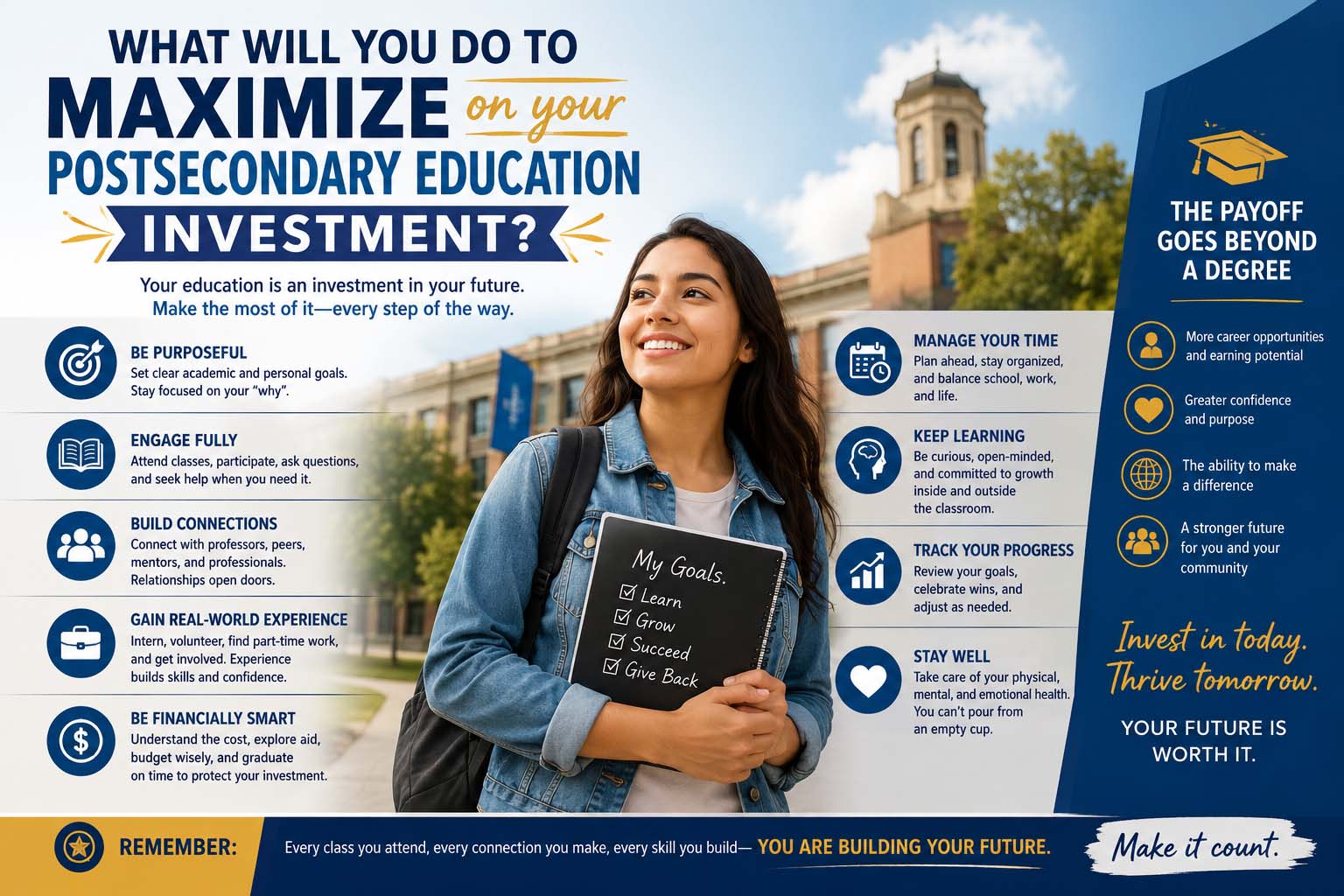
What Will You Do to Maximize on Your Postsecondary Education Investment?
What will you do to maximize on your postsecondary education investment? This is an important question for students preparing for college, university, technical education, or professional training. To maximize your postsecondary education investment, you must make thoughtful decisions about your academic goals, finances, career preparation, and personal development.
Postsecondary education requires more than tuition payments. Students also invest time, energy, and effort in developing knowledge and professional abilities. However, earning a qualification does not automatically guarantee career success or financial security.
Therefore, making the most of your education requires a practical plan. You should select an appropriate program, manage expenses, build valuable skills, and explore career opportunities before graduation.
This guide explains how to improve the value of your education while preparing for long-term personal and professional success.
Understanding Your Postsecondary Education Investment
Postsecondary education refers to educational opportunities available after high school. These include universities, community colleges, vocational institutions, technical programs, and professional training.
An educational investment involves both direct and indirect costs.
Direct expenses include tuition, textbooks, accommodation, transportation, and learning materials. Meanwhile, indirect costs may include the time students spend studying instead of earning income through full-time employment.
However, education can also provide important benefits. These may include specialized knowledge, career opportunities, personal development, and professional connections.
The value of an educational investment depends on several factors, including the program selected, the total cost, the skills developed, and future employment opportunities.
Understanding these factors allows students to make better academic and financial decisions.
How to Maximize Your Postsecondary Education Investment
Choosing the right educational program is one of the first steps toward achieving a positive return on your investment.
Students should evaluate their interests, academic strengths, financial resources, and professional goals before selecting a degree or training program.
Additionally, researching employment opportunities can help students understand whether a particular qualification supports their intended career.
Choose a Program That Maximizes Your Education Investment
Start by identifying your preferred career path.
Then, research the qualifications, skills, and experience commonly required in that profession.
Some careers require university degrees or professional licenses. Others may offer opportunities through technical certificates, apprenticeships, or vocational education.
If you are uncertain about your academic direction, explore What Should I Major In to understand how interests and strengths can influence degree selection.
A carefully selected program may help students avoid unnecessary course changes and additional educational expenses.
Compare Postsecondary Degrees and Career Opportunities
Different qualifications offer different learning experiences and career pathways.
For example, associate degrees, bachelor’s degrees, certificates, and technical qualifications vary in duration, cost, and academic requirements.
Students should compare accredited programs, course structures, graduation requirements, and available career information.
Those considering bachelor’s degree programs may also benefit from understanding the Difference Between BA and BS.
However, a degree title alone does not determine professional success. Relevant experience, practical abilities, and workplace performance also matter.
Maximize Your Postsecondary Education Investment Through Academic Success
Academic achievement is an important part of obtaining value from education.
Strong academic performance can support eligibility for certain scholarships, internships, and postgraduate opportunities. More importantly, meaningful learning prepares students to apply their knowledge outside the classroom.
Therefore, students should focus on understanding their subjects rather than memorizing information solely for examinations.
Develop Study Habits That Improve Your Education Investment
Effective study habits can improve concentration, organization, and academic performance.
Instead of waiting until examinations approach, review learning materials regularly.
Useful strategies include:
- Creating a consistent weekly study schedule
- Reviewing notes after lectures
- Dividing large assignments into smaller tasks
- Practicing questions and reviewing mistakes
- Asking instructors for clarification
- Preparing for examinations in advance
Students can also explore How to Make a Study Guide to organize information and improve examination preparation.
Furthermore, regular study sessions can reduce last-minute stress and make difficult subjects easier to manage.
Improve Academic Performance Through Active Participation
Attending classes is important, but active participation can make learning more effective.
Ask questions, contribute to discussions, and complete practical assignments carefully.
Additionally, participate in group projects and presentations whenever appropriate.
These activities help students strengthen communication, collaboration, and problem-solving abilities.
As a result, classroom learning becomes more relevant to real-world situations.
Maximize Your Postsecondary Education Investment With Campus Resources
Educational institutions often provide services that support academic performance and career development.
However, students sometimes overlook these opportunities.
Using available resources can help you overcome academic challenges, explore career options, and develop valuable connections.
Use Academic Support and Tutoring Services
Many colleges and universities offer tutoring, academic advising, writing centers, libraries, and study workshops.
For example, a student experiencing difficulty with mathematics may benefit from tutoring before examination problems become serious.
Similarly, writing centers may help students improve essays, reports, and research assignments.
Therefore, seeking assistance early can support steady academic progress.
Explore Career Centers and Student Organizations
Career centers may offer resume reviews, interview preparation, internship information, and employment guidance.
Some institutions also organize employer presentations and recruitment events.
Meanwhile, student clubs and professional organizations can provide leadership opportunities.
Participating in these activities helps students build confidence and develop professional relationships.
Consequently, campus involvement can increase the practical value of the educational experience.
Maximize Your Postsecondary Education Investment With Work Experience
Practical experience helps students connect academic knowledge with workplace expectations.
Although classroom learning provides important foundations, employers may also look for evidence that applicants can apply their knowledge.
Therefore, gaining relevant experience before graduation can improve career preparation.
Build Career Skills Through Internships
Internships allow students to explore professional environments and understand industry expectations.
Depending on the program, internships may involve research, technical tasks, administrative responsibilities, or supervised workplace projects.
Students can also develop communication, teamwork, and problem-solving abilities.
However, internship quality varies. Consider supervision, learning opportunities, compensation, and time commitments before accepting a position.
Gain Experience Through Part-Time Jobs and Volunteering
Part-time employment can help students cover expenses while developing workplace skills.
Even positions unrelated to a student’s intended profession may strengthen reliability, customer service, and time management.
Similarly, volunteering can provide opportunities to practice leadership and teamwork.
For example, helping organize a community event may improve planning and communication skills.
These experiences can help you maximize your postsecondary education investment by preparing you for responsibilities beyond the classroom.
Manage Costs to Maximize Your Postsecondary Education Investment
Financial planning plays a major role in determining the overall value of education.
Tuition, housing, transportation, and other expenses can create financial pressure.
Consequently, students should develop a realistic budget and explore suitable funding opportunities before taking on unnecessary debt.
Create a Budget to Protect Your Education Investment
Begin by calculating your expected educational and living expenses.
Your budget may include:
- Tuition and mandatory fees
- Books and learning materials
- Housing and utilities
- Food and transportation
- Internet and technology expenses
- Personal necessities
- Emergency savings when possible
Next, compare these costs with savings, scholarships, financial aid, and employment income.
Review your budget throughout the academic year because expenses may change.
Additionally, separating essential costs from optional spending can help students manage limited financial resources.
Apply for Scholarships, Grants, and Financial Aid
Scholarships and grants can help reduce educational expenses.
However, funding availability and eligibility requirements depend on the institution, program, and country.
Students in the United States can consult the official Federal Student Aid resources for information about federal student aid, applications, and loan options.
Students in other countries should review guidance from their educational institutions and relevant government agencies.
Furthermore, applying before deadlines and carefully reviewing requirements can improve access to available funding opportunities.
Borrow Carefully and Understand Repayment
Student loans may provide financial support, but borrowing creates future repayment responsibilities.
Before accepting a loan, understand its interest rate, repayment conditions, and total potential cost.
Whenever possible, borrow only what you need for necessary expenses.
Additionally, consider how expected career opportunities may affect your ability to repay educational debt.
Responsible financial decisions can reduce stress after graduation.
Develop Skills That Maximize Your Education Investment
Academic knowledge is important, but transferable skills can increase your readiness for employment.
These abilities are useful across many industries and professional roles.
Students can develop them through coursework, internships, employment, and extracurricular activities.
Improve Communication and Teamwork
Communication skills help people explain ideas, understand instructions, and work effectively with others.
Students can strengthen these abilities through presentations, group assignments, and discussions.
Meanwhile, teamwork encourages cooperation, responsibility, and conflict resolution.
These skills are valuable in many professional environments.
Strengthen Critical Thinking and Problem-Solving
Critical thinking involves evaluating information before making decisions.
Students can practice this skill through research, case studies, and analytical assignments.
For example, comparing solutions to a business problem requires evidence, reasoning, and judgment.
Over time, these experiences can improve decision-making and professional confidence.
Build Digital Skills and Commercial Awareness
Digital skills are increasingly useful across different occupations.
Students should become familiar with software and technology relevant to their chosen fields.
In addition, understanding how businesses and organizations operate can support career preparation.
Learning about Commercial Awareness can help students recognize how economic conditions, customer needs, and organizational decisions influence workplaces.
Together, digital abilities and business understanding can improve professional adaptability.
Build Professional Networks to Maximize Your Education Investment
Professional relationships can provide useful guidance during education and early career development.
Professors, classmates, alumni, mentors, and industry professionals may offer advice about academic decisions and employment opportunities.
However, networking should focus on genuine relationships rather than simply collecting contacts.
Connect With Professors and Mentors
Professors may provide insight into academic pathways, research opportunities, and professional expectations.
Therefore, students should consider attending office hours and discussing their educational goals.
Mentors can also offer guidance about career development and professional challenges.
Maintaining respectful relationships may create opportunities for learning and collaboration.
Attend Career Events and Industry Workshops
Career fairs and industry workshops introduce students to employers and professional organizations.
These events can help students understand recruitment expectations and emerging workplace skills.
Additionally, professional networking platforms such as LinkedIn may help students connect with alumni and potential employers.
A clear professional profile can highlight relevant education, experience, and abilities.
Set Goals to Maximize Your Postsecondary Education Investment
Clear goals can help students use their time and resources more effectively.
Without direction, it may be difficult to decide which academic activities and professional opportunities deserve attention.
Therefore, students should establish realistic objectives that connect education with long-term plans.
Establish Short-Term Academic Goals
Short-term goals may include improving performance in a difficult subject, completing a certification, or applying for internships.
Make each goal specific and achievable.
For example, instead of planning to study more, schedule regular revision sessions throughout the semester.
Then, review your progress and adjust your approach when necessary.
Plan for Long-Term Career Development
Long-term goals may involve entering a particular profession, gaining specialized expertise, or pursuing additional qualifications.
Some careers require postgraduate education, while others place greater emphasis on experience or professional certifications.
Students considering advanced study can explore What Is a Master’s Degree to understand the purpose of graduate-level education.
However, additional qualifications should support a clear academic or professional objective.
Before enrolling, compare the expected benefits with the financial and time commitments involved.
Continue Learning to Maximize Your Long-Term Education Investment
Learning should not stop after graduation.
Technology, professional standards, and industry requirements can change over time.
Therefore, graduates may need to update their knowledge and develop new abilities.
Professional workshops, online courses, certifications, and employer training can support continued development.
However, additional education should address a genuine need.
Before paying for a course, consider whether it will strengthen relevant skills or support a realistic career goal.
This approach helps graduates continue investing in their professional development responsibly.
Avoid Mistakes That Reduce Your Postsecondary Education Investment
Certain decisions can reduce the value students receive from education.
Recognizing these mistakes early can help protect both academic progress and financial resources.
Choosing a Program Without Research
Selecting a program solely because it is popular may lead to disappointment.
Instead, investigate course requirements, costs, personal interests, and career opportunities.
Ignoring Available Financial Support
Some students overlook scholarships, grants, and institutional assistance.
Therefore, explore available funding options before relying heavily on loans.
Focusing Only on Grades
Academic performance matters, but grades do not demonstrate every professional ability.
Practical experience, communication skills, and professional relationships also support career preparation.
Delaying Career Planning Until Graduation
Waiting until the final semester to explore employment opportunities can limit preparation time.
Instead, begin researching career paths and developing relevant skills while studying.
Frequently Asked Questions About Postsecondary Education Investment
How Can You Maximize Your Postsecondary Education Investment?
You can maximize your postsecondary education investment by selecting a suitable program, maintaining academic progress, managing expenses, and gaining relevant experience.
Additionally, use campus resources, build professional relationships, and develop transferable skills.
Why Is Postsecondary Education Considered an Investment?
Postsecondary education requires money, time, and effort in exchange for potential future benefits.
These benefits may include specialized knowledge, career opportunities, personal development, and higher earning potential.
However, outcomes vary depending on the qualification, career field, and individual circumstances.
How Can Students Reduce Higher Education Costs?
Students can compare educational institutions, apply for scholarships, explore grants, follow realistic budgets, and avoid unnecessary borrowing.
Completing program requirements efficiently may also help control expenses.
Are Internships Important for College Students?
Internships can help students apply academic knowledge and develop workplace skills.
They may also introduce students to potential career paths and professional contacts.
However, their value depends on the quality and relevance of the experience.
How Can Students Prepare for Employment Before Graduation?
Students can complete practical projects, develop relevant skills, attend career events, and seek suitable work experience.
Additionally, career centers may provide guidance on resumes, interviews, and employment opportunities.
Conclusion: Maximize Your Postsecondary Education Investment
Learning how to maximize your postsecondary education investment can help you make informed academic, financial, and professional decisions.
Choosing the right program provides a strong starting point. However, academic success, responsible budgeting, practical experience, and transferable skills also influence long-term outcomes.
Furthermore, using campus resources, developing professional relationships, and establishing realistic goals can increase the value of your educational experience.
Ultimately, a thoughtful approach can help turn your investment of time, money, and effort into meaningful personal development and professional opportunities.