
Benefits of MBA: Why an MBA Can Be a Smart Investment in Your Future
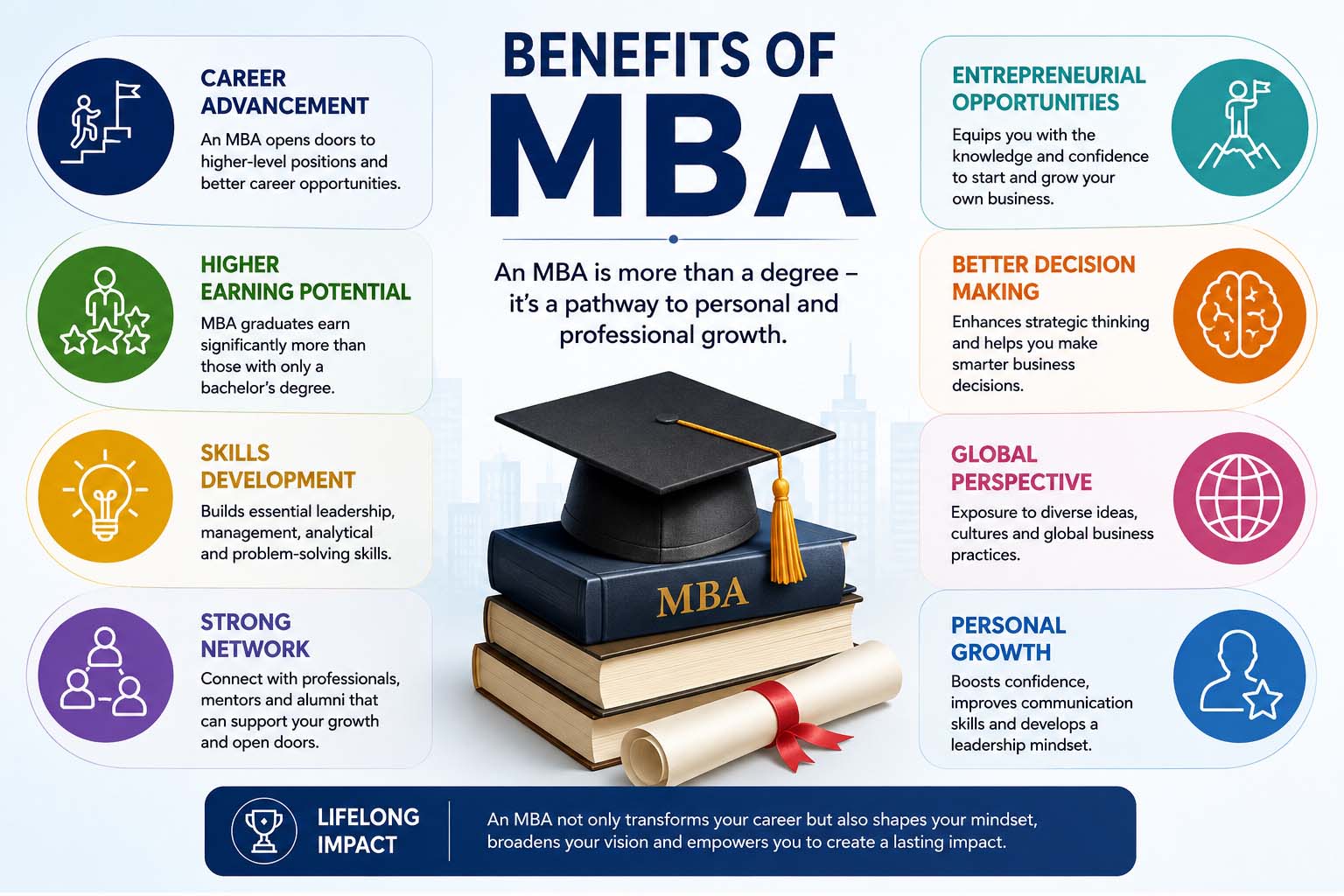
Benefits of MBA: Why an MBA Can Be a Smart Investment in Your Future
If you’re considering graduate school, you’ve probably wondered about the benefits of MBA programs. A Master of Business Administration (MBA) is one of the world’s most recognized graduate degrees, helping students build leadership skills, expand business knowledge, and prepare for management roles across many industries.
An MBA isn’t only for future CEOs. Professionals in healthcare, technology, engineering, finance, marketing, education, and entrepreneurship also pursue this degree to strengthen their careers. Whether you’re hoping to earn a promotion, switch industries, or start your own business, an MBA can provide practical knowledge that supports those goals.
What Is an MBA?
An MBA, or Master of Business Administration, is a graduate-level degree focused on business management and leadership.
Most MBA programs combine theory with practical learning through projects, case studies, presentations, and team assignments.
Students commonly study:
- Finance
- Marketing
- Accounting
- Economics
- Business strategy
- Operations management
- Human resources
- Leadership
- Business ethics
Many universities also offer concentrations such as data analytics, healthcare management, entrepreneurship, international business, or supply chain management.
Before applying, it’s helpful to understand admissions policies. Learning about What Is Rolling Admission can make it easier to plan your application timeline, especially if you’re considering schools that review applications throughout the year.
Benefits of MBA for Career Growth
One of the biggest benefits of MBA programs is the opportunity to advance your career.
Many employers value candidates who understand both technical work and business strategy. An MBA helps develop that combination.
Graduates often qualify for positions such as:
- Project manager
- Operations manager
- Marketing manager
- Financial analyst
- Business consultant
- Product manager
- Human resources manager
- Executive leadership roles
While an MBA doesn’t guarantee a promotion, it often strengthens your qualifications for higher-level positions.
Improved Leadership Skills
Successful managers need more than technical expertise.
MBA programs help students develop skills in:
- Decision-making
- Team leadership
- Conflict resolution
- Strategic thinking
- Communication
- Problem-solving
These abilities are useful whether you supervise a small team or lead a large organization.
Better Communication
Business leaders regularly present ideas, negotiate contracts, and explain complex information.
MBA students practice these skills through:
- Presentations
- Group projects
- Business reports
- Case discussions
Over time, many students become more confident speaking with colleagues, clients, and executives.
Benefits of an MBA Beyond the Classroom
The benefits of an MBA extend well beyond earning a diploma.
Students also gain practical experiences that prepare them for real workplaces.
Examples include:
- Working on business case studies
- Solving real-world business challenges
- Collaborating with classmates from different industries
- Learning from experienced faculty
- Building professional confidence
These experiences help bridge the gap between academic learning and professional responsibilities.
MBA vs. No MBA: A Quick Comparison
| Area | MBA Graduate | Professional Without MBA |
|---|---|---|
| Business knowledge | Advanced | Depends on experience |
| Leadership training | Extensive | Varies by role |
| Management preparation | Structured | Often learned on the job |
| Professional network | Usually larger | May grow more gradually |
| Career flexibility | Often broader | Depends on experience |
While experience remains valuable, an MBA provides structured business education that many professionals don’t receive through everyday work alone.
Skills You Can Build During an MBA Program
One reason employers appreciate MBA graduates is the wide range of transferable skills they develop.
Strategic Thinking
Students learn how businesses make long-term decisions.
Instead of solving today’s problems only, they learn how current decisions affect future growth.
Financial Understanding
Even managers outside finance benefit from understanding:
- Budgets
- Profit margins
- Cash flow
- Financial statements
- Business investments
These skills improve decision-making across nearly every industry.
Data-Driven Decision Making
Modern businesses rely heavily on data.
MBA students often learn how to analyze information before making recommendations, helping them make better-informed business decisions.
Team Collaboration
Many MBA assignments require students to work together.
Learning how to lead teams while respecting different perspectives becomes valuable in nearly every career.
Benefits of MBA Program for Different Career Paths
One strength of an MBA is its flexibility.
Graduates work in many industries rather than one specific field.
Some examples include:
Business Management
Many graduates move into leadership positions where they oversee departments, projects, or company operations.
Healthcare
Hospitals and healthcare organizations increasingly need professionals who understand both patient care systems and business management.
Technology
Software companies often promote engineers into leadership roles.
An MBA helps technical professionals develop business knowledge that complements their existing expertise.
Entrepreneurship
Many future business owners choose an MBA because they want to understand:
- Business planning
- Marketing
- Accounting
- Funding
- Leadership
- Growth strategies
These subjects can help entrepreneurs avoid common business mistakes.
Networking Opportunities
One of the most overlooked benefits of MBA programs is networking.
Students build relationships with:
- Professors
- Alumni
- Industry professionals
- Recruiters
- Guest speakers
- Fellow students
These connections sometimes lead to:
- Job opportunities
- Business partnerships
- Mentorship
- Career advice
Professional relationships often continue long after graduation.
Can an MBA Increase Salary?
Higher salaries are one reason many professionals consider graduate business education.
Although results vary by industry, location, experience, and employer, MBA graduates often qualify for roles with greater responsibility, which may also come with higher compensation.
The degree should be viewed as a long-term investment rather than a guarantee of immediate income growth.
Financing Your MBA
Graduate school requires careful financial planning.
Students may combine:
- Personal savings
- Scholarships
- Employer tuition assistance
- Student loans
- Assistantships
- Part-time employment
Some universities also offer What Is Work Study opportunities that help eligible students earn income while continuing their education, reducing some of the financial pressure associated with graduate study.
Is an MBA Right for Everyone?
Not necessarily.
An MBA works best when it aligns with your personal goals.
Ask yourself:
- Do I want to move into management?
- Am I interested in business leadership?
- Would business skills strengthen my current career?
- Am I considering starting a company?
- Am I prepared for graduate-level coursework?
Your answers can help determine whether pursuing an MBA makes sense for your situation.
Benefits of MBA Degree to a Company
An MBA doesn’t just benefit the person earning the degree. Organizations also gain from hiring professionals with advanced business training.
The benefits of MBA degree to a company often include stronger leadership, better decision-making, and improved business performance. MBA graduates are trained to evaluate challenges from different perspectives, balancing financial goals with customer needs and long-term strategy.
Companies may benefit when MBA graduates:
- Lead projects more effectively
- Improve operational efficiency
- Analyze business data with confidence
- Manage teams and budgets
- Support organizational growth
- Communicate clearly across departments
These skills can help businesses adapt to changing markets and solve problems more efficiently.
Benefits of an MBA to an Employer
From an employer’s point of view, MBA graduates often bring a combination of technical knowledge and leadership potential.
The benefits of an MBA to an employer may include employees who can:
- Make informed business decisions
- Understand financial reports
- Lead cross-functional teams
- Develop marketing and growth strategies
- Improve customer satisfaction
- Identify opportunities for innovation
While every employee develops at a different pace, an MBA can provide a solid foundation that supports career growth within an organization.
Choosing the Right MBA Program
Not every MBA program is the same. Before applying, compare several schools to find one that matches your career goals, learning style, and budget.
As you evaluate programs, consider:
- Accreditation
- Program reputation
- Specializations offered
- Faculty experience
- Internship opportunities
- Alumni network
- Tuition costs
- Online, hybrid, or on-campus options
- Graduation rates
- Career support services
Taking time to compare programs can help you choose one that offers the greatest value for your future.
Full-Time, Part-Time, or Online MBA?
Many universities now offer flexible study options.
| Program Type | Best For |
|---|---|
| Full-Time MBA | Students who can study full time and want to graduate quickly |
| Part-Time MBA | Working professionals balancing education and employment |
| Online MBA | Students who need flexibility because of work or family responsibilities |
| Executive MBA (EMBA) | Experienced professionals preparing for senior leadership roles |
The right format depends on your schedule, finances, and career plans.
Common Misconceptions About an MBA
Many students delay applying because they’ve heard myths about graduate business education.
That’s not true.
Students with backgrounds in engineering, healthcare, education, science, technology, and the arts often succeed in MBA programs because they bring different experiences into classroom discussions.
“An MBA guarantees a high-paying job.”
No degree can guarantee employment or a specific salary.
An MBA can strengthen your qualifications, but career success also depends on experience, skills, networking, and the job market.
“You need years of management experience first.”
Some MBA programs prefer applicants with work experience, while others welcome recent graduates or offer programs designed for early-career professionals.
Always review each university’s admission requirements before applying.
Preparing for MBA Success
Once you’ve decided to pursue an MBA, a few habits can make the experience more rewarding.
Build Strong Time Management Skills
MBA programs often involve multiple assignments, presentations, and group projects.
Using a planner or digital calendar can help you stay organized throughout the semester.
Strengthen Your Communication Skills
Much of your coursework includes presenting ideas, writing reports, and collaborating with classmates.
Practicing clear communication before classes begin can boost your confidence.
Refresh Basic Business Knowledge
Reviewing introductory topics in accounting, economics, statistics, or finance before your program starts may make your first semester easier.
Set Clear Career Goals
Knowing why you want an MBA helps you choose electives, internships, and networking opportunities that support your long-term plans.
Frequently Asked Questions
What are the biggest benefits of MBA?
Some of the biggest benefits of MBA programs include:
- Leadership development
- Career advancement
- Broader business knowledge
- Stronger professional network
- Improved communication skills
- Better problem-solving abilities
- Increased career flexibility
The value of these benefits depends on how you apply what you learn throughout your career.
Is an MBA worth it?
For many professionals, an MBA can be a worthwhile investment if it aligns with their career goals.
Those interested in leadership, management, consulting, entrepreneurship, or executive positions often find the degree especially valuable.
Can I earn an MBA without a business degree?
Yes.
Many MBA students come from non-business backgrounds, including healthcare, engineering, education, social sciences, and technology.
Universities often welcome applicants with diverse academic experiences.
Does an MBA help with promotions?
An MBA may improve your qualifications for leadership roles, although promotions also depend on job performance, experience, and organizational needs.
How Long Does It Take to Earn an MBA Degree?
Program length varies.
Many full-time MBA programs take about two years, while accelerated, part-time, and online options may follow different schedules.
Taking the Next Step Toward Your Career Goals
Choosing to earn an MBA is a significant decision, and the right program can help you develop skills that remain valuable throughout your career. From leadership and strategic thinking to communication and financial analysis, the knowledge gained during graduate business education can open doors across many industries.
As you prepare for graduate school, continue building a strong academic foundation. Understanding topics such as What Is the Highest GPA can help you evaluate admission expectations, while exploring What Is Dual Enrollment may benefit students planning their long-term educational pathway before reaching graduate studies.
The best MBA is one that matches your goals, interests, and career plans. Research your options carefully, compare programs thoughtfully, and choose a path that supports the future you want to build.