
Career Advancement Strategies for 2026 Success
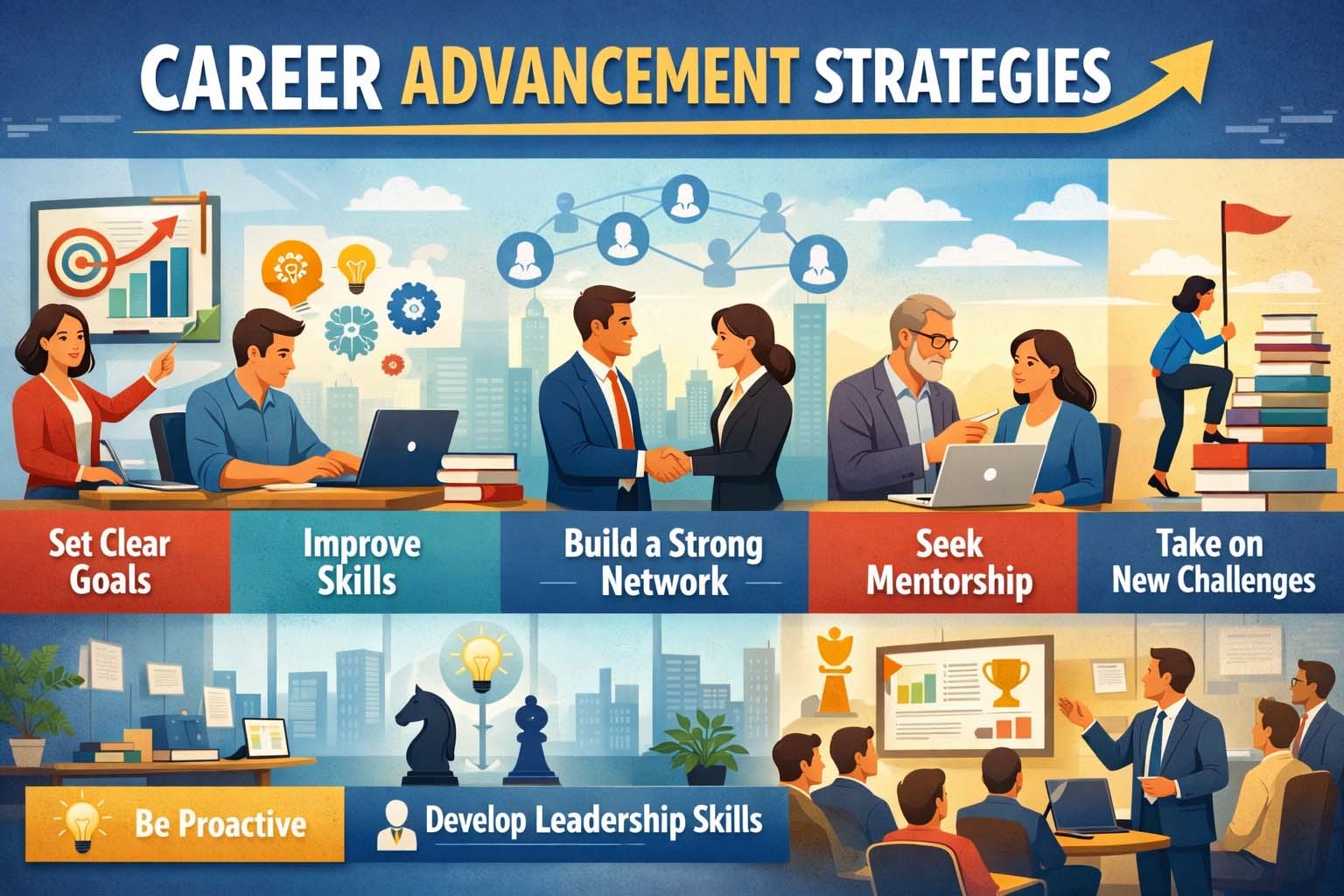
Career Advancement Strategies for 2026 Success
In today’s fast-changing work world, learning good career advancement strategies is key for anyone who wants to grow, earn more, and reach long-term success. Whether you are just starting out or already have years of experience, a clear plan helps you move forward with confidence. Today, companies value employees who keep learning, adapt quickly, and show leadership potential.
The workplace in 2026 is more competitive than ever. In particular, technology, automation, and global hiring are changing how people work. That is why modern career advancement strategies can give you a strong edge. By improving your skills, building relationships, and setting clear goals, you can stand out in your field.
In this guide, you will learn proven ways to grow faster, find better opportunities, and build a successful future.
Why Career Advancement Strategies Matter
Career growth is not only about promotions or pay raises. It also includes gaining new skills, finding better roles, and enjoying your job more. As a result, employees who plan their future often feel more stable and confident.
Many people stay in the same job for years because they wait for chances instead of creating them. However, smart professionals know that success comes from action. So, by using the right career advancement strategies, you can shape your own future instead of relying on luck.
Set Clear Career Goals
First, you need to know what you want. For example, ask yourself which job you want in two years, which industry interests you most, what salary you are aiming for, and which skills you need to get there.
Once your goals are clear, it becomes much easier to build a roadmap. In fact, people who follow career advancement strategies 2026 often set measurable goals, such as earning a certificate, taking on a leadership role, or moving into a high-demand industry.
Next, write your goals down and review them every few months. This way, you stay motivated and focused.
Skill-Building Career Advancement Strategies
One of the best ways to grow is to keep learning. After all, employers prefer workers who stay up to date and keep improving.
For instance, marketing professionals can learn AI marketing tools, while finance workers can study data analytics. Similarly, managers can sharpen their leadership skills, and designers can learn advanced software.
Further study can help too. Before you invest in more education, ask yourself what will you do to maximize on your postsecondary education investment so that each course leads to better opportunities.
Overall, learning is at the heart of modern career growth because industries change quickly. If you stop learning, others may pass you.
Build a Strong Professional Network
Networking is a powerful tool for growth. In fact, many promotions and job offers come through referrals. Therefore, build relationships with coworkers, managers, clients, and other people in your industry.
To grow your network, attend business events, join LinkedIn groups, and take part in webinars. Also, connect with mentors and help others whenever you can.
Strong networking is one of the most effective strategies for career advancement because trusted relationships often open doors faster than online applications.
Leadership-Based Career Advancement Strategies
Even if you are not a manager, leadership matters. Generally, employers look for people who solve problems, motivate others, and handle responsibility well.
To show leadership, volunteer for important projects and help train coworkers. In addition, take initiative, stay calm under pressure, and offer useful solutions.
Leadership is a core part of career advancement strategies since companies promote people who can guide teams and improve results.
Strengthen Your Personal Brand
Your personal brand is how others see you at work. In other words, it includes your reputation, online presence, communication style, and expertise.
To build a strong brand, keep your LinkedIn profile updated and share industry insights online. At the same time, be reliable at work, dress professionally, and communicate clearly.
Nowadays, recruiters often search online before hiring. Because of this, a polished and professional image matters more than ever.
Ask for Feedback Regularly
Feedback helps you improve faster. Instead of guessing what to fix, ask your manager and coworkers directly.
For example, ask which skills you should improve, how you can perform better, and which strengths you should use more. Then, ask whether you are ready for bigger responsibilities.
Honest feedback lets you adjust quickly and move forward. That is why successful employees treat it as an opportunity, not criticism.
Find a Mentor
A mentor can save you years of mistakes by sharing advice. Moreover, mentors often help with promotions, leadership growth, and industry knowledge.
Ideally, look for someone who understands your industry, has leadership experience, communicates honestly, and enjoys helping others.
Many successful professionals credit mentors for their progress. Indeed, mentorship remains one of the smartest career advancement strategies available.
Tech Career Advancement Strategies
Technology is changing every industry. As a result, smart workers use digital tools to work faster and stay competitive.
For instance, you can use AI writing tools, project management software, and data dashboards. Likewise, automation systems and remote collaboration tools can save you hours every week.
People looking for tech career advancement strategies should focus on digital skills, cybersecurity awareness, coding basics, and AI literacy. Besides, these skills are valuable in almost every job market.
Digital skills also connect to commercial awareness, since knowing industry trends helps you make better career decisions.
Be Visible at Work
Many talented employees go unnoticed because they work quietly. Of course, performance matters, but visibility matters too.
To become more visible, share your project results and speak up in meetings. Furthermore, offer ideas, volunteer for high-value tasks, and support team goals.
This way, leaders notice your value. In turn, this can lead to promotions, raises, and better opportunities.
Upgrade Your Resume and Portfolio
Your resume should always be ready. Even if you love your current job, keeping it updated prepares you for sudden opportunities.
Specifically, add new achievements, certifications, leadership roles, measurable results, and technical skills.
Some people search online for career advancement strategies pdf download resources. Indeed, templates, planners, and guides can help you organize your next steps.
Learn Communication Skills
Strong communication builds your influence and trust. Not surprisingly, employees who speak clearly often move ahead faster.
The most useful skills include public speaking, writing clear emails, negotiation, active listening, and presenting ideas with confidence. Ultimately, communication can separate average workers from future leaders.
Stay Adaptable
Workplaces change quickly. For example, new software, new leaders, and market shifts happen all the time. Still, adaptable professionals stay valuable during change.
To stay adaptable, accept learning curves, stay positive, and solve problems quickly. Equally important, welcome new systems and keep an open mind.
Clearly, adaptability is one of the most practical skills for the modern workforce.
Track Your Achievements
Keep a list of your wins. Otherwise, you may forget your achievements when reviews or interviews come around.
For example, track revenue earned, costs cut, projects finished, clients kept, and team improvements. To show these results in numbers, it helps to know how to find percent increase.
Later, this record helps during promotions, salary talks, and job interviews.
Negotiate Smartly
Career growth also means asking for what you deserve. So, learn how to negotiate salary, job title, flexibility, and benefits in a professional way.
Before any talk, research market pay. The U.S. Bureau of Labor Statistics Occupational Outlook Handbook lists typical pay and job outlook for hundreds of careers. During the talk, show measurable results, stay confident, and be respectful.
In the end, negotiation is not greed. Rather, it is professional self-advocacy.
Mistakes That Weaken Career Advancement Strategies
Even a good plan can fail if bad habits get in the way. For instance, waiting for recognition, ignoring networking, and resisting change can all hold you back.
Similarly, avoiding feedback, communicating poorly, having no clear goals, and staying comfortable too long slow your progress. Fortunately, removing these habits can speed up your growth a lot.
Career Advancement Strategies 2026: A Simple Plan
To make things easy, split your year into four parts.
First quarter: set goals, update your resume, and choose courses.
Second quarter: network actively, improve your visibility, and ask for feedback.
Third quarter: lead projects, build your brand, and track your results.
Final quarter: apply for promotions, negotiate a raise, and review your progress.
Altogether, this plan turns career advancement strategies 2026 into clear, measurable steps.
Final Thoughts on Career Advancement Strategies
Success rarely happens by accident. Instead, it comes from planning, learning, networking, and taking action every day. In short, the best career advancement strategies focus on clear goals, skill growth, leadership, adaptability, and strong relationships.
Whether you want a promotion, a career change, or a higher income, now is the perfect time to start. So, use these proven methods, stay disciplined, and keep growing each year. That way, your career goals can become reality.