
What Is Dual Enrollment? A Complete Guide for Students and Parents
What Is Dual Enrollment? A Complete Guide for Students and Parents
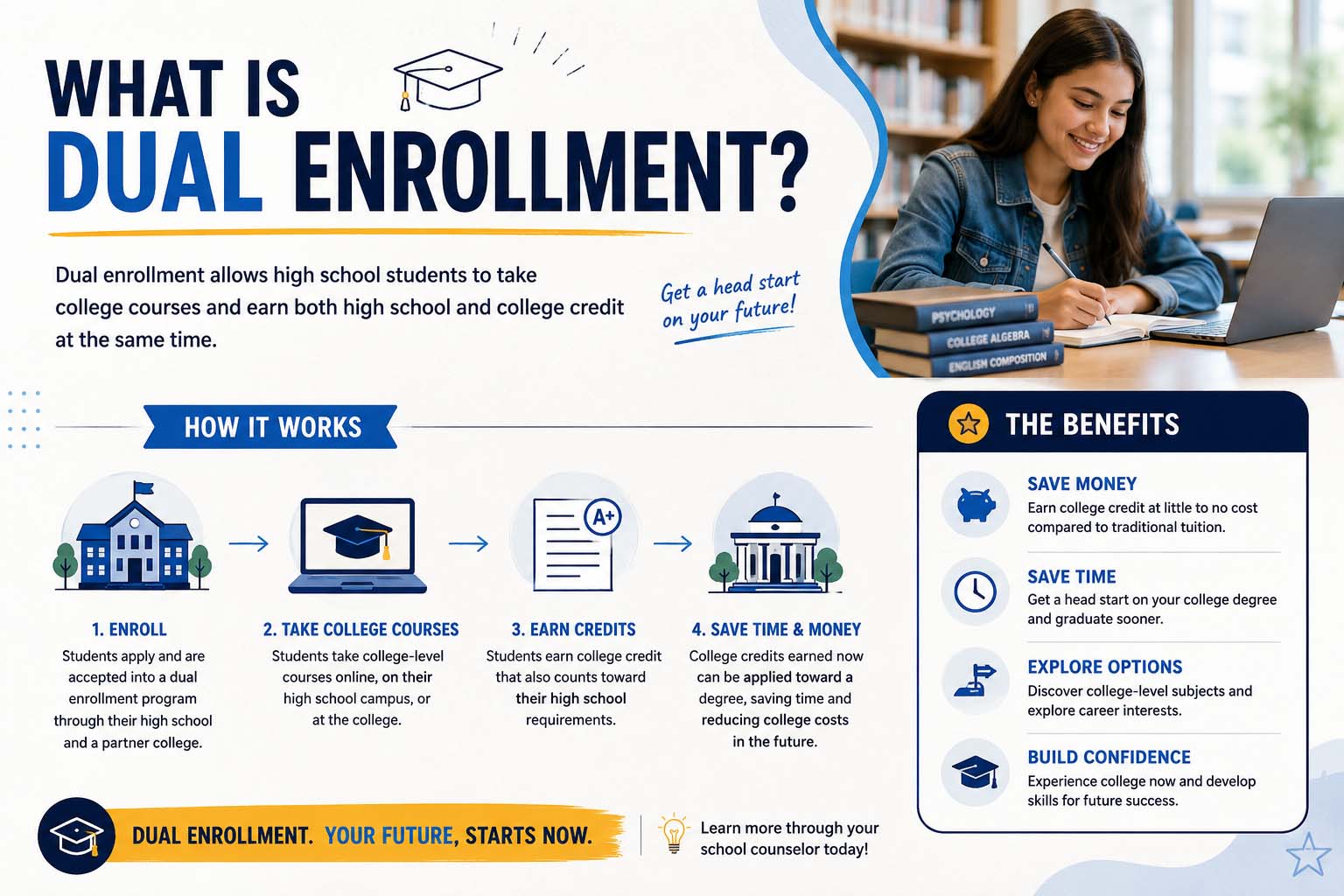
Dual enrollment is an educational program that allows high school students to take college-level courses while they are still enrolled in high school. Students can often earn both high school and college credits by successfully completing these courses. If you are wondering what is dual enrollment, it is essentially an opportunity to get a head start on college education, explore different subjects, and potentially save time and money on future college coursework.
If you’ve ever wondered what is dual enrollment, you’re not alone. Students, parents, and educators often ask how these programs work and whether they are worth pursuing.
Dual offers students the opportunity to earn both high school and college credit simultaneously, potentially saving time and money while preparing for higher education.
What Is Dual Enrollment?
Dual enrollment is an educational program that allows students to enroll in college courses while still attending high school.
Students who successfully complete these courses may receive:
- High school credit
- College credit
- Early exposure to college-level academics
The goal is to help students transition more smoothly into higher education while accelerating their academic progress.
Many programs are offered through partnerships between high schools and colleges or universities.
How Does Dual Enrollment Work?
Although requirements vary by location and institution, the process is generally straightforward.
Students typically:
- Meet eligibility requirements.
- Apply to a participating college.
- Select approved courses.
- Complete coursework while enrolled in high school.
- Earn credits that may count toward both high school graduation and college degrees.
Courses may be taught:
- On a college campus
- At the student’s high school
- Online
- Through hybrid learning models
This flexibility allows students to participate in a way that fits their schedules and academic goals.
What Is Dual Enrollment in High School?
One of the most common questions is what is dual enrollment in high school.
In high school, dual enrollment allows qualified students to begin taking college courses before earning their high school diploma.
Benefits include:
- Academic challenge
- College preparation
- Potential cost savings
- Earlier degree progress
For example, a high school junior may take a college English course that counts toward both high school graduation requirements and future college credits.
This dual-credit structure is what makes unique.
What Is Dual Enrollment in College?
Students often ask what is dual enrollment in college because the program involves both educational levels.
From the college perspective, allows high school students to participate in real college courses before officially enrolling as full-time college students.
Students gain access to:
- College instructors
- Academic resources
- Higher-level coursework
- College learning environments
This experience helps students build confidence and develop skills that are valuable in higher education.
Benefits of Dual Enrollment
Students planning for college should also understand What Is Rolling Admission, as the application process can influence when and where they enroll after high school.
Dual enrollment offers several advantages for motivated students.
Earn College Credits Early
Perhaps the biggest benefit is the opportunity to earn college credits before graduating high school.
This can reduce the number of courses required later in college.
Save Money
In addition to earning college credits early, students may later benefit from learning What Is Work Study when exploring ways to help pay for college expenses.
Many dual enrollment programs are offered at reduced costs or funded through school partnerships.
This can lower future college expenses.
Improve College Readiness
Students experience college expectations, deadlines, and coursework before becoming full-time college students.
Explore Career Interests
Taking specialized courses allows students to explore potential majors and career paths early.
Strengthen College Applications
Participation in dual enrollment demonstrates academic motivation and readiness for challenging coursework.
What Is a Dual Enrollment Class?
Another common question is what is a dual enrollment class.
A dual enrollment class is a college-level course taken by a high school student for both high school and college credit.
Examples include:
- English composition
- College algebra
- Psychology
- Biology
- History
- Business courses
These classes often follow the same standards and expectations as courses taken by regular college students.
Students are expected to complete assignments, projects, and exams at the college level.
What Is a Dual Enrollment Course?
The phrase what is a dual enrollment course is often used interchangeably with dual enrollment class.
A dual enrollment course refers to any approved college course that counts toward both educational programs.
Examples may include:
General Education Courses
These satisfy common college degree requirements.
Career and Technical Courses
These focus on practical skills and workforce preparation.
Advanced Academic Courses
These challenge students in subjects such as science, mathematics, and writing.
The specific courses available depend on participating schools and colleges.
Who Is Eligible for Dual Enrollment?
Students preparing for college may also want to understand What Is a Good PSAT Score, since standardized test performance can support future academic opportunities.
Eligibility requirements vary, but common qualifications include:
Academic Performance
Many programs require a minimum GPA.
Grade Level
Programs often target juniors and seniors, though some allow younger students.
Placement Testing
Certain courses may require placement exams or assessment scores.
School Approval
Students may need permission from school counselors or administrators.
Meeting these requirements helps ensure students are prepared for college-level work.
Step-by-Step Guide to Getting Started
Students interested in dual enrollment can follow a simple process.
Step 1: Speak With a School Counselor
Counselors can explain available opportunities and requirements.
Step 2: Research Partner Colleges
Find out which institutions participate in local programs.
Step 3: Review Eligibility Requirements
Check GPA requirements, testing standards, and application deadlines.
Step 4: Submit Applications
Complete all required forms and documentation.
Step 5: Choose Courses Carefully
If you’re unsure which classes to choose, exploring What Should I Major In can help you select courses that align with your future academic and career goals.
Select courses that support your educational plans and interests.
Step 6: Stay Organized
College coursework requires strong time-management skills and responsibility.
Potential Challenges of Dual Enrollment
While dual enrollment offers many benefits, students should also consider potential challenges.
Increased Academic Expectations
College courses may require more independent learning.
Time Management
Balancing high school activities and college coursework can be demanding.
Credit Transfer Considerations
Students should verify whether future colleges will accept earned credits.
Workload Pressure
Some students may find college-level assignments more rigorous than expected.
Proper planning helps reduce these challenges.
Real-World Example
Imagine a high school senior interested in business.
Through dual enrollment, the student completes introductory business, accounting, and economics courses before graduation.
After enrolling in college, those credits may reduce the number of required courses, potentially saving both time and tuition costs.
This example illustrates how dual enrollment can accelerate educational progress while supporting long-term goals such as What Will You Do to Maximize on Your Postsecondary Education Investment through careful academic planning.
Tips for Success in Dual Enrollment
Stay Organized
Use calendars and planners to track deadlines.
Communicate With Instructors
Ask questions and seek support whenever needed.
Manage Time Effectively
Create a schedule that balances academics and personal responsibilities.
Focus on Long-Term Goals
Choose courses that support future educational and career objectives.
FAQ
What is dual enrollment?
Dual enrollment is a program that allows high school students to take college courses and earn both high school and college credit.
What is dual enrollment in high school?
It is a system that enables students to complete college coursework while still enrolled in high school.
What is a dual enrollment class?
A dual enrollment class is a college-level course that counts toward both high school graduation and college credit.
What is dual enrollment in college?
It refers to high school students participating in college courses before becoming full-time college students.
Is dual enrollment worth it?
For many students, dual enrollment provides academic challenges, cost savings, valuable college preparation, and a smoother transition into higher education.
Conclusion
Understanding what is dual enrollment can help students make informed decisions about their educational future. These programs provide an opportunity to earn college credits early, save money, build confidence, and gain valuable experience with college-level coursework. With proper planning and commitment, can be an excellent pathway toward college success and long-term academic achievement.