
Is It Illegal to Keep Students After the Bell? Rules, Rights, and School Policies
Is It Illegal to Keep Students After the Bell? Rules, Rights, and School Policies
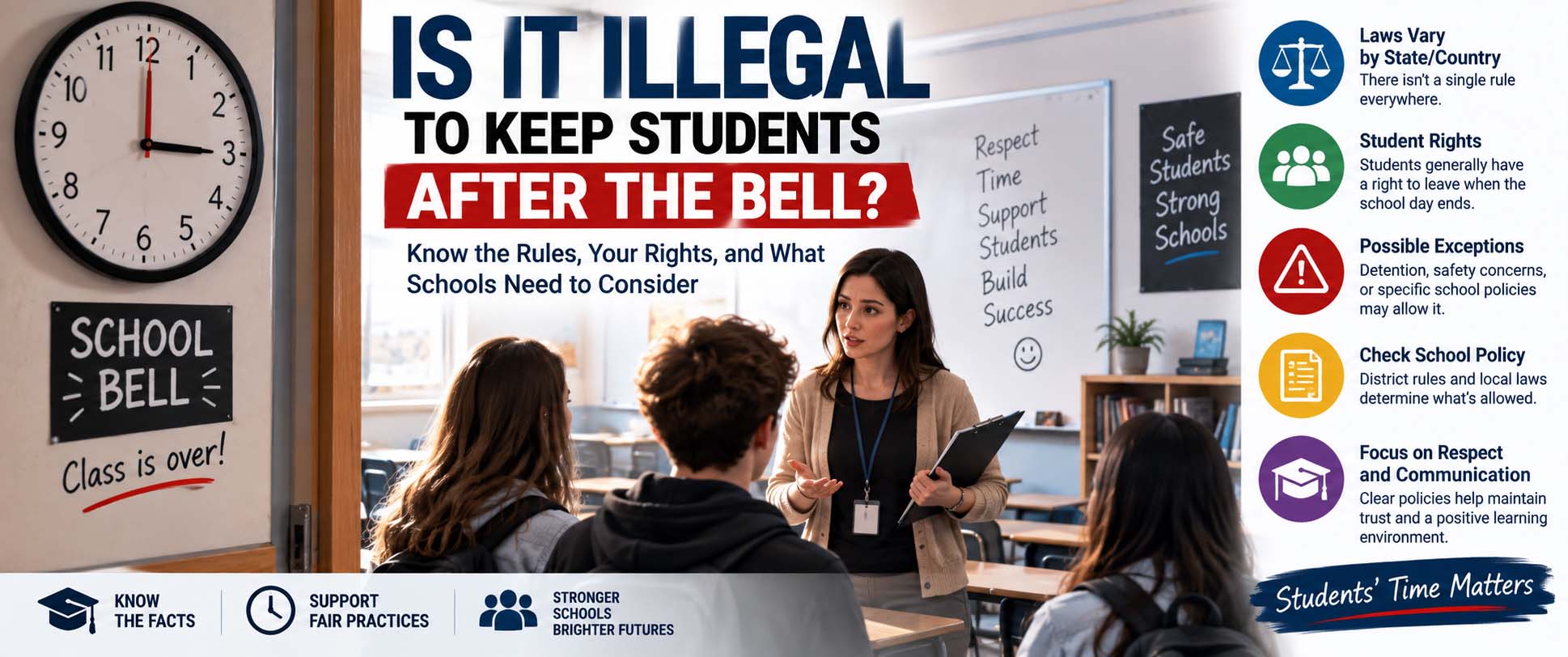
A teacher asks the class to stay behind after the dismissal bell, but your bus leaves in a few minutes. That situation naturally raises the question: is it illegal to keep students after the bell? In most cases, keeping a student briefly after a bell is not automatically illegal. However, the answer depends on local education laws, school policies, the student’s age, the reason for staying, how long the student is kept, and whether the delay creates transportation, supervision, or other concerns.
The bell itself usually signals a school’s scheduled transition or dismissal time rather than creating a universal legal right to leave that exact second. Still, teachers and schools have responsibilities toward students. Therefore, keeping someone after class should generally have a reasonable educational or disciplinary purpose and follow applicable school rules.
Is It Illegal to Keep Students After the Bell?
There is no single worldwide law that makes every instance of keeping students after the bell illegal. Education rules vary between countries and, in places such as the United States, can also vary by state, district, and individual school policy.
For example, a teacher may ask a student to remain for a few minutes to discuss missing work, classroom behavior, or instructions the student did not understand. Schools may also have formal detention procedures that allow students to remain after normal hours when certain requirements are followed.
However, circumstances matter.
Keeping a student for a short conversation is very different from making a young student remain for an extended period without considering transportation or supervision. Likewise, scheduled detention is different from an unexpected delay that causes a student to miss a school bus.
Therefore, students and parents should check the rules that apply to their specific school instead of relying on claims about a universal “bell law.”
Does the Bell Legally Dismiss Students?
Students sometimes hear that “the bell doesn’t dismiss you; the teacher does.” In practice, schools often give teachers some authority to manage the end of a lesson. However, that phrase is not itself a law.
A school bell mainly helps organize the daily schedule. It tells students and staff when classes normally begin, end, or transition.
Teachers may need a short amount of time to finish instructions or address classroom behavior. Still, school policies may limit how and when students can be held after class.
This is especially relevant when a student’s next responsibility is time-sensitive. For example, keeping a student after one class could make the student late for another class. Meanwhile, keeping someone after the final bell might interfere with a bus, parent pickup, extracurricular activity, or another scheduled arrangement.
Students concerned about academic consequences may also benefit from understanding What Is a Passing Grade?, since classroom expectations and academic policies are separate from disciplinary procedures.
Is It Illegal for Teachers to Keep Students After the Bell?
Parents and students often ask, is it illegal for teachers to keep students after the bell when the teacher wants to finish a lesson or address behavior?
Usually, a brief delay does not automatically become unlawful simply because the bell has sounded. Yet teachers remain subject to school policies and applicable education regulations.
The reason for the delay can make a difference.
For instance, asking one student to remain briefly to clarify an assignment may be reasonable. Likewise, a school may permit teachers to assign detention according to an established disciplinary policy.
On the other hand, repeatedly keeping an entire class late as punishment may raise questions under the school’s discipline rules, particularly when students who were not involved in the behavior are affected.
Rather than assuming something is legal or illegal, students should first identify what their school handbook says about dismissal, detention, transportation, and disciplinary procedures.
Keeping Students Between Classes vs. After School
The phrase “after the bell” can describe two different situations, and the distinction matters.
Staying After a Class Period
If a teacher keeps students after a period-change bell, they may become late for their next lesson.
A delay of a minute while the teacher finishes an instruction may be treated differently from a longer delay. However, if students regularly receive tardiness consequences because another teacher keeps them late, they should explain the situation to the teachers involved or a school administrator.
Teachers have different classroom management approaches, which is one reason students may encounter several types of teachers during their education. Even so, classroom expectations should work within the school’s wider schedule and policies.
Staying After the Final Bell
Keeping a student after the final dismissal bell creates different practical issues.
Transportation is one of the biggest. A student might rely on a school bus, arranged transportation, or a parent who expects pickup at a particular time.
Because of this, schools often establish procedures for after-school detention and other activities. Depending on local policy, these procedures may address parent notification, supervision, transportation, and the length of the detention.
Is It Illegal to Keep Students in After the Bell as Punishment?
The question is it illegal to keep students in after the bell often comes up when a teacher uses extra time as a disciplinary measure.
Again, the bell alone does not determine whether the action is permitted. Instead, school discipline policies and applicable local rules matter.
Many schools use detention as a recognized disciplinary response. However, formal detention usually works differently from an unexpected instruction to remain in the classroom indefinitely.
A school handbook may explain:
- Who can assign detention
- When detention can occur
- How long it can last
- Whether parents receive notice
- What happens if transportation is affected
- What behavior can lead to detention
- How students or parents can raise concerns
Consequently, the handbook is often the best starting point for understanding a particular school’s procedure.
Schools also use academic assessments for different purposes, but discipline and assessment should not be confused. For example, Summative Assessment Examples relate to measuring student learning, whereas detention is generally connected with conduct or school rules.
What About Keeping Students During Recess?
Keeping a student inside during recess is somewhat different from keeping someone after the final dismissal bell.
Rules vary significantly between schools and jurisdictions. Some education systems or local policies place restrictions on withholding physical activity or recess as punishment, while others give schools more discretion.
Age can also matter because recess plays a larger role in the daily routine of younger students.
Researching the benefits of recess can help parents understand why schools schedule these breaks and why policies around withholding them may deserve careful consideration.
If recess is repeatedly withheld, parents can review the school’s written discipline policy and ask school staff how the practice aligns with applicable rules.
Is It Illegal to Keep Students After the Bell UK?
Another common question is is it illegal to keep students after the bell UK?
In England, schools have legal authority to use detention as a disciplinary measure when statutory conditions are met. Department for Education guidance on behaviour in schools explains how schools may use detention, including detention outside normal school hours in permitted circumstances.
However, schools still need to consider relevant circumstances, including whether detention timing is reasonable and issues such as travel arrangements.
Rules may differ elsewhere in the UK because education is devolved. Therefore, families in Scotland, Wales, or Northern Ireland should check guidance and rules for their own education system rather than assuming that England’s rules apply everywhere.
Likewise, individual school behaviour policies remain relevant. Parents and students should read the school’s published policy for details about detention and dismissal.
What If a Student Will Miss the School Bus?
Missing transportation is one of the most practical concerns when a teacher keeps a student after school.
If a student depends on a school bus, they should tell the teacher immediately rather than simply leaving without explanation.
A student could say, “My bus leaves in a few minutes. Can we discuss this tomorrow or with another member of staff?”
The teacher may be able to release the student, arrange another time, or follow the school’s transportation procedure.
If the student does miss transportation, they should contact the appropriate school office or responsible adult and follow school procedures rather than attempting an unsafe journey home.
Transportation considerations can be especially significant in residential education settings. Families researching What Is Boarding School will find that supervision and daily schedules operate differently when students live on campus.
Can a Teacher Keep the Whole Class After the Bell?
Teachers sometimes keep an entire class because several students were talking, packing early, or ignoring instructions.
Whether that approach complies with policy depends on the school and jurisdiction.
Even when a brief class-wide delay is permitted, repeated collective punishment can become a concern for students and parents. For example, students who followed instructions may feel they are being penalized for another person’s behavior.
If the situation happens regularly, students can document the dates and approximate length of each delay. Then, they can raise the issue calmly with the teacher or another appropriate staff member.
The goal should be to solve the scheduling or classroom-management problem rather than immediately turn it into a confrontation.
What Students Should Do If They Are Regularly Kept Late
If being held after the bell happens once for a minute or two, it may simply be part of finishing a classroom task. However, repeated or lengthy delays deserve a more organized response.
First, stay calm and ask why you are being kept behind. A polite question often clears up misunderstandings quickly.
Next, explain any immediate problem. Tell the teacher if you are going to miss another class, school transportation, or an arranged pickup.
Then, check the student handbook or school behaviour policy. Look specifically for rules covering dismissal, tardiness, detention, transportation, and complaints.
If the issue continues, keep simple notes showing when it happened, approximately how long you stayed, why you were kept, and what consequence resulted.
After that, speak with a parent, guardian, counselor, year head, principal, or another appropriate member of staff if necessary.
This approach gives adults specific information they can use when reviewing the situation.
Common Myths About Teachers and the Bell
One common online claim is that it is illegal to keep students after the bell in every situation. That statement is too broad.
Another myth is that students always have an automatic right to leave the classroom the instant a bell sounds. Again, school rules and local law are more complicated than that.
The opposite extreme is misleading too. Teachers do not necessarily have unlimited authority to keep students for any length of time or under any circumstances.
A better way to understand the issue is to separate three things: the school’s normal schedule, the school’s disciplinary policy, and the law or education regulations that apply where the school operates.
Once those are separated, most situations become much easier to evaluate.
Frequently Asked Questions
Can a Teacher Make You Stay After Class?
A teacher may be permitted to keep a student briefly after class, depending on school policy and local rules. However, repeated delays that make a student late for other classes should be discussed with school staff.
Can Teachers Give After-School Detention?
Many school systems allow detention as a disciplinary measure. However, the procedures, notice requirements, timing, supervision, and transportation considerations vary by jurisdiction and school policy.
Can I Leave If the Bell Rings?
Do not assume the bell automatically gives permission to walk out regardless of the circumstances. Instead, follow your school’s dismissal rules. If remaining will cause you to miss transportation or another class, explain that to the teacher.
What Should Parents Do If a Child Is Repeatedly Kept Late?
Parents can first ask the child what happened and review the school’s written policies. If the concern continues, they can contact the teacher or school administration and ask for clarification about the applicable rule.
Know the School Rules Before Assuming Something Is Illegal
So, is it illegal to keep students after the bell? Usually, the answer cannot be decided by the bell alone. A short classroom delay is not automatically illegal, while formal detention and longer after-school delays may be governed by specific school policies and local education rules.
Students should communicate calmly when being kept late creates a problem, especially if another class or transportation is affected. Meanwhile, parents can check the student handbook and applicable education guidance when a practice seems unreasonable or happens repeatedly.
Most of all, avoid relying on viral claims that something is “always illegal” or “always allowed.” School authority has limits, but those limits depend on the rules that apply to the particular school and location.