
What Is a Passing Grade? A Student-Friendly Guide to Grades and Academic Success
What Is a Passing Grade? A Student-Friendly Guide to Grades and Academic Success
Have you ever received a test score and wondered, “Did I pass?” You’re not alone. One of the most common questions students ask is what is a passing grade. The answer isn’t always the same because grading policies can vary between schools, colleges, countries, and even individual courses.
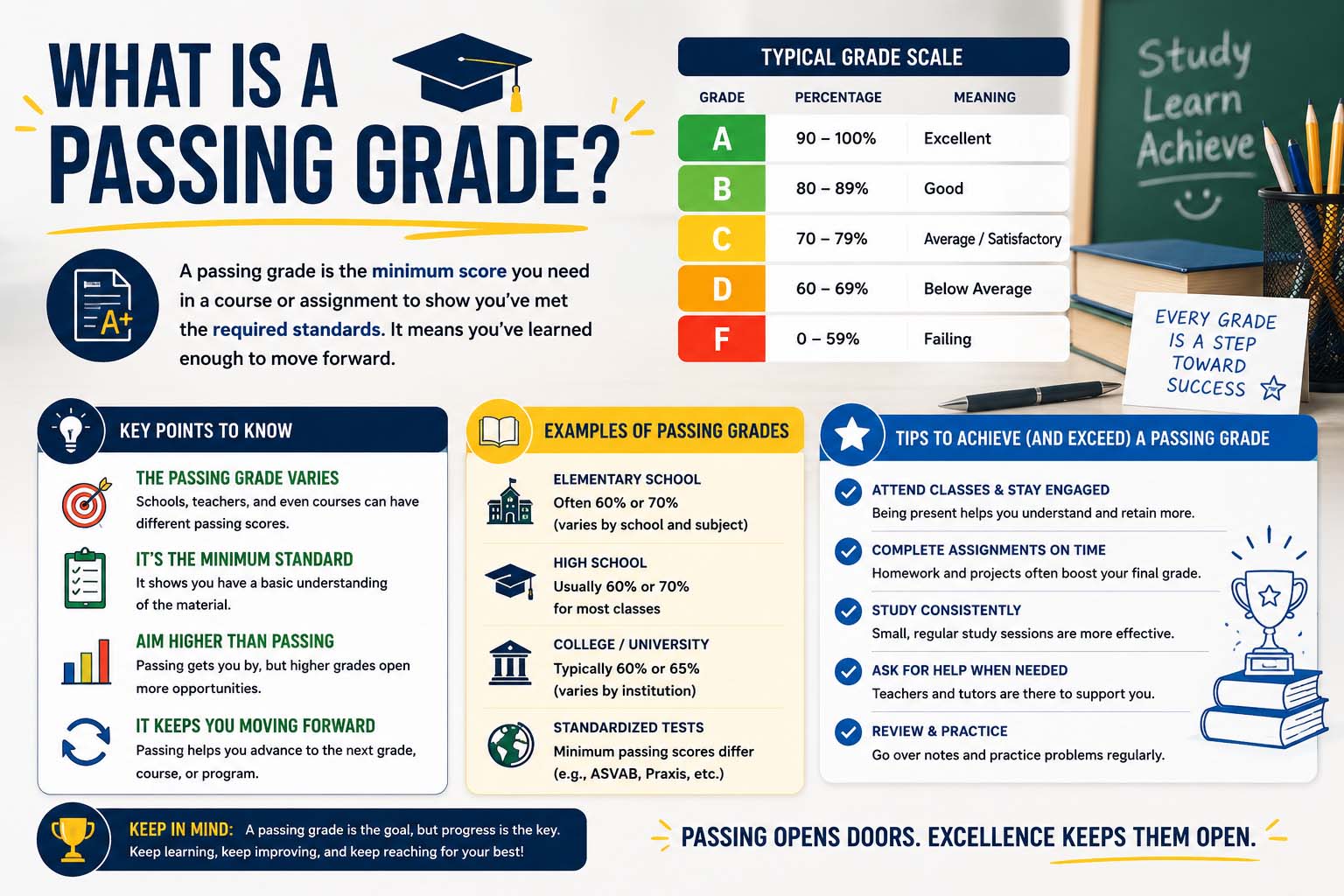
In general, a passing grade is the minimum score or letter grade required to successfully complete an assignment, course, or academic program. Passing means you’ve met the required learning standards, while failing means you’ll likely need extra work or may have to repeat the course.
This guide explains how passing grades work, common grading systems, and what students should know to stay on track throughout their education.
What Is a Passing Grade?
A passing grade is the lowest acceptable grade that allows a student to earn credit for a class or move on to the next level of study.
Schools use passing grades to measure whether students have learned enough of the required material.
Passing grades may be shown as:
- Percentages
- Grade points
- Numerical scores
- Standards-based ratings
Every school sets its own grading policy, so students should always check their school’s handbook or course syllabus.
What Is Considered a Passing Grade?
Many students ask what is considered a passing grade because grading scales vary.
In many schools:
| Grade | Percentage (Typical) | Pass or Fail |
|---|---|---|
| A | 90–100% | Pass |
| B | 80–89% | Pass |
| C | 70–79% | Pass |
| D | 60–69% | Often Pass* |
| F | Below 60% | Fail |
*Some schools accept a D as passing, while others require at least a C, especially for major subjects or degree requirements.
Always verify the grading rules for your school or program.
Why Schools Use Passing Grades
Passing grades help teachers and schools:
- Measure student learning
- Maintain academic standards
- Identify students needing extra support
- Award course credit
- Determine graduation eligibility
- Evaluate readiness for more advanced courses
Grades also help students understand their strengths and areas that need improvement.
Understanding Different Grading Systems
Schools around the world use several grading methods.
Letter Grades
This is the most familiar system.
Students receive:
- A = Excellent
- B = Good
- C = Satisfactory
- D = Minimum passing (at many schools)
- F = Failing
Percentage Grades
Some schools report grades as percentages.
For example:
- 95%
- 87%
- 74%
- 62%
Teachers may convert these percentages into letter grades.
GPA System
“Students who want to understand how academic performance is measured over time can also learn more about What Is the Highest GPA and how GPA systems compare across schools.”Can Passing Grades Affect Your Future?
Colleges often use Grade Point Average (GPA).
Typical values include:
| Letter Grade | GPA Value |
| A | 4.0 |
| B | 3.0 |
| C | 2.0 |
| D | 1.0 |
| F | 0.0 |
Your GPA reflects your overall academic performance across multiple courses.
What Is a Passing Grade in Middle School?
Many parents and students wonder what is a passing grade in middle school.
In many middle schools:
- 60% or higher is considered passing.
- Some districts require at least 65% or 70%.
- Students often need passing grades in core subjects like math, science, English, and social studies.
Middle school grades help prepare students for the expectations of high school. Schools may also consider attendance, participation, homework, and classroom behavior as part of the final grade.
What Is a Passing Grade in High School?
Knowing what is a passing grade in high school is especially important because high school grades can affect graduation, scholarships, and college admissions.
Many high schools consider these grades passing:
- A
- B
- C
- D (at some schools)
Some advanced classes or graduation requirements may require students to earn at least a C.
High school transcripts become part of college applications, so students should aim for more than simply passing whenever possible.
What Is a Passing Grade in College?
The answer to what is a passing grade in college depends on the institution and the course.
Many colleges consider:
- C or higher as passing for most major courses.
- D as passing for some elective courses.
- Graduate programs often require a B or higher.
Some degree programs have stricter requirements.
For example:
- Nursing
- Engineering
- Education
- Medical programs
These programs may require students to maintain higher grades to continue in the program.
Always review your college catalog or department handbook.
Passing Grade vs Good Grade
| Passing Grade | Good Grade |
| Meets minimum requirement | Exceeds expectations |
| Earns course credit | Builds a stronger GPA |
| May qualify for graduation | Improves scholarship opportunities |
| May satisfy prerequisites | Makes competitive applications stronger |
Passing keeps you moving forward, but higher grades often open more opportunities.
What Happens If You Fail a Class?
Failing a class doesn’t mean your academic journey is over.
Depending on school policy, students may:
- Retake the course
- Attend summer school
- Complete extra assignments
- Receive tutoring
- Repeat the academic year (in some cases)
Many schools provide support services to help students improve before failure becomes permanent.
Factors That Affect Final Grades
Your final grade usually includes more than test scores.
Teachers may consider:
- Homework
- Quizzes
- Exams
- Class participation
- Attendance
- Projects
- Presentations
- Group work
- Laboratory assignments
Understanding how each assignment is weighted helps students manage their study time more effectively.
How to Improve Your Grades
If you’re close to the passing mark, small improvements can make a big difference.
Step 1: Understand the Grading Policy
Read your course syllabus carefully.
Know:
- Passing score
- Assignment weights
- Exam schedule
- Make-up work policy
Step 2: Stay Organized
Keep track of:
- Homework deadlines
- Test dates
- Project due dates
- Study sessions
Using a planner or digital calendar can help you avoid missing assignments.
Step 3: Ask Questions Early
If something isn’t clear, ask your teacher before the next test.
Waiting until the end of the semester makes catching up much harder.
Step 4: Review Mistakes
Instead of only looking at your score, study why you answered questions incorrectly.
Learning from mistakes often improves future test performance.
Step 5: Build a Study Routine
“Creating effective study materials is another useful strategy, and learning How to Make a Study Guide can help students organize information and prepare more efficiently.”
Studying a little every day is usually more effective than trying to learn everything the night before an exam.
Common Mistakes Students Make
Many students lose valuable points because of avoidable habits.
These include:
- Missing homework
- Poor attendance
- Ignoring teacher feedback
- Not asking for help
- Forgetting assignment deadlines
Improving these habits often raises grades without requiring major changes.
Can Passing Grades Affect Your Future?
“For students preparing for future college applications, understanding standardized test performance, such as What Is a Good PSAT Score, can also help them set realistic academic goals.”
Yes, although the impact depends on your goals.
Higher grades may help with:
- College admissions
- Scholarships
- Academic honors
- Internship opportunities
- Competitive degree programs
For many careers, employers care more about your skills and qualifications than individual grades. Still, maintaining solid academic performance can create more opportunities during your education.
Frequently Asked Questions
What is a passing grade?
A passing grade is the minimum score or letter grade required to successfully complete a course or assignment and earn academic credit.
What is considered a passing grade?
In many schools, a score of 60% or higher is considered passing, though some schools require at least 65% or 70%.
What is a passing grade in middle school?
Many middle schools consider 60% or above passing, but local school districts may use different grading policies.
What is a passing grade in high school?
Many high schools accept grades of A, B, C, and sometimes D as passing. Graduation requirements may require higher grades for certain subjects.
What is a passing grade in college?
“Students planning advanced education may also want to understand What Is a Master’s Degree and how graduate-level requirements can differ from undergraduate programs.”
Many colleges require at least a C for major courses, while some elective courses may accept a D. G
Is a D always a passing grade?
No. Some schools consider a D passing, while others require a C or higher. Degree programs and prerequisite courses may also have stricter requirements.
Can you graduate with low passing grades?
In many schools, yes, if you meet all graduation requirements. However, higher grades may improve your GPA and create more opportunities for scholarships and future education.
Final Study Tips
Understanding what is a passing grade helps students set realistic academic goals and avoid surprises at the end of a semester. While earning the minimum passing score allows you to move forward, aiming higher can improve your GPA, strengthen college or scholarship applications, and build confidence in your learning.
Every school has its own grading policies, so make it a habit to review your course requirements early. Stay organized, ask questions when needed, and build consistent study habits. Those small steps often make the difference between barely passing and achieving long-term academic success.