
Types of Trade Schools: A Complete Guide to Career-Focused Education
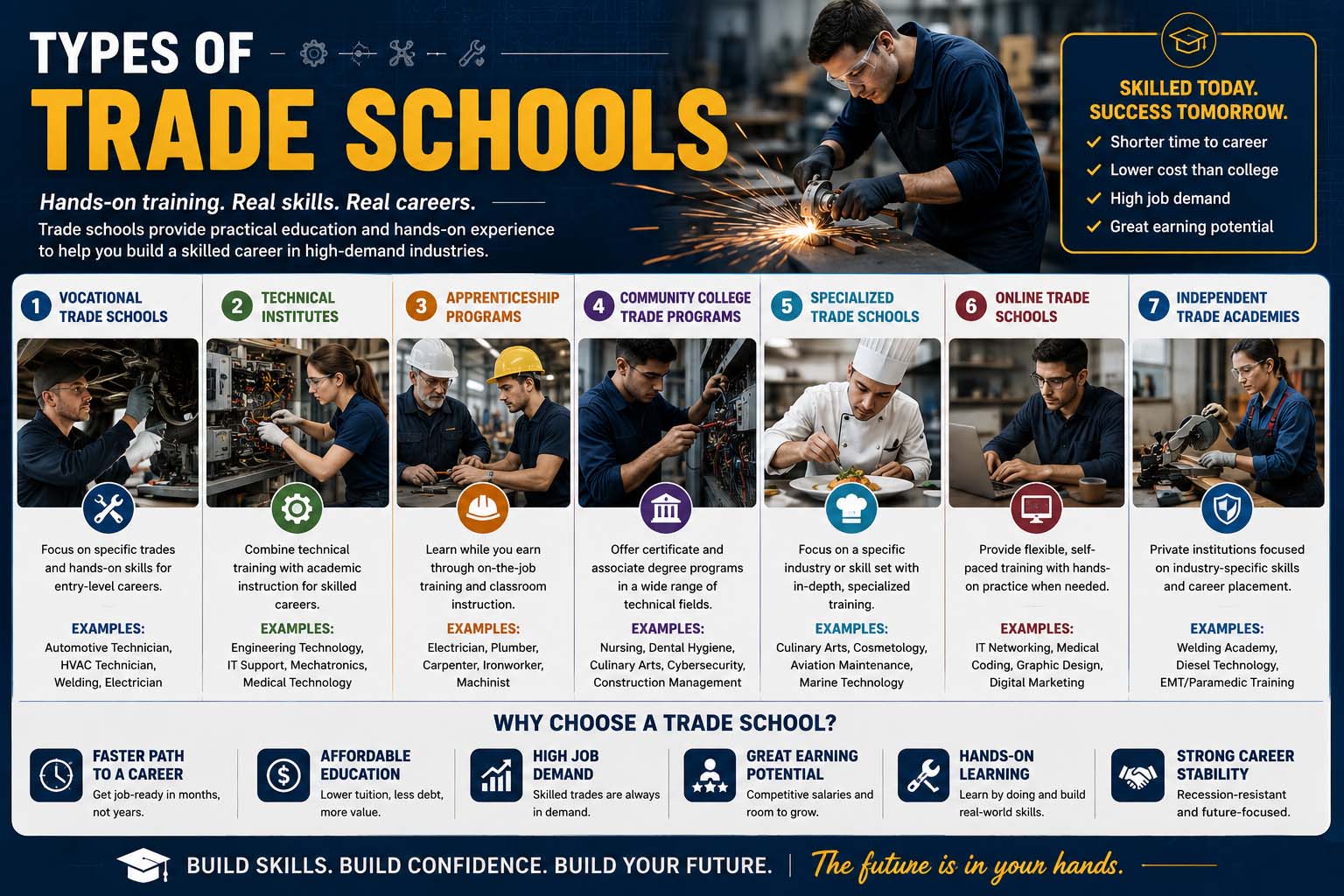
Types of Trade Schools: A Complete Guide to Career-Focused Education
If you’re considering a faster path into the workforce, learning about the types of trade schools is a great place to start. Trade schools focus on practical, hands-on training that prepares students for specific careers, often in much less time than a traditional four-year degree.
Whether you’re graduating from high school, changing careers, or looking to build new skills, understanding the available options can help you choose a program that matches your interests, budget, and career goals.
What Are Trade Schools?
Trade schools, also called vocational schools or technical schools, provide specialized education for careers that require practical skills rather than broad academic coursework.
Instead of spending several years studying general education subjects, students concentrate on learning the knowledge and techniques needed for a particular profession.
Many programs include:
- Hands-on laboratory training
- Industry-standard equipment
- Classroom instruction
- Certifications
- Internships or clinical experience
- Career placement assistance
Because programs are career-focused, many graduates enter the workforce soon after completing their training.
Types of Trade Schools
The types of trade schools available today cover nearly every major industry. Some prepare students for construction careers, while others focus on healthcare, technology, transportation, or skilled manufacturing.
Below are some of the most common options.
Healthcare Trade Schools
Healthcare remains one of the fastest-growing vocational fields.
Popular programs include:
- Medical Assistant
- Dental Assistant
- Surgical Technologist
- Pharmacy Technician
- Sterile Processing Technician
- Practical Nursing (LPN/LVN)
Many healthcare careers can be entered after completing programs that last between several months and two years.
Skilled Construction Trades
Construction programs prepare students for careers that build and maintain homes, businesses, and public infrastructure.
Examples include:
- Electrician
- Plumber
- Carpenter
- Mason
- HVAC Technician
- Roofer
Students typically combine classroom learning with practical training using real tools and equipment.
Automotive and Transportation Schools
These programs teach students how to inspect, repair, and maintain vehicles.
Career options include:
- Automotive Technician
- Diesel Mechanic
- Motorcycle Technician
- Collision Repair Specialist
- Aviation Maintenance Technician
Many schools partner with manufacturers to provide training on current vehicle technology.
Information Technology Trade Schools
Technology-focused vocational programs continue to grow as employers seek workers with practical technical skills.
Common specialties include:
- Cybersecurity
- Network Administration
- Computer Support
- Cloud Computing
- Software Development
- IT Help Desk
Unlike traditional computer science degrees, these programs emphasize job-ready skills that employers need immediately.
Manufacturing and Industrial Trades
Industrial careers remain essential across many industries.
Programs often include:
- Welding
- CNC Machining
- Industrial Maintenance
- Precision Manufacturing
- Robotics Technology
- Quality Control
Many graduates find employment in manufacturing plants, engineering companies, or industrial facilities.
Culinary and Hospitality Schools
Students interested in food service or hospitality can pursue vocational training in areas such as:
- Culinary Arts
- Baking and Pastry
- Restaurant Management
- Hotel Operations
- Event Management
These programs combine classroom instruction with practical kitchen or hospitality experience.
Beauty and Personal Care Schools
Trade schools also prepare students for licensed beauty careers.
Popular choices include:
- Cosmetology
- Barbering
- Esthetics
- Nail Technology
- Massage Therapy
Licensing requirements vary depending on the state or country.
What Types of Trade Schools Are There?
If you’re wondering what types of trade schools are there, they generally fall into several broad categories.
| Trade School Category | Common Careers | Typical Program Length |
|---|---|---|
| Healthcare | Medical Assistant, Dental Assistant | 9–24 months |
| Construction | Electrician, Plumber | 1–2 years |
| Automotive | Auto Technician, Diesel Mechanic | 1–2 years |
| Information Technology | Network Technician, Cybersecurity | 1–2 years |
| Manufacturing | Welder, CNC Operator | 6–24 months |
| Culinary | Chef, Baker | 1–2 years |
| Beauty | Cosmetologist, Barber | 9–18 months |
Program length varies depending on certification requirements and local regulations.
Different Types of Trade Schools for Different Career Goals
Not every vocational program leads to the same type of work environment.
For example:
- Healthcare professionals often work in hospitals or clinics.
- Electricians may work on residential or commercial construction sites.
- Automotive technicians spend most of their day in repair shops.
- Culinary graduates typically work in restaurants, hotels, or catering businesses.
- IT specialists may work remotely or in office settings.
Choosing the right career starts with understanding your interests, strengths, and preferred work environment.
If you’re still deciding between vocational education and a traditional degree, reading What Should I Major In can help clarify which educational path aligns best with your long-term goals.
Types of Trade Schools Trades With Strong Job Demand
Many students choose vocational education because skilled workers remain in high demand.
Some of the fastest-growing trades include:
Electrician
Electricians install, repair, and maintain electrical systems in homes, offices, and industrial buildings.
As renewable energy and smart-home technology continue expanding, skilled electricians remain highly sought after.
HVAC Technician
Heating, ventilation, and air conditioning specialists install and service climate control systems.
Since every building requires heating or cooling, demand remains steady throughout most regions.
Dental Assistant
Dental assistants support dentists during procedures while preparing equipment and assisting patients.
Training programs are generally shorter than many traditional healthcare degrees.
Welder
Welders work across construction, manufacturing, shipbuilding, and infrastructure projects.
Specialized certifications often increase earning potential.
Cybersecurity Technician
Businesses increasingly rely on trained professionals to protect computer networks from cyber threats.
Vocational cybersecurity programs provide practical skills that employers actively seek.
Why Students Choose Trade Schools
Trade schools appeal to students for several reasons.
Some of the biggest advantages include:
- Shorter program lengths
- Lower tuition costs compared to many universities
- Practical, career-focused education
- Strong employment opportunities
- Smaller class sizes
- Hands-on learning
- Industry certifications
For students who enjoy learning by doing rather than sitting through years of lecture-based courses, vocational education can be an excellent fit.
Some programs even offer opportunities similar to What Is Work Study, allowing students to gain practical experience while completing their education.
How to Choose the Right Types of Trade Schools
Selecting the right trade school is about more than finding the shortest program. You should compare schools based on the quality of training, graduation outcomes, and career support.
When evaluating your options, consider:
- Accreditation
- Program reputation
- Graduation rates
- Certification exam pass rates
- Hands-on training opportunities
- Internship or apprenticeship partnerships
- Job placement services
- Tuition and financial aid
Visiting a campus or attending an open house can also help you decide whether a program feels like the right fit.
What Are the Different Types of Trade Schools for Recent High School Students?
Many vocational schools welcome students immediately after high school, while others also serve working adults looking for a career change.
Common entry pathways include:
Direct Enrollment
Students begin vocational training after earning a high school diploma or equivalent.
Apprenticeship Programs
Some trades combine classroom instruction with paid on-the-job training.
Students earn practical experience while developing industry skills.
Community College Technical Programs
Many community colleges offer trade programs alongside academic degrees, giving students additional flexibility.
Some learners even begin preparing through What Is Dual Enrollment, allowing them to earn college credits while still in high school before continuing into a technical program.
Trade School vs. College
Choosing between vocational education and a traditional college depends on your career goals.
| Trade School | Traditional College |
|---|---|
| Career-focused training | Broad academic education |
| Usually 6 months–2 years | Usually 4 years for a bachelor’s degree |
| Hands-on learning | More classroom-based learning |
| Industry certifications | Academic degrees |
| Faster workforce entry | Broader career flexibility |
Neither option is automatically better.
If you’re comparing educational paths in greater detail, the guide on the difference between college and university can help explain how traditional higher education is structured.
Costs and Financial Aid
Trade schools are often less expensive than four-year degree programs, but costs vary depending on the field, equipment, and program length.
Students may be able to reduce expenses through:
- Scholarships
- Grants
- Employer sponsorships
- Student loans
- State workforce programs
- Veterans’ education benefits
Before enrolling, ask the school for a complete breakdown of tuition, tools, uniforms, licensing fees, and certification costs.
Common Mistakes When Choosing a Trade School
A little research can prevent costly decisions later.
Choosing Based Only on Tuition
The least expensive program isn’t always the best value.
Strong instructors, modern equipment, and job placement support often justify higher tuition.
Ignoring Licensing Requirements
Some careers require state or national licenses before graduates can begin working.
Always confirm that the program meets local licensing standards.
Not Researching Employment Outcomes
Ask schools about:
- Graduate employment rates
- Employer partnerships
- Average starting salaries
- Internship opportunities
These details often provide a clearer picture of program quality than advertising materials.
Career Outlook for Skilled Trades
Many skilled trades continue to offer strong employment opportunities because employers need trained professionals in essential industries.
Fields with steady or growing demand include:
- Healthcare
- Construction
- Skilled manufacturing
- Information technology
- Transportation
- Renewable energy
- HVAC
- Electrical work
Employment trends vary by region, so researching local labor markets can help you choose a career with long-term potential.
Quick Checklist Before You Enroll
Before committing to any program, ask yourself:
- Does this career match my interests?
- Is the school accredited?
- Will I earn an industry-recognized certification?
- Does the program include practical training?
- Are graduates finding jobs?
- Can I afford the total cost?
- Does the schedule fit my lifestyle?
- What are the long-term career opportunities?
Taking time to answer these questions can help you make a more confident decision.
Frequently Asked Questions
What are trade schools?
Trade schools are educational institutions that provide practical, career-focused training for skilled professions such as healthcare, construction, automotive technology, information technology, and manufacturing.
What are the different types of trade schools?
The main categories include healthcare, construction, automotive, information technology, manufacturing, culinary arts, beauty, and other vocational programs that prepare students for specific careers.
How long does trade school take?
Many programs can be completed in six months to two years, although some apprenticeships or specialized certifications may require additional training.
Are trade schools worth it?
For students pursuing careers that require technical skills, trade schools can offer an efficient path into the workforce with lower educational costs and shorter program lengths than many traditional degree programs.
Can I attend trade school after high school?
Yes. Many students enroll immediately after graduation, while others attend later to change careers or develop new professional skills.
Your Next Step
Learning about the types of trade schools is the first step toward choosing a career that fits your goals, interests, and preferred way of learning. Whether you’re interested in healthcare, skilled construction, technology, automotive repair, or another hands-on profession, vocational education offers practical training designed to prepare you for real-world work.
Before making a decision, compare schools carefully, speak with admissions counselors, and research the careers that interest you most. Thinking about What Will You Do to Maximize on Your Postsecondary Education Investment can also help you evaluate how each program aligns with your future plans. Choosing the right trade school today can lay the foundation for a rewarding and long-lasting career.