
How to Write Cursive: A Complete Beginner’s Guide
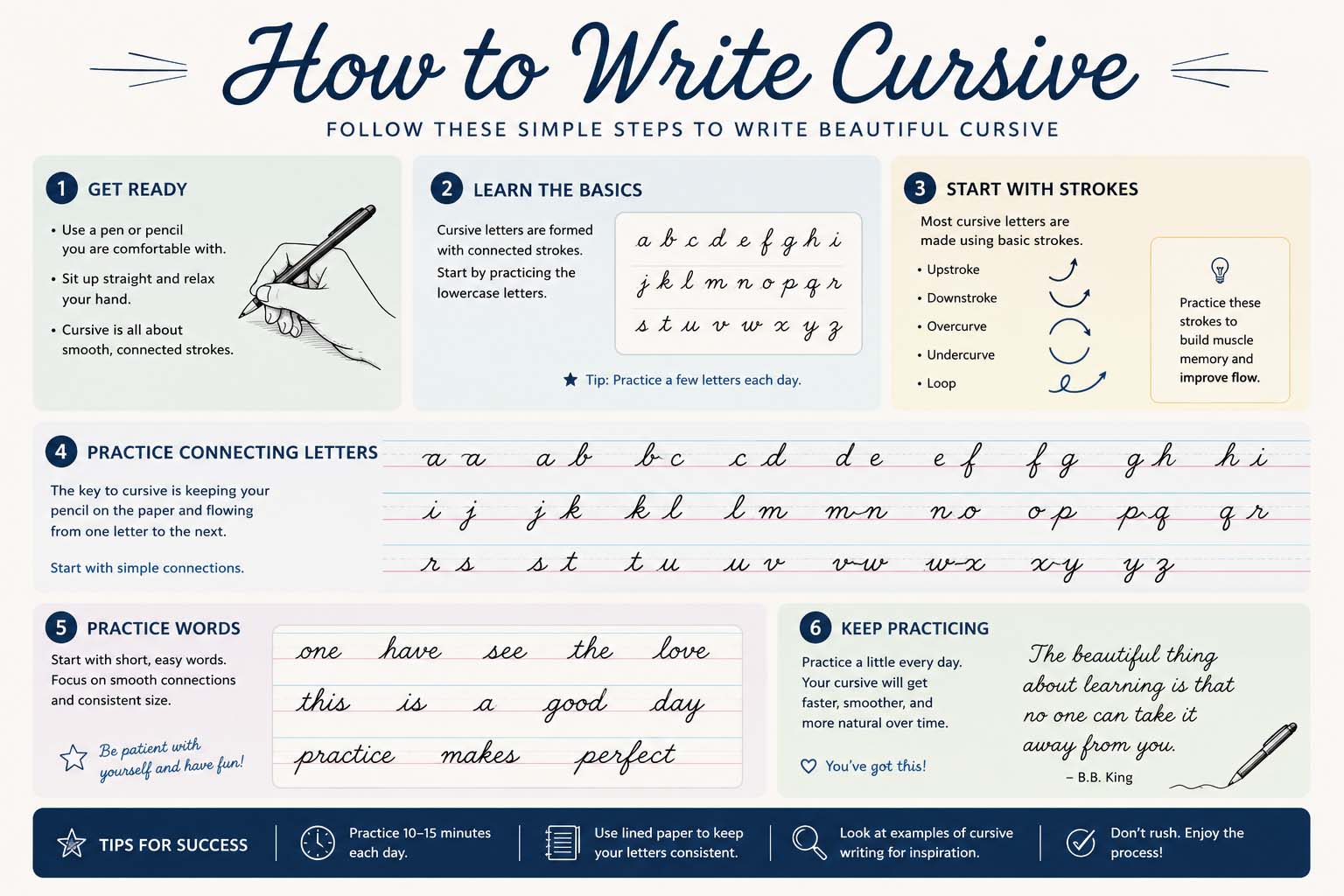
How to Write Cursive: A Complete Beginner’s Guide
Cursive writing is a beautiful and timeless skill that helps improve handwriting, creativity, and writing speed. Even in the digital age, many people still want to learn how to write cursive because it looks elegant and personal. From signing important documents to creating artistic notes, cursive writing continues to be useful for students, professionals, and handwriting enthusiasts around the world.
Learning cursive may seem difficult at first, especially for beginners who are used to print writing. However, with patience and regular practice, anyone can master the flowing strokes and connected letters that make cursive unique. The key is understanding letter formation, maintaining smooth movement, and practicing consistency every day.
One reason cursive writing remains popular is because it develops hand coordination and improves fine motor skills. Many teachers also believe cursive helps strengthen memory and concentration. Whether you want to improve your handwriting style or simply learn a classic writing technique, cursive is a rewarding skill worth practicing.
How to Write in Cursive
The first step in learning how to write in cursive is understanding the difference between cursive and print handwriting. In cursive writing, most letters connect smoothly to one another instead of being written separately.
To begin practicing cursive, start with lowercase letters because they are generally easier to connect. Focus on maintaining consistent spacing and smooth strokes. Many beginners make the mistake of writing too quickly, which often causes messy or uneven letters. Slow and controlled movements usually produce the best results during early practice.
Posture and grip are also important. Hold the pen comfortably without applying too much pressure. A relaxed hand allows smoother movements and prevents fatigue during longer writing sessions. Sitting upright and positioning the paper at a slight angle can also improve control and comfort.
Using How to Make a Study Guide techniques can also help learners organize practice schedules, track progress, and review difficult letters more effectively.
Repeating simple words and sentences helps build muscle memory. Over time, your hand naturally becomes more comfortable with the flowing motion of cursive writing. Daily practice is one of the most effective ways to improve quickly.
How to Write A in Cursive
Many beginners specifically search for how to write a in cursive because the lowercase “a” looks different from its printed version. In cursive, the letter usually begins with an upward stroke that curves into a small oval shape before connecting smoothly to the next letter.
The uppercase cursive “A” is often more decorative and stylish. Some versions resemble loops or artistic curves, depending on the handwriting style being used. Beginners should start with simple forms before experimenting with advanced decorative styles.
Practicing the cursive “a” repeatedly helps develop smooth transitions between letters. Since “a” appears frequently in English words, becoming comfortable with this letter is important for improving overall cursive fluency.
Consistency matters when practicing. Keeping the same size and slant throughout your writing creates a cleaner and more readable appearance. Many handwriting experts recommend practicing one letter at a time until it feels natural before moving to more complex words.
How to Write S in Cursive
Another commonly searched topic is how to write s in cursive because the letter “s” can appear challenging for beginners. The lowercase cursive “s” often features smooth curves and a flowing shape that connects easily to neighboring letters.
Beginners should focus on clarity before attempting advanced designs. Writing slowly helps maintain proper curves and prevents the letter from looking distorted.
The uppercase cursive “S” can be one of the most elegant letters in cursive handwriting. It usually includes larger loops and sweeping strokes that give writing a stylish appearance. Because of its decorative potential, many people enjoy practicing this letter repeatedly.
Using lined paper can improve consistency while learning cursive “s.” Maintaining proper height and spacing helps the letter blend naturally with surrounding characters. Over time, repeated practice builds confidence and smoothness.
How to Write a J in Cursive
Learning how to write a j in cursive is important because this letter includes unique strokes and loops. The lowercase cursive “j” typically starts with a downward curve below the writing line before looping back upward. It also includes a dot above the letter similar to print handwriting.
The uppercase cursive “J” often appears more decorative with large loops and extended curves. Some styles make the letter resemble artistic calligraphy, which adds personality to handwriting.
Many beginners struggle with letters that extend below the line, such as “j,” “g,” and “y.” Practicing these letters carefully helps improve balance and spacing within words. The goal is creating smooth movements without making the lower loops too large or uneven.
Joining “j” with other letters is another important skill. Since cursive writing emphasizes connected strokes, practicing words containing “j” helps improve natural flow. Simple words like “jump,” “joy,” and “jelly” provide useful exercises for beginners.
Benefits of Learning Cursive Writing
There are many advantages to mastering cursive handwriting. One major benefit is writing speed. Because the letters connect smoothly, cursive often allows faster writing compared to print handwriting. This can be useful for note-taking and long writing sessions.
Cursive writing also improves hand coordination and concentration. The continuous movement involved in cursive activates fine motor skills and encourages better focus during writing tasks. Many educators believe this contributes positively to learning and memory development.
Another benefit is individuality. Every person develops a unique cursive style over time. This makes handwriting more personal and expressive compared to standard typing fonts. Beautiful cursive can also enhance invitations, journals, greeting cards, and artistic projects.
Students who enjoy creative writing can make their handwritten work even more engaging by using figurative language, such as Metaphor in a Sentence, to add expression and imagery.
Even signatures rely heavily on cursive writing. A well-developed cursive signature often appears more professional and confident, which explains why many people continue practicing cursive despite increasing digital communication.
Tips for Improving Cursive Handwriting
Improvement comes through consistent practice and patience. Writing a few lines every day can gradually strengthen muscle memory and improve smoothness. Beginners should avoid rushing because speed naturally develops with experience.
Using cursive worksheets or tracing exercises can help reinforce correct letter formation. Observing examples carefully and copying them repeatedly builds familiarity with different strokes and connections.
Choosing the right pen can also make a difference. Smooth-flowing pens often improve comfort and create cleaner lines. Many people find gel pens or fountain pens particularly enjoyable for cursive writing.
Reading cursive examples regularly can inspire better handwriting techniques. Observing different cursive styles helps learners discover which forms they prefer most. Paying attention to grammar while writing, including Examples of Adverbs, can also improve the overall quality and clarity of handwritten sentences. Likewise, studying Types of Writing helps writers understand different narrative styles that they can practice in cursive.
Conclusion
Learning how to write cursive is a valuable and rewarding skill that combines creativity, coordination, and personal expression. Whether you are studying how to write in cursive, practicing how to write a in cursive, mastering how to write s in cursive, or learning how to write a j in cursive, regular practice is the key to improvement.
Cursive handwriting continues to remain relevant because of its elegance, speed, and individuality. With patience and dedication, anyone can develop beautiful cursive writing that looks polished and professional. By practicing consistently and focusing on smooth letter connections, beginners can gradually transform simple handwriting into flowing and stylish cursive script.