
Metaphor in a Sentence
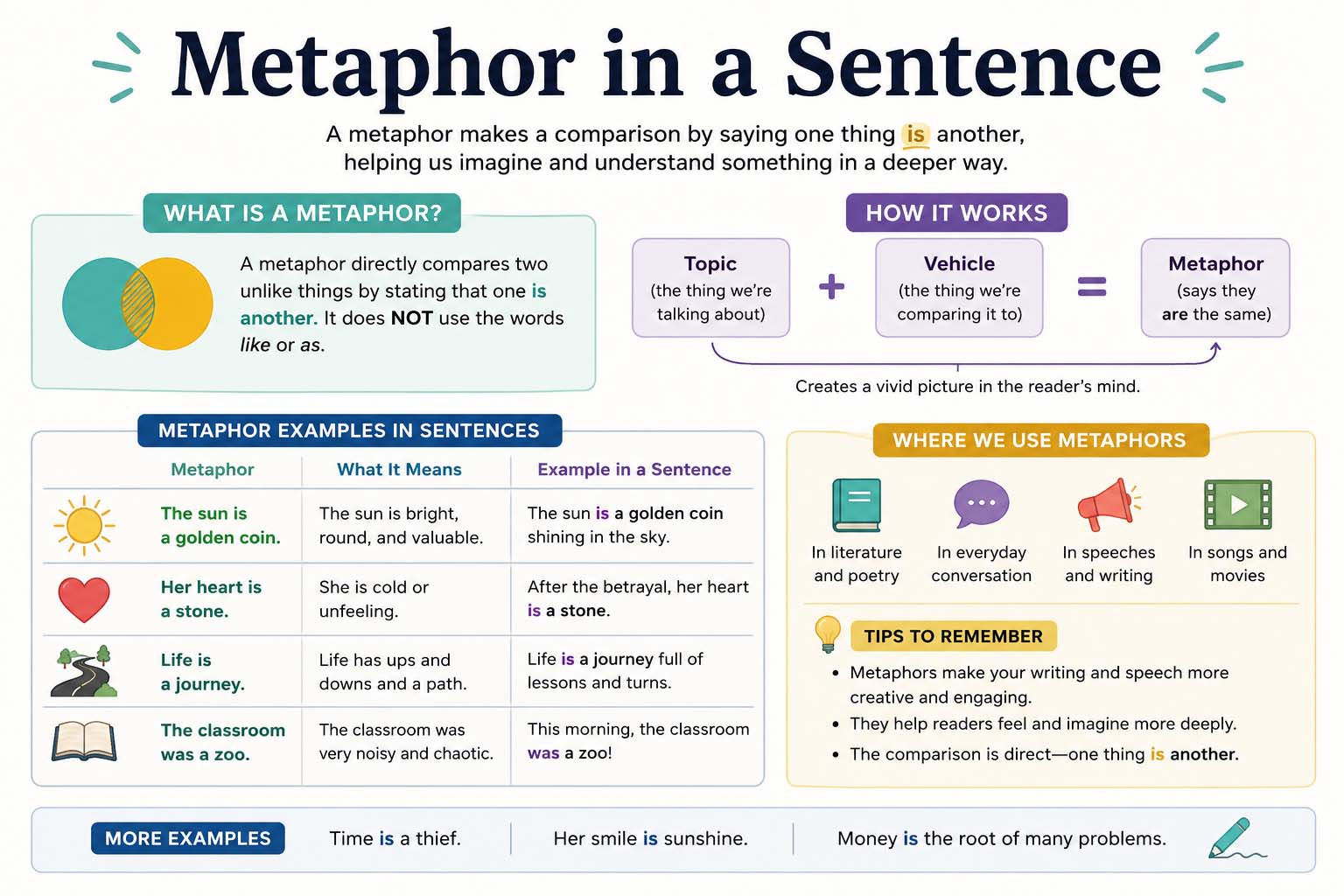
Metaphor in a Sentence
Understanding how to use a metaphor in a sentence can improve both writing and communication skills. Metaphors are powerful literary devices that compare two unlike things without using words such as “like” or “as.” Writers, poets, teachers, and students often use metaphors to make language more creative, emotional, and memorable. A strong metaphor helps readers visualize ideas and connect with the message on a deeper level.
Metaphors appear everywhere in daily life, from books and movies to conversations and advertisements. People often use metaphorical expressions without even realizing it. Phrases such as “time is money” or “the classroom was a zoo” are common examples that show how metaphors create vivid imagery and emotional meaning.
Learning how to identify and create a metaphor in a sentence can help students improve academic writing, storytelling, and public speaking. It also strengthens reading comprehension because many authors rely on figurative language to express complex ideas. Along with studying figurative language, reviewing What Is Figurative Language can help students better understand how creative language influences the meaning of a text.
Understanding the Meaning of a Metaphor
A metaphor is a figure of speech that directly compares two different things by stating that one thing is another. Unlike similes, metaphors do not use connecting words such as “like” or “as.” This direct comparison creates stronger imagery and emotional impact.
For example, when someone says, “Her smile was sunshine,” they are not literally saying the smile is the sun. Instead, the metaphor suggests warmth, happiness, and positivity. This makes the sentence more expressive and engaging.
Writers often use metaphors to explain feelings, describe situations, or paint vivid pictures in the reader’s mind. Metaphors can be simple or complex depending on the context and writing style.
Metaphor Used in a Sentence
Learning how a metaphor used in a sentence changes meaning can help writers create stronger content. A simple sentence may communicate information clearly, but adding a metaphor makes it more memorable and emotional.
Consider the sentence, “The city never sleeps.” The city is not literally awake, but the metaphor suggests constant activity and energy. This type of figurative language gives readers a clearer mental image.
Another example is, “His words were daggers.” In this sentence, the metaphor compares words to sharp weapons, showing emotional pain or cruelty. The comparison immediately creates emotional depth that plain language may not achieve.
Students often encounter metaphors in literature classes because famous authors use them to develop themes and emotions. Shakespeare, Robert Frost, and many modern writers rely heavily on metaphors to enrich their writing.
Using a metaphor in a sentence also helps speakers communicate emotions more effectively in everyday conversations. Instead of saying someone is very busy, a person might say, “I am drowning in work.” This metaphor instantly creates a vivid picture of stress and pressure.
Why Metaphors Are Important in Writing
Metaphors make writing more interesting because they engage readers emotionally and visually. Without figurative language, writing can feel flat or repetitive. Metaphors help authors create atmosphere, tone, and personality.
Creative writers use metaphors to add beauty and depth to stories and poems. Business writers sometimes use metaphors to explain complicated concepts in simple ways. Teachers also use metaphors to help students understand difficult ideas more easily.
For example, a teacher may describe the brain as “a computer” to explain how information is processed and stored. This metaphor makes an abstract idea easier to understand.
Students preparing for exams often organize literary devices into notes, and learning How to Make a Study Guide can make reviewing metaphors, similes, and other figures of speech much more effective.
Example of a Metaphor in a Sentence
Seeing an example of a metaphor in a sentence helps learners recognize how figurative language works. One classic example is, “The world is a stage.” This metaphor suggests that life is similar to a performance where people play different roles.
Another common example is, “He has a heart of stone.” The person’s heart is not literally made of stone, but the metaphor describes someone as emotionally cold or unfeeling.
In literature, authors often use metaphors to reveal character emotions or create symbolic meaning. For instance, saying “Fear was a shadow following her” compares fear to a shadow that constantly stays nearby. This creates a strong emotional image for readers.
How Students Can Use Metaphors Effectively
Students often study metaphors in language arts and literature courses. Learning how to use metaphors correctly can improve essays, presentations, and creative writing assignments.
One important step is understanding the emotion or idea behind the comparison. A metaphor should help explain something clearly instead of confusing the reader. Writers should also avoid mixing unrelated metaphors because that can weaken the message.
Reading books, poems, and speeches can help students discover different metaphor styles. Practice is also important because writing original metaphors takes creativity and observation.
Practicing handwriting while drafting creative work can also improve writing confidence. Many beginners enjoy learning How to Write Cursive as they develop note-taking and composition skills.
Use Metaphor in a Sentence
When teachers ask students to use metaphor in a sentence, they usually want to see creative thinking and figurative language skills. A successful metaphor creates a direct comparison that enhances meaning.
For example, the sentence “The classroom was a jungle” suggests chaos and noise without describing every detail directly. Another sentence such as “Her voice was music to his ears” creates a positive emotional image.
Writers can practice by observing everyday life and comparing ordinary situations to interesting images. Rain may become “silver threads,” while stress may become “a mountain on my shoulders.” These comparisons make writing more expressive and imaginative.
What Is a Metaphor in a Sentence
Many learners ask, what is a metaphor in a sentence? A metaphor is a figure of speech that directly compares two unrelated things to create meaning or imagery. Instead of making a literal statement, the sentence becomes more imaginative and emotional.
For example, “Life is a journey” is a metaphor because it compares life to traveling along a path filled with experiences and challenges. This comparison helps readers think about life in a deeper way.
Conclusion
Learning how to use a metaphor in a sentence is an important skill for students, writers, and everyday communicators. Metaphors make language more vivid, emotional, and memorable by creating imaginative comparisons between different ideas.