
How to Get an Internship: A Practical Guide for Students
How to Get an Internship: A Practical Guide for Students
Figuring out how to get an internship can feel confusing when every listing seems to ask for skills or experience you are still trying to build. However, internships are designed to help students and early-career applicants gain exactly that kind of practical experience. A strong application, focused search, and willingness to contact employers can often matter more than having an impressive work history.
Whether you are in high school, college, or changing career direction, you can approach the process systematically. Instead of applying randomly to dozens of positions, first decide what you want to learn, prepare a targeted resume, find suitable opportunities, and then make each application count.
What Is an Internship?
An internship is a temporary work experience that gives you exposure to a profession, industry, or organization. Depending on the employer, internships may be paid or unpaid, full-time or part-time, remote or in person.
Some programs last only a few weeks, while others continue for an academic semester or several months. Likewise, responsibilities vary. One intern might shadow experienced employees, while another may complete projects, attend meetings, analyze information, or work directly with customers.
Although earning money can be valuable, an internship can offer something else that students need: evidence that they can apply classroom knowledge in a professional setting.
Therefore, a good internship can help you develop skills, build professional contacts, understand workplace expectations, and test whether a particular career actually suits you.
How to Get an Internship: Start With a Clear Target
Before searching job boards, decide what type of experience you want. Otherwise, hundreds of unrelated listings can quickly make the process overwhelming.
Start by considering your interests, current studies, strengths, location, availability, and long-term goals. For instance, a marketing student might target social media, market research, content, or advertising internships rather than simply searching for “business internships.”
If you are still deciding What Should I Major In, internships can also provide a low-risk way to explore possible career paths before making bigger academic decisions.
Next, create a short list of target roles. You might choose three categories, such as:
- Marketing intern
- Communications intern
- Social media intern
This approach keeps your search broad enough to find opportunities while still giving it direction.
Build a Resume That Fits Internship Applications
You do not need years of employment to create a useful internship resume. Instead, focus on evidence that shows what you can already contribute.
Include your education, relevant coursework, projects, volunteering, extracurricular activities, certifications, technical abilities, and any previous employment. Meanwhile, tailor the information to the internship rather than sending exactly the same resume everywhere.
For example, if a position requires teamwork and spreadsheet knowledge, mention a class project where you worked with a group and analyzed data in Excel or Google Sheets.
When choosing Good Skills to Put on a Resume, focus on abilities you can demonstrate rather than filling the page with vague phrases. Communication, research, writing, coding, data analysis, presentation skills, and specific software knowledge can all be useful when relevant.
Whenever possible, describe results too. “Helped organize a university event for 200 students” tells an employer more than simply writing “event planning.”
How to Get an Internship With No Experience
One of the biggest misconceptions about internships is that you need professional experience before getting one. While competitive programs may prefer experienced applicants, many employers understand that interns are still learning.
So, how to get an internship with no experience comes down to presenting other forms of experience effectively.
Turn Academic Work Into Evidence
A strong academic project can demonstrate real skills. For example, a research paper can show research and writing ability, while a programming assignment can demonstrate technical knowledge.
Similarly, presentations show communication skills, and group projects provide examples of collaboration.
Instead of thinking, “I have never worked,” ask yourself, “What have I completed that proves I can do this?”
Create Your Own Projects
If your resume still feels empty, build something relevant.
A student interested in graphic design could create a small portfolio. Likewise, an aspiring software developer could publish a project online. Someone interested in marketing could create a sample campaign for an imaginary business.
Personal projects cannot replace every qualification, yet they show initiative and give interviewers something concrete to discuss.
Use Volunteering and Campus Activities
Volunteer roles, student societies, sports teams, clubs, and community projects can demonstrate responsibility. Therefore, do not dismiss them simply because you were not paid.
Leading a club fundraiser, for example, may show planning, communication, budgeting, and teamwork.
Where to Find Good Internship Opportunities
Once your materials are ready, use several search methods instead of relying on one website.
College career centers are an excellent starting point because employers sometimes recruit directly through schools. Professors and academic departments may also know about research positions or organizations seeking students.
Meanwhile, employer career pages, professional networking platforms, internship databases, industry associations, career fairs, alumni networks, and government programs can reveal more opportunities.
You can also contact organizations directly. Smaller companies, nonprofits, laboratories, clinics, and local businesses may need help even when they have not advertised a formal internship.
A short professional email introducing yourself, explaining your interests, and asking about opportunities can sometimes open a door that was never posted online.
How to Get an Internship in College
Students wondering how to get an internship in college should use the resources available through their institution as early as possible.
First, visit your career services office. Advisors may review resumes, conduct mock interviews, organize career fairs, and maintain employer relationships.
Next, speak with professors. Because faculty members often have professional or research connections, they may know organizations looking for motivated students.
Your classmates and alumni can help too. Instead, it means developing professional relationships and learning from people already working in areas that interest you.
An internship can also help answer a broader question: What Will You Do to Maximize on Your Postsecondary Education Investment? Combining academic learning with practical experience is one way to gain more career value from your time in school.
Apply Strategically Instead of Applying Everywhere
Sending 100 generic applications is not necessarily better than sending 20 strong ones.
First, read the internship description carefully. Then, identify the qualifications and responsibilities that appear most important.
Adjust your resume so relevant experience is easy to find. If a cover letter is requested, explain why that particular organization and role interest you.
However, never copy phrases from the listing just to match keywords. Instead, provide evidence.
For example, rather than saying, “I have excellent leadership skills,” briefly describe where you demonstrated leadership.
Keep track of your applications in a simple spreadsheet with columns for the company, position, application date, deadline, contact person, interview status, and follow-up date. As a result, you are less likely to miss opportunities or forget where you applied.
Prepare for the Internship Interview
Getting an interview means the employer already sees potential in your application. Therefore, your next goal is to show that you are prepared, interested, and capable of learning.
Research the organization beforehand. Understand what it does, who it serves, and what the internship involves.
Then, prepare short examples showing teamwork, problem-solving, communication, responsibility, and initiative. These examples can come from school, volunteering, clubs, sports, or previous jobs.
You should also prepare questions. Ask about typical intern responsibilities, training, supervision, projects, workplace culture, or what successful interns usually accomplish.
Afterward, send a brief thank-you email when appropriate. Keep it professional and mention something specific from the conversation.
How to Get an Internship in High School
Learning how to get an internship in high school requires a slightly different strategy because many formal programs have minimum age requirements.
Start locally. Small businesses, nonprofit organizations, libraries, museums, community groups, universities, and local government offices may offer suitable opportunities.
Your teachers and school counselor can also help identify structured programs.
Since high school students usually have limited work experience, employers may focus more heavily on reliability, enthusiasm, academic interests, and willingness to learn.
Therefore, highlight school activities, volunteer experience, personal projects, competitions, clubs, and relevant classes.
Parents can help with transportation or reviewing applications, but students should communicate with employers themselves whenever possible. Doing so demonstrates maturity and professional independence.
What About an Internship Abroad?
Students searching for how to get an internship in Spain, or another country, have extra factors to consider.
Start with universities, established international internship programs, multinational employers, and recognized exchange organizations. Then, verify visa or work-authorization requirements based on your nationality, destination, internship length, and whether the position is paid.
Also consider language expectations, housing, insurance, transportation, program fees, and living costs before accepting an opportunity.
Requirements can change, so confirm immigration and employment rules through the relevant official government or consular sources rather than relying solely on old blog posts or forum discussions.
Turn an Internship Into Long-Term Career Value
Getting accepted is only the beginning. Once you start, treat the internship as a chance to build both skills and professional relationships.
Arrive prepared, meet deadlines, take notes, ask thoughtful questions, and request feedback. At the same time, look for opportunities to contribute beyond basic assigned tasks without ignoring your core responsibilities.
Keep a private record of projects you completed, skills you learned, and measurable results you helped produce. Later, those details can strengthen your resume and make interview answers more specific.
Strong internships can also support broader career advancement strategies, since supervisors, coworkers, and mentors may become references or professional contacts after the placement ends.
Before leaving, thank the people who supported you and ask whether you may stay in touch.
Common Internship Search Mistakes
Students often hurt their chances through small, avoidable mistakes.
For instance, waiting until the last minute can reduce your options because large organizations sometimes recruit months before the internship begins. Likewise, submitting an unedited resume to every employer makes it harder to show why you fit a specific position.
Other common problems include ignoring application instructions, using an unprofessional email address, failing to proofread documents, exaggerating skills, and not preparing for interviews.
Another mistake is limiting yourself to famous companies. While major employers can offer excellent programs, smaller organizations may give interns broader responsibilities and more direct contact with experienced professionals.
Rejection is also normal. An internship application can attract many qualified candidates, so one rejection does not tell you much about your long-term potential. Instead, keep improving your materials and continue applying.
Frequently Asked Questions
How early should I apply for an internship?
Start researching several months before you want to begin. However, exact recruiting schedules vary by industry and employer. Large summer programs may recruit well in advance, while smaller organizations sometimes hire much closer to the start date.
Do you need a high GPA to get an internship?
Not always. Some competitive programs set minimum GPA requirements, yet many employers also consider projects, technical skills, communication, work experience, extracurricular activities, and enthusiasm.
Can a freshman get an internship?
Yes. Although some programs target juniors or seniors, first-year students can find internships, research opportunities, volunteer positions, job-shadowing experiences, and smaller-company placements.
Should I accept an unpaid internship?
Consider the learning value, legal requirements, schedule, expenses, supervision, and whether you can realistically afford to participate. A paid opportunity may be more accessible, while any unpaid arrangement should comply with applicable employment laws.
How many internships should I apply for?
There is no perfect number. Instead, maintain a manageable pipeline of relevant opportunities and continue applying until you have accepted a suitable offer. Quality and consistency usually work better than sending large numbers of rushed applications.
Your Next Steps
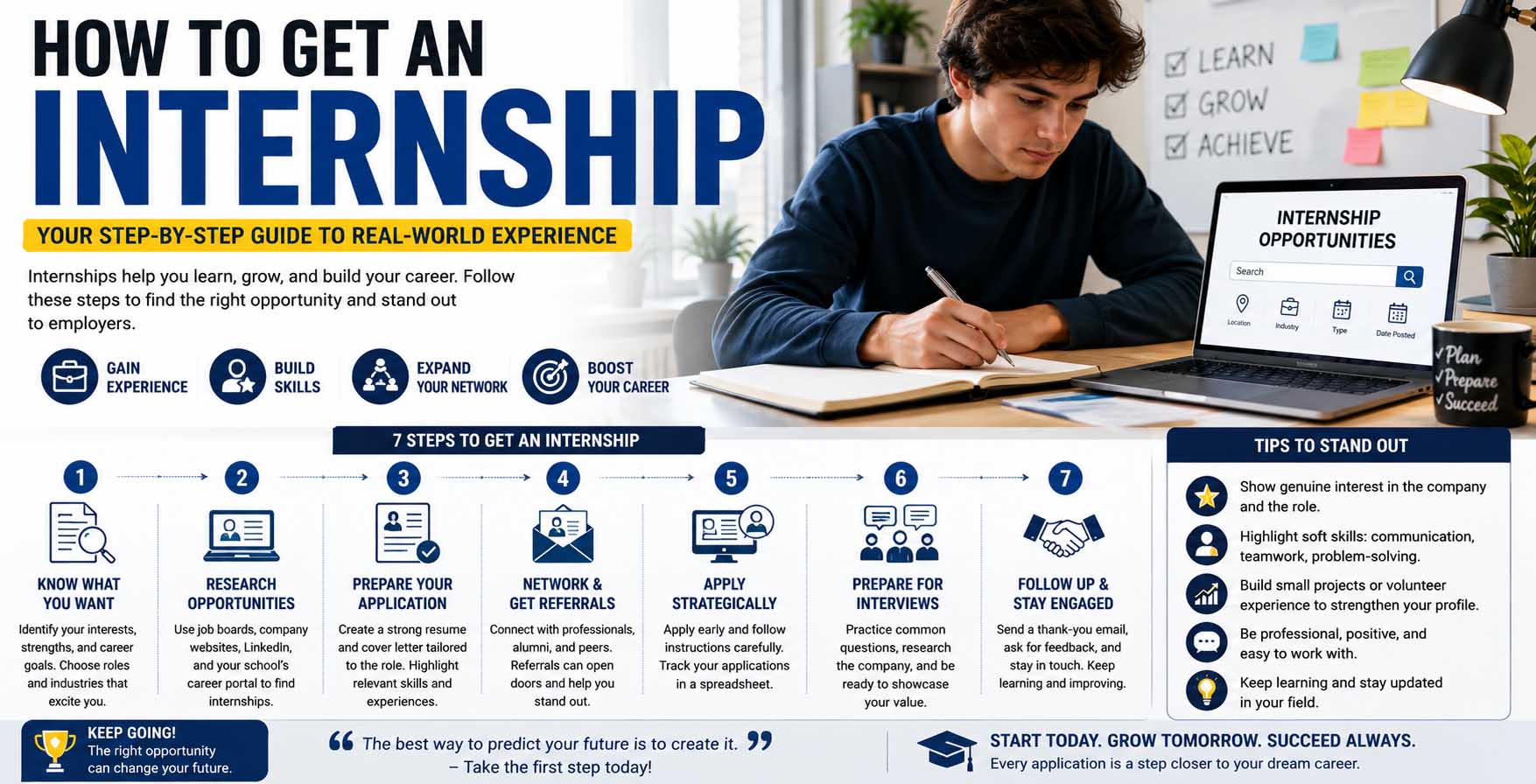
Learning how to get an internship becomes much easier when you treat the search as a process rather than a single application. First, choose your target field. Then, build a focused resume, gather evidence of your skills, search through several channels, and tailor each strong application.
Most of all, do not wait until you feel perfectly qualified. Internships exist partly because students are still developing professional experience. Start with what you already know, show what you can contribute, and keep building from there.