
Good Skills to Put on a Resume: Best Resume Skills to Impress Employers
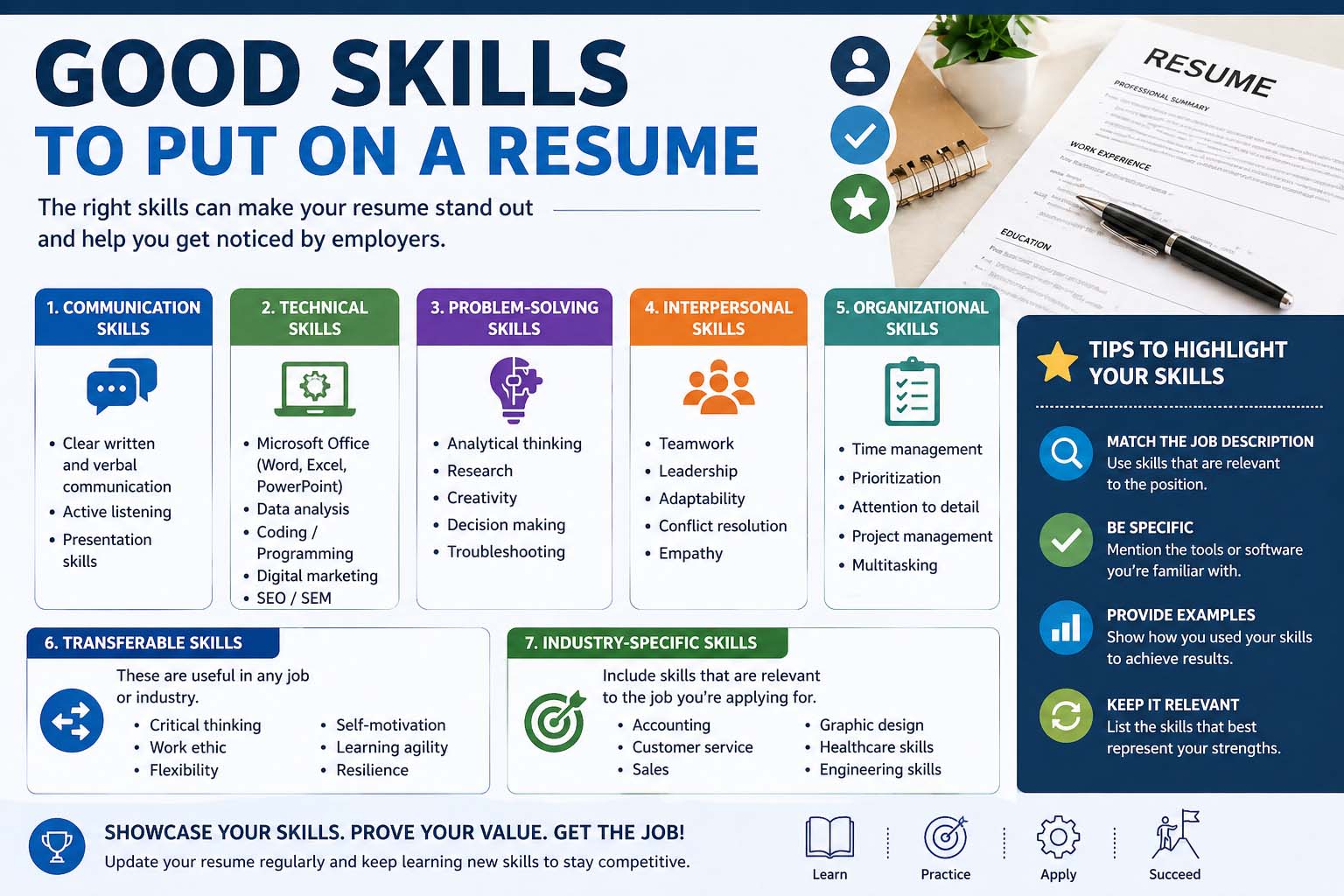
Good Skills to Put on a Resume: Best Resume Skills to Impress Employers
When creating a strong job application, choosing the right good skills to put on a resume can make a huge difference. Employers often scan resumes quickly, looking for candidates who have the abilities needed to succeed in the role. Including relevant skills helps your resume stand out, shows your value, and increases your chances of landing an interview.
The best resumes combine technical abilities with personal strengths. Whether you are applying for your first job or advancing your career, selecting the right mix of skills is essential. In this guide, you will learn how to choose the most effective resume skills and present them professionally.
What Are Good Skills to Put on a Resume?
If you are wondering what are good skills to put on a resume, the answer depends on the job you want. Every employer values different qualities, but some skills are useful across many industries.
Communication is one of the top skills employers look for because nearly every job requires teamwork, customer interaction, or clear written messages. Problem-solving is another powerful skill because businesses need employees who can think critically and handle challenges effectively.
Time management is highly valued, especially in fast-paced workplaces where deadlines matter. Adaptability is also important because companies constantly change processes, technology, and priorities.
Technical skills can also strengthen your application. Computer proficiency, spreadsheet management, project management tools, data entry, and social media knowledge are all valuable depending on the position.
When adding skills to your resume, always match them to the job description. If an employer asks for customer service experience or leadership ability, make sure those relevant strengths appear clearly in your resume.
Why Skills Matter on a Resume
The skills section is often one of the first areas recruiters check. It quickly tells them whether you meet the basic requirements of the role. Strong skills can also compensate for limited experience, especially for students, entry-level workers, or career changers.
For example, someone with little formal work history can still show strengths in communication, organization, teamwork, and technology. These qualities signal potential and willingness to learn.
Many companies also use applicant tracking systems (ATS) to scan resumes for keywords. Including the right skills improves your chances of passing these systems and getting seen by a hiring manager.
What Are Some Good Skills to Put on a Resume?
Many job seekers ask what are some good skills to put on a resume because they want examples that actually help. The most effective choices are skills that show you can contribute immediately.
Examples include:
- Customer service
- Leadership
- Communication
- Time management
- Problem-solving
- Teamwork
- Organization
- Adaptability
- Critical thinking
- Attention to detail
- Project management
- Microsoft Office
- Google Workspace
- Data analysis
- Social media management
Customer service skills are excellent for retail, hospitality, and office jobs. Leadership skills are useful for management roles or positions requiring initiative. Sales ability is powerful for business development positions.
Organization skills show that you can handle multiple tasks efficiently. Attention to detail is valuable in accounting, administration, quality control, and healthcare. Creativity helps in marketing, design, and content-related careers.
Analytical thinking is attractive for finance, operations, engineering, and data roles. Conflict resolution is helpful in management, human resources, and customer-facing positions.
If you have software knowledge such as Microsoft Excel, Google Workspace, CRM systems, graphic design tools, or coding platforms, those can also add significant value to your resume.
How to Choose the Right Resume Skills
The smartest strategy is to customize your resume for each application. Carefully read the job posting and identify repeated requirements. If a company emphasizes teamwork, communication, and multitasking, those should appear in your resume if they honestly reflect your strengths.
Researching the employer before applying can also help. For example, preparing a simple SWOT Analyse Beispiel of the company or industry can help you better understand what employers value and which skills to highlight during your application.
What Skills Are Good to Put on a Resume?
Another common question is what skills are good to put on a resume for different career levels. The answer often changes based on experience.
Entry-Level Candidates
Employers appreciate:
- Reliability
- Willingness to learn
- Communication
- Teamwork
- Computer literacy
- Organization
- Adaptability
These skills show readiness even without a long work history.
Students who participated in programs such as What Is Dual Enrollment can also highlight college-level coursework, responsibility, and academic achievement as additional strengths.
Mid-Level Professionals
Experienced candidates should emphasize:
- Leadership
- Project management
- Negotiation
- Strategic planning
- Problem-solving
- Budget management
- Specialized software expertise
These skills demonstrate proven workplace contribution.
Where to Place Skills on a Resume
You can include skills in several parts of your resume.
A dedicated Skills section allows recruiters to quickly identify your qualifications.
You should also reinforce these skills within your work experience.
For example:
Instead of:
“Managed office duties.”
Write:
“Managed office scheduling, improved team communication, coordinated multiple deadlines, and maintained accurate records.”
This approach proves your skills through real accomplishments rather than simply listing them.
What Are Good Soft Skills to Put on a Resume?
Many candidates ask what are good soft skills to put on a resume because personal qualities are just as important as technical ability.
Highly valued soft skills include:
- Communication
- Teamwork
- Leadership
- Emotional intelligence
- Adaptability
- Dependability
- Critical thinking
- Conflict resolution
- Creativity
- Time management
Communication is one of the most valuable soft skills because every workplace depends on clear interaction.
Teamwork is highly desired since most jobs require collaboration.
Adaptability helps employees succeed in changing work environments.
Leadership demonstrates initiative, responsibility, and decision-making ability.
Dependability shows employers they can trust you to meet deadlines and fulfill responsibilities consistently.
Tips for Making Your Resume Stand Out
A strong resume includes more than a list of skills.
To improve your resume:
- Tailor it for every job application.
- Use action verbs such as “managed,” “organized,” “created,” and “improved.”
- Include measurable achievements whenever possible.
- Keep formatting clean and professional.
- Limit your resume to relevant information.
Students and recent graduates can also mention experiences gained through internships, volunteer work, or programs like What Is Work Study, which demonstrate responsibility, teamwork, and practical workplace skills.
Common Mistakes to Avoid
Many resumes fail because they include vague or outdated skill lists.
Avoid:
- Listing unrelated skills.
- Using generic phrases like “hard worker” without evidence.
- Including too many skills.
- Copying the job description word for word.
- Forgetting to update skills for each application.
Instead, focus on quality over quantity and provide examples that demonstrate your abilities.
Final Thoughts
Choosing the right good skills to put on a resume can dramatically improve your job search success. Employers want candidates who offer both practical expertise and strong personal qualities. By tailoring your skills to each role, using clear language, and proving strengths through experience, your resume becomes far more competitive.
Building communication and confidence through activities like the Morning Meeting Questions Guide can also strengthen interpersonal skills that employers highly value. And after a successful interview, relaxing with a few Riddles for Adults is a fun way to keep your mind sharp while enjoying a well-earned break.