
Sterile Processing Technician Training Guide
Sterile Processing Technician Training Guide
Healthcare facilities depend on clean, sterile, and properly prepared medical instruments every day. Behind the scenes, sterile processing technicians protect patients by cleaning, disinfecting, sterilizing, and organizing surgical tools and equipment. So, if you want to enter healthcare without spending years in school, sterile processing technician training can be an excellent career path.
This growing profession offers strong job demand, room to advance, and work in hospitals, surgery centers, dental clinics, and labs. Whether you prefer classroom or online learning, there are many ways to begin. In this guide, you will learn how these programs work, what you will study, your certification options, and the career benefits.
What Is Sterile Processing Technician Training?
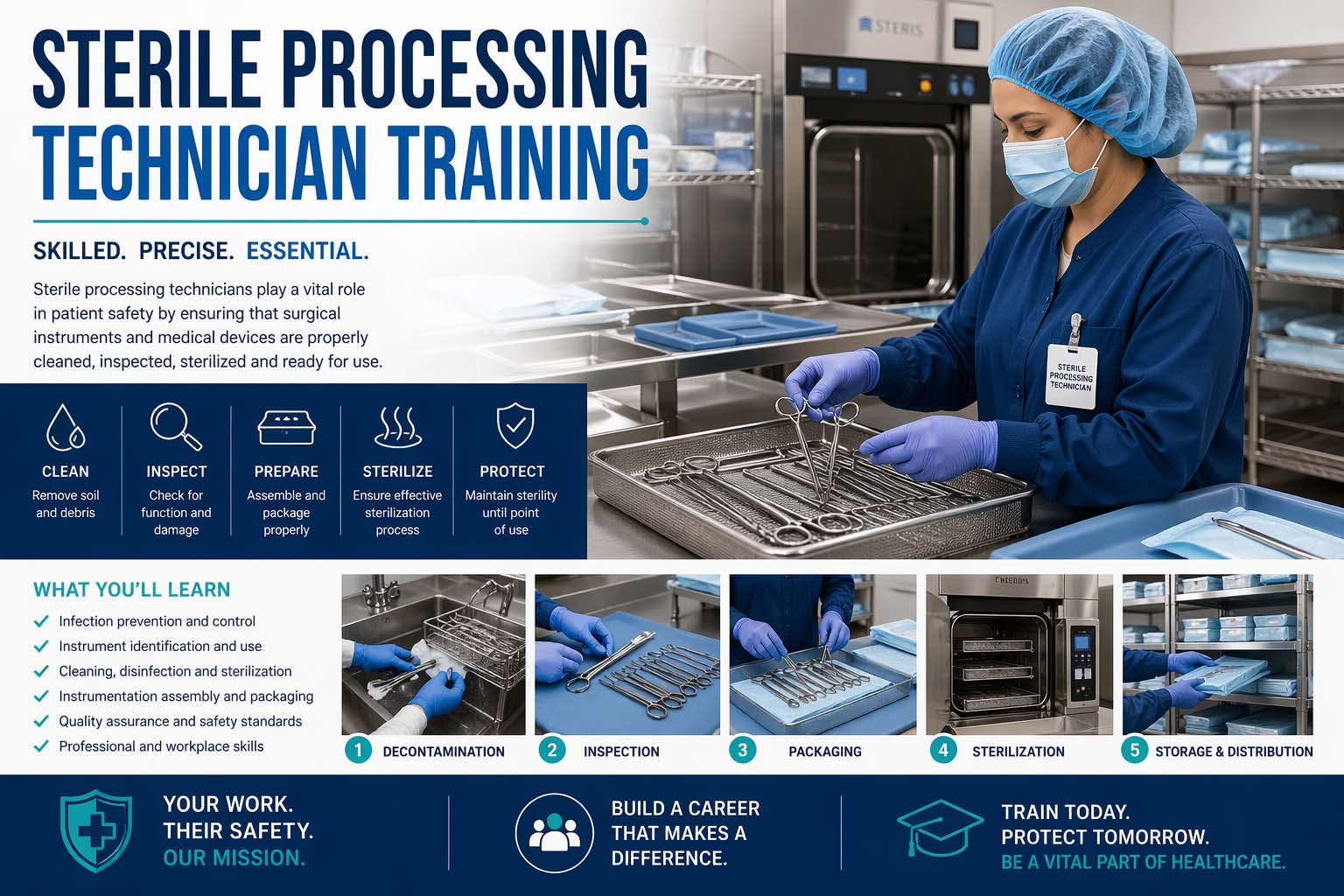
Sterile processing technician training is a program that teaches students how to safely clean, inspect, package, sterilize, store, and deliver medical instruments. As a result, graduates help prevent infections and make sure surgical teams have the tools they need.
Typically, programs cover infection control, decontamination, instrument identification, and sterilization methods. In addition, students learn packaging and storage standards, safety rules, quality assurance, and medical terminology.
Also, many programs include hands-on practice with real equipment used in healthcare settings.
Why Choose This Career?
This path is a smart choice for people who want a stable healthcare job with short education requirements. In fact, the programs are often shorter and cheaper than many medical degrees.
For example, you can enter healthcare quickly and find growing demand in hospitals and clinics. Moreover, the work supports patient care, offers chances to advance, and often comes with flexible schedules.
Overall, this career suits people who value cleanliness, organization, teamwork, and attention to detail.
What You Learn in Training
Students build practical skills that prepare them for real healthcare work. For instance, they learn to inspect surgical tools for damage, wrap instrument trays, and run sterilization machines.
Besides these basics, you may learn how steam and chemical sterilization work and how instrument tracking systems operate. Likewise, you will study how to prevent contamination, complete documentation, and follow OSHA and healthcare safety standards.
These skills matter because mistakes in sterile processing can directly affect patient safety. Therefore, careful records and strict procedures are just as important as the hands-on techniques.
Sterile Processing Technician Training Near Me
Many people start by searching for sterile processing technician training near me. Usually, local options include community colleges, vocational schools, healthcare institutes, and hospital-based programs.
Local programs offer hands-on labs and in-person teaching. Plus, they help you network with nearby employers, find externships more easily, and get face-to-face support from instructors.
Before enrolling, compare tuition, graduation rates, certification pass rates, and employer partnerships.
Sterile Processing Technician Training Online
If you need flexibility, sterile processing technician training online may be the best fit. That is because online programs let you study from home while you balance work or family.
Generally, online courses cover theory topics such as infection prevention, instrument classification, sterilization science, safety rules, and healthcare communication.
In many cases, online schools also arrange externships so students can complete hands-on practice. Still, always check that the school is reputable and respected by employers.
Sterile Processing Technician Training NYC
Healthcare jobs are in high demand in large cities, so sterile processing technician training NYC is a popular search. After all, New York City has many hospitals, surgical centers, and medical institutions that need qualified technicians.
For example, NYC programs may offer access to major healthcare networks and internships in top hospitals. On top of that, students often see faster job placement and gain experience in busy, high-volume settings.
If you live in or near the city, compare schools by location, tuition, exam preparation, and reputation with employers.
Sterile Processing Technician On the Job Training
Some facilities offer sterile processing technician on the job training, so new hires can learn while they work. In these programs, trainees learn directly in a hospital or medical center under experienced supervisors.
As a result, you earn income while learning and gain real-world experience right away. Furthermore, you move into full employment faster and learn daily workflows and standards.
However, some employers still prefer or require formal coursework or certification. For this reason, combining classroom learning with job training can be a powerful path.
If you plan more education while working, learning about What Is Work Study can help you fund future school goals.
Certification and Career Growth
Although certification rules vary by employer and state, many technicians earn professional credentials to improve their job chances. Usually, these come from respected organizations that focus on sterile processing standards.
In particular, certification can boost your hiring chances, build credibility, help you qualify for promotions, and raise your pay in some markets. That is why many programs prepare students for certification exams.
How Long Does Training Take?
The length depends on the program. For example, some certificate programs take only a few months, while others last up to one year.
In general, the timeline depends on full-time or part-time study, online or in-person format, externship rules, and past healthcare experience. Either way, shorter programs help students start working quickly.
Skills for Success
Successful technicians often share key qualities. For instance, they pay close attention to detail, stay organized, and are dependable. Equally important, they follow procedures, stay calm in fast-paced settings, and communicate well with their team.
In fact, communication and emotional awareness are also built through Social Emotional Learning Activities, which help people work well in teams.
Since technicians support surgery and patient treatment, precision is extremely important.
Job Outlook and Salary Potential
Demand for these technicians keeps rising as healthcare facilities expand and infection control stays critical. Consequently, hospitals, outpatient surgery centers, dental offices, and specialty clinics all need trained staff.
Pay depends on experience, certification, location, employer type, and shift schedule. For current wage data, the U.S. Bureau of Labor Statistics lists pay and employment figures for medical equipment preparers, the official job title for this role. Typically, cities and large healthcare systems offer stronger pay.
How to Choose the Best Program
Before enrolling, research each school carefully. First, check whether the curriculum is current and whether it includes certification exam prep.
Next, ask if externships are available and what the tuition and fees are. Finally, find out whether the school offers job placement help and whether local employers hire its graduates.
Ultimately, the right program can strongly shape your future success.
Staying Healthy on the Job
Technicians spend much of their day lifting instrument trays, moving equipment, and doing repetitive tasks. Because of this, learning about the Muscles of the Arm Explained can help you use good body mechanics and lower your risk of injury.
Accurate records are also an important duty. For example, when you record sterilization cycles, inventory counts, or quality checks, knowing when to round to the nearest hundredth keeps your numbers precise.
Conclusion
A career in sterile processing lets you join healthcare quickly and make a real difference behind the scenes. In short, sterile processing technician training teaches the skills you need to keep medical instruments safe, sterile, and ready for patient care.
Whether you choose a local program, an online course, a school in NYC, or on-the-job training, there are many paths to success. So, with the right education, hands-on experience, and commitment to quality, you can build a rewarding and stable healthcare career.