
RBT Competency Assessment Guide
RBT Competency Assessment Guide
The RBT competency assessment is an important step for anyone pursuing or maintaining the credential of Registered Behavior Technician (RBT). This assessment ensures that candidates and certified professionals demonstrate the practical skills required to deliver high-quality behavior analytic services under supervision. Whether you are completing the assessment for the first time or completing a renewal, understanding the process can help you succeed.
For many aspiring technicians, the assessment can feel challenging at first. However, with the right preparation, guidance, and practice, it becomes a valuable opportunity to show your ability to work effectively with clients. In this guide, we will explain what the assessment includes, why it matters, and how to prepare for success.
What Is an RBT Competency Assessment?
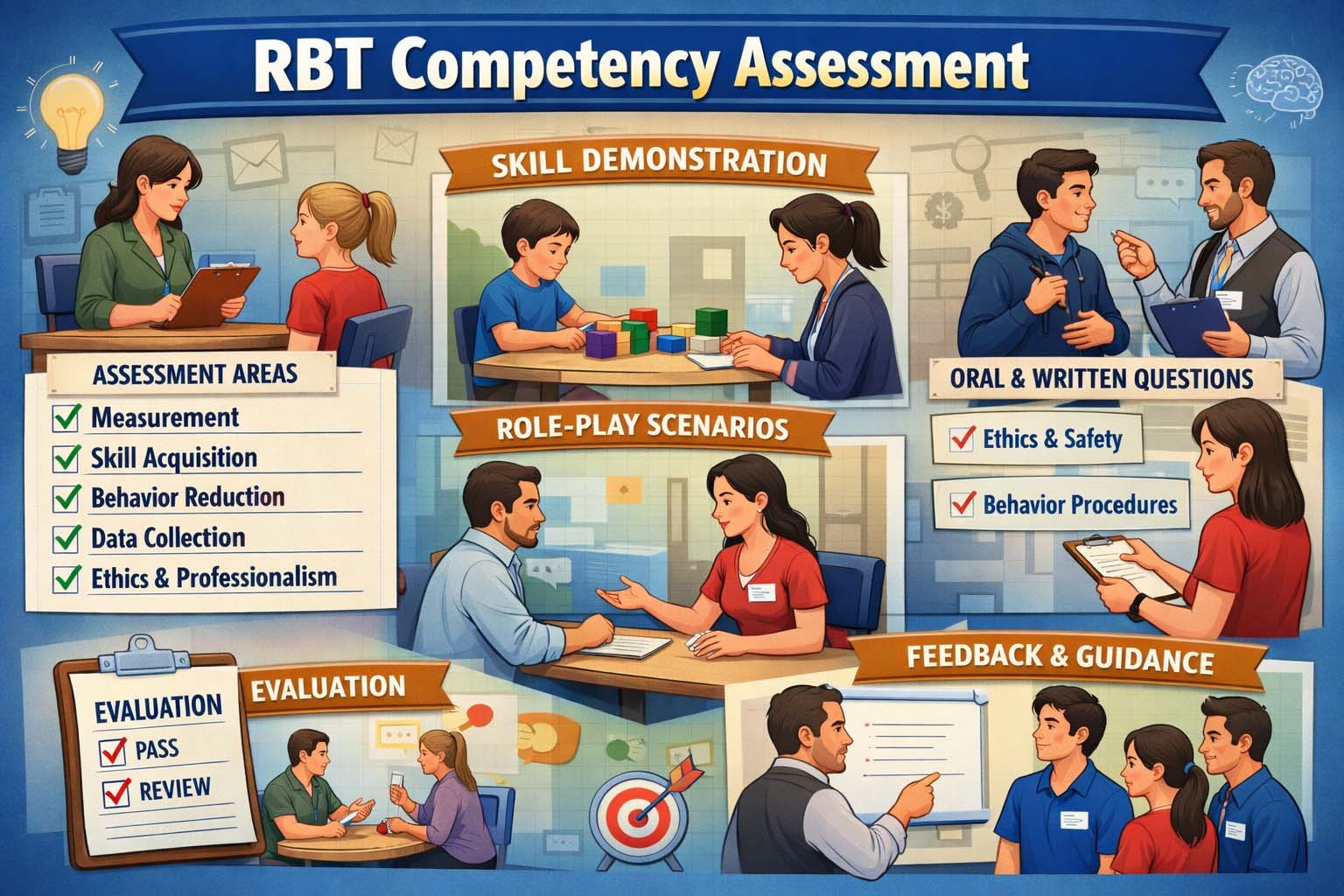
The RBT competency assessment is designed to measure whether a candidate can perform tasks outlined in the RBT Task List. It is completed with a qualified assessor, often a BCBA (Board Certified Behavior Analyst) or another approved supervisor.
This assessment focuses on practical skills rather than written knowledge. Instead of answering multiple-choice questions, candidates demonstrate their ability to implement behavior intervention strategies, collect data, communicate professionally, and follow ethical guidelines.
The goal is to confirm that the individual is ready to provide services safely and effectively under supervision. Accurate observation and careful analysis are essential throughout the evaluation process, much like identifying the correct answer in Which of the Following Statements Is False, where close attention to details is important.
Why the Assessment Is Important
The competency assessment protects both clients and professionals by ensuring technicians possess the hands-on skills necessary to work in applied behavior analysis settings. This is especially important because RBTs often work directly with children and adults who need behavior support.
Employers also value candidates who perform well during the assessment. It shows readiness, professionalism, and commitment to quality care. Completing the assessment successfully is often one of the most significant milestones in an RBT career path.
RBT Initial Competency Assessment
The RBT initial competency assessment is required for individuals applying for the RBT credential for the first time. Before taking the certification exam, candidates must complete this practical skills evaluation with an authorized assessor.
During the initial assessment, candidates may be asked to demonstrate skills such as:
- Data collection methods
- Preference assessments
- Skill acquisition procedures
- Behavior reduction strategies
- Documentation and reporting
- Professional conduct
Many assessors use role-play situations, interviews, or direct observation with clients when appropriate. The purpose is to verify that new applicants can apply what they learned in training to real-world situations.
Preparing for the initial assessment usually involves reviewing training materials, practicing scenarios, and asking supervisors for feedback.
RBT Renewal Competency Assessment
Once certified, RBTs must maintain their credential by meeting renewal requirements. One of these steps may include the RBT renewal competency assessment, depending on current certification standards and timelines.
This renewal process helps ensure that RBTs continue to perform skills correctly after gaining real-world experience. It also reinforces updated best practices, ethics, and professional standards.
Experienced RBTs often find the renewal process easier because they use these skills daily. However, it is still wise to review core procedures, data accuracy, and communication techniques before the assessment date.
Competency Assessment RBT Requirements
The competency assessment RBT process generally involves direct demonstration of skills from the official task list. Candidates must perform tasks competently and consistently. Assessors may score each skill as completed successfully or requiring additional practice.
Common areas assessed include:
Measurement Skills
RBTs must collect accurate data during sessions. This may include frequency, duration, latency, and interval recording methods.
Assessment Skills
Candidates may demonstrate preference assessments or assist with functional assessment procedures under supervision.
Skill Acquisition
This includes teaching replacement behaviors, using prompting strategies, and reinforcing appropriate responses.
Behavior Reduction
RBTs must show they can implement behavior intervention plans safely and consistently.
Documentation
Accurate session notes and professional communication are critical components of the role.
Tips to Pass the Assessment
Success comes from preparation and confidence.
Here are effective strategies:
Review the Task List
Study each item carefully so you understand what skills may be tested.
Practice With Supervisors
Ask a BCBA or senior staff member to run mock scenarios. Practice improves confidence.
Focus on Professionalism
Dress appropriately, communicate clearly, and remain calm during the evaluation.
Ask Questions
If instructions are unclear, politely ask for clarification before starting.
Stay Organized
Bring required paperwork, identification, and any materials requested by your assessor.
Strong communication, patience, and empathy are valuable professional qualities that are also emphasized in Social Emotional Learning Activities, making these skills beneficial in both educational and clinical settings.
RBT Competency Assessment Renewal Preparation
The RBT competency assessment renewal process is often smoother when you treat it as a refresher rather than a test. Review common procedures you use daily and identify any areas where habits may have slipped over time.
For example, many experienced technicians benefit from reviewing precise data collection methods or updated ethics requirements. A little preparation can make a big difference and help you complete the renewal efficiently.
Common Mistakes to Avoid
Some candidates struggle because they underestimate the importance of preparation. Others rush through demonstrations without showing each step clearly.
Avoid these common mistakes:
- Forgetting to explain procedures
- Recording inaccurate data
- Missing reinforcement opportunities
- Poor communication with the assessor
- Ignoring ethical considerations
- Appearing unprepared or disorganized
Being calm and methodical is usually more effective than trying to move quickly.
Benefits of Passing the Assessment
Completing the competency assessment successfully offers several advantages:
- Progress toward RBT certification
- Continued credential renewal
- Increased job opportunities
- Greater confidence in service delivery
- Stronger professional reputation
As you build professional qualifications, understanding career-related topics such as What Is Work Study can also be helpful if you plan to continue your education while gaining practical experience.
Employers appreciate technicians who demonstrate both knowledge and skill.
Maintaining Long-Term Professional Skills
Passing the assessment is only the beginning. Successful RBTs continue improving their observation, communication, documentation, and intervention skills throughout their careers.
Maintaining good physical health is also important, especially for professionals who spend long periods assisting clients during therapy sessions. Learning about the Muscles of the Arm Explained can help you better understand the muscles commonly used during lifting, positioning, and everyday workplace activities.
When recording behavioral data or calculating percentages and averages, using accurate mathematical methods—such as Round to the Nearest Hundredth when appropriate—helps ensure documentation remains clear and reliable.
Conclusion
The RBT competency assessment is a key requirement for becoming and remaining a Registered Behavior Technician. Whether you are completing the RBT initial competency assessment for the first time or preparing for the RBT renewal competency assessment, preparation is the best path to success.
By reviewing the task list, practicing real scenarios, and focusing on professionalism, you can perform confidently and meet expectations. Think of the assessment not only as a certification requirement but also as proof of your ability to provide safe, effective, and high-quality support to the individuals you serve.