
Difference Between Tone and Mood
Difference Between Tone and Mood
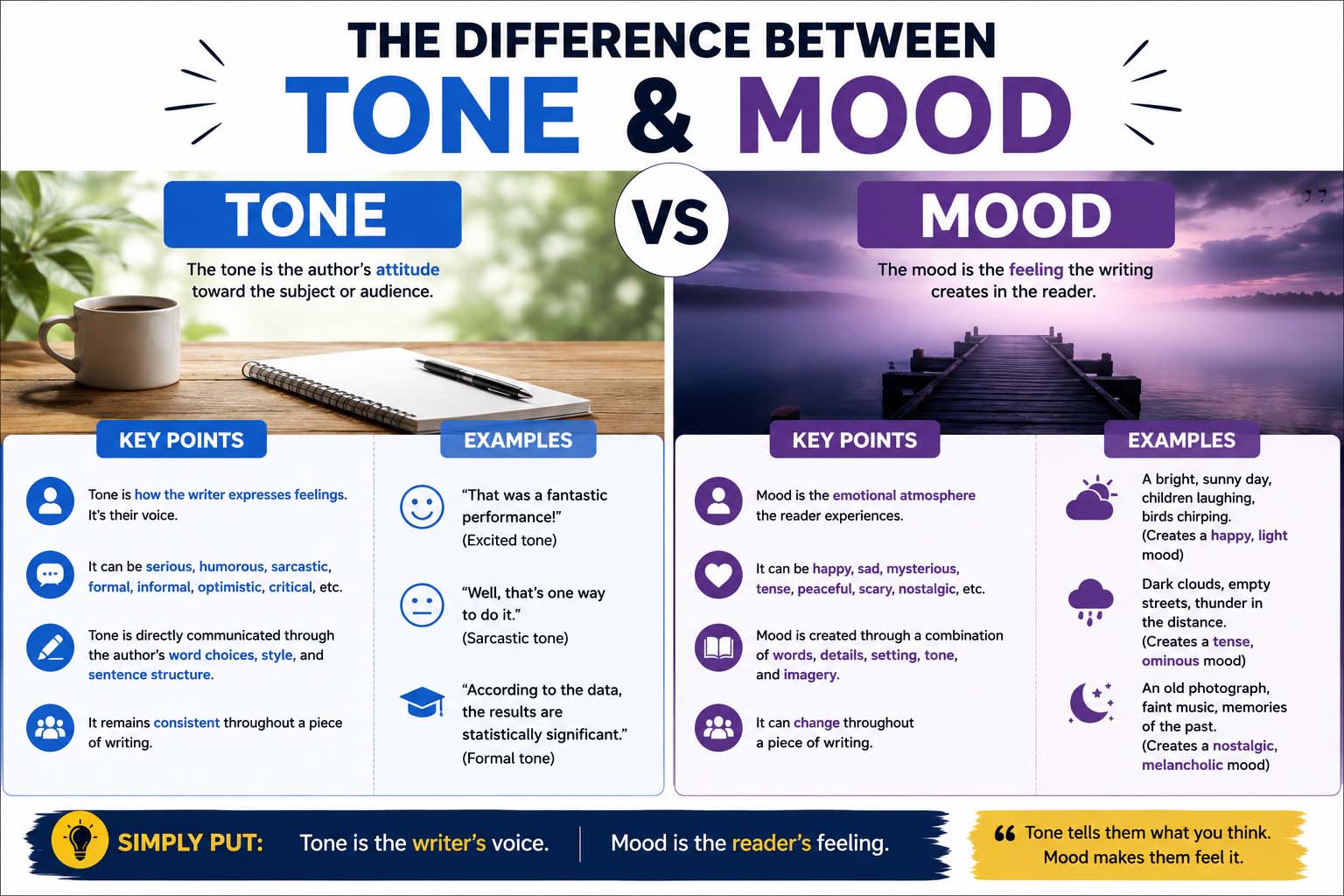
If you’ve ever asked yourself about the difference between tone and mood, you’re not alone. These two literary terms often appear together in English classes, reading assignments, and exams because they work closely together. Even so, they have different meanings. Tone reflects the author’s attitude toward a subject, while mood describes the feeling a reader experiences while reading.
Once you understand this distinction, analyzing stories, poems, speeches, and articles becomes much easier. Whether you’re preparing for a classroom discussion or improving your reading skills, learning the difference between these concepts will help you become a more confident reader and writer.
What Is the Difference Between Tone and Mood?
The easiest way to answer what is the difference between tone and mood is to remember who creates each one.
- Tone is the author’s attitude toward the topic, characters, or audience.
- Mood is the emotional atmosphere that the reader experiences.
Although tone influences mood, they are not the same thing.
| Tone | Mood |
|---|---|
| Expresses the writer’s attitude | Expresses the reader’s emotional response |
| Created through word choice and style | Created through setting, imagery, dialogue, and tone |
| Belongs to the author | Experienced by the reader |
| Can be humorous, serious, critical, or hopeful | Can feel exciting, mysterious, peaceful, or frightening |
This simple comparison helps students quickly recognize which literary element they are identifying.
Understanding Tone
Tone is the author’s opinion or attitude expressed through writing.
Writers rarely state their attitude directly. Instead, they reveal it through vocabulary, sentence structure, descriptions, dialogue, and details.
For example, imagine these two sentences:
“The classroom buzzed with excited conversations before the science fair.”
“The classroom echoed with endless chatter that distracted everyone.”
Both describe the same situation, yet the author’s attitude changes because of the word choices.
The first sentence sounds positive and encouraging.
The second sounds annoyed or critical.
That’s tone.
When studying literature, you’ll also encounter many other literary devices. Understanding What Is Figurative Language can make it easier to recognize how authors use imagery, symbolism, and descriptive language to establish a particular tone.
Common Types of Tone
Authors use many different tones depending on their purpose.
Some common examples include:
- Friendly
- Optimistic
- Serious
- Humorous
- Formal
- Informal
- Suspenseful
- Sympathetic
- Critical
- Hopeful
- Curious
- Encouraging
The same writer may even change tone several times throughout one story.
Understanding Mood
Mood is the emotional feeling that readers experience while reading.
Unlike tone, mood belongs to the audience rather than the author.
A mystery novel may create suspense.
A fairy tale may create wonder.
A tragedy may create sadness.
Authors carefully choose settings, sensory details, pacing, and dialogue to encourage certain emotional responses.
Common Examples of Mood
Readers often describe mood using words like:
- Peaceful
- Cheerful
- Nervous
- Mysterious
- Lonely
- Romantic
- Exciting
- Tense
- Hopeful
- Frightening
Different readers may experience slightly different emotions, but skilled writers guide readers toward a similar feeling.
Difference Between Mood and Tone in Everyday Language
The difference between mood and tone isn’t limited to novels or poems.
You encounter both every day.
Imagine receiving this text message:
“Nice job…”
Depending on the punctuation and context, the tone might sound sincere, sarcastic, or disappointed.
Your emotional reaction—perhaps happiness, confusion, or frustration—is the mood.
This simple example shows why both concepts matter in daily communication as well as literature.
How Authors Create Tone and Mood
Authors use several writing techniques to shape both elements.
Word Choice
Specific vocabulary immediately affects the reader’s interpretation.
Words such as bright, warm, and welcoming often create positive feelings.
Words like dark, cold, and silent often create a more serious or unsettling atmosphere.
Setting
The location plays a major role.
A sunny beach naturally creates a different mood than an abandoned house during a thunderstorm.
Dialogue
Characters reveal tone through the way they speak.
Supportive conversations may create a comforting mood, while hostile arguments often increase tension.
Imagery
Sensory details help readers imagine the scene.
Descriptions involving sounds, colors, smells, and textures make emotions feel more realistic.
If you’re analyzing literary techniques, studying a Metaphor in a Sentence can also help you see how figurative language contributes to both tone and mood.
What’s the Difference Between Tone and Mood in Literature?
Many students ask, what’s the difference between tone and mood when reading novels because both often appear together.
Here’s a simple example.
“The old cabin stood alone beneath gray clouds as icy wind rattled the broken windows.”
The author’s careful word choices suggest a serious or ominous tone.
As readers, we may feel nervous or uneasy.
Notice how the tone helps create the mood without becoming the same thing.
Why Students Often Confuse These Concepts
Several reasons make these literary terms difficult at first.
First, tone and mood usually appear together.
Second, both involve emotions.
Third, classroom assignments often ask students to identify both within the same passage.
The easiest way to remember the distinction is this:
Tone belongs to the writer.
Mood belongs to the reader.
Keeping that simple rule in mind helps eliminate much of the confusion.
Tone, Mood, and the Author’s Purpose
Tone supports the author’s overall purpose.
Someone writing a humorous story may use playful language.
Someone explaining scientific facts may choose a neutral tone.
As you improve your reading skills, you’ll also notice that tone supports What Is a Central Idea by reinforcing the message the author wants readers to understand. When tone and the central idea work together, the writing becomes clearer and more memorable.
Recognizing Tone and Mood Step by Step
If you’re unsure while reading, follow this simple process.
- Identify descriptive words.
- Ask yourself how the author feels about the topic.
- Decide which tone best matches that attitude.
- Ask how the passage makes you feel.
- Identify the mood using emotional vocabulary.
With regular practice, identifying both literary elements becomes much faster and more accurate.
Classroom Examples of Tone and Mood
Let’s look at a few simple examples that students might see in class.
| Passage | Tone | Mood |
|---|---|---|
| “The children laughed as colorful kites filled the sky.” | Joyful | Happy |
| “Rain tapped against the empty house while every light remained off.” | Serious | Lonely |
| “The coach smiled proudly after the team’s hard work paid off.” | Encouraging | Inspired |
| “The old path disappeared into thick fog without a sound.” | Suspenseful | Nervous |
Notice that the tone describes the author’s attitude, while the mood describes how the passage makes the reader feel.
How Tone and Mood Change Across Different Genres
Every genre uses tone and mood differently.
A horror novel often creates fear or suspense through dark descriptions and slow pacing.
A comedy usually has a lighthearted or playful tone that encourages laughter.
Historical fiction may use a respectful or reflective tone while creating feelings of curiosity or admiration.
Even nonfiction writing uses tone. A textbook generally sounds objective, while an opinion article may sound persuasive or passionate.
Understanding these differences also helps students recognize how authors adapt their style for different types of writing, from creative stories to informational essays.
Common Mistakes Students Make
Many learners mix up tone and mood because both involve emotions. Knowing the most common mistakes can help you avoid them.
Confusing the Author With the Reader
The biggest mistake is forgetting who each term belongs to.
Remember:
- Tone = the author’s attitude
- Mood = the reader’s emotional response
Looking at Only One Sentence
Sometimes a single sentence does not reveal the full tone or mood.
Instead, read an entire paragraph or chapter before deciding. Authors often build emotions gradually.
Ignoring Context
Words can change meaning depending on the situation.
For example, the phrase “What a surprise!” could sound excited, sarcastic, or disappointed depending on the surrounding details.
Always consider the complete context before identifying tone.
Study Tips for Identifying Tone and Mood
The more you practice, the easier these concepts become.
Try these strategies:
- Highlight descriptive words while reading.
- Circle words that reveal the author’s attitude.
- Write one word that describes your emotional reaction.
- Compare your answer with classmates or teachers.
- Read short stories from different genres to see how tone changes.
You can also create flashcards with common tone words and mood words to build your vocabulary.
Tone and Mood vs. Other Literary Devices
Students often compare tone and mood with other literary concepts.
For example, understanding the difference between metaphor and simile can help you recognize how authors create vivid imagery. Those comparisons make descriptions more powerful, which often strengthens both the tone and the mood of a passage.
Although these literary terms work together, each has its own purpose. Learning how they connect makes reading analysis much easier.
A Quick Checklist Before You Answer
When a teacher asks about tone or mood, pause and ask yourself these questions.
To Identify Tone
- What attitude does the author show?
- Which words reveal that attitude?
- Does the writing sound positive, negative, humorous, serious, or something else?
To Identify Mood
- How did the passage make me feel?
- Which details created that feeling?
- Would another reader probably experience a similar emotion?
Using this checklist during reading assignments can improve both accuracy and confidence.
Practice Activity
Read the short passage below.
“Leaves drifted across the empty playground as the sun disappeared behind dark clouds. The swings moved gently in the cold wind.”
Now answer these questions.
- What attitude does the author seem to have?
- How do you feel while reading?
- Which words influenced your answer?
A possible response is:
- Tone: Quiet and slightly serious.
- Mood: Lonely or mysterious.
There can be more than one reasonable answer if you support it with evidence from the text.
Frequently Asked Questions
What is the difference between mood and tone?
The difference between mood and tone is that tone reflects the author’s attitude, while mood is the emotional response experienced by the reader.
What is the difference between tone and mood?
Tone belongs to the writer and is shown through language and style. Mood belongs to the reader and is created through the author’s descriptions, setting, dialogue, and imagery.
Can one story have more than one tone?
A novel might begin with a cheerful tone before becoming serious during a conflict.
Can readers experience different moods?
Yes. While authors guide readers toward a particular feeling, personal experiences may influence how different people respond to the same text.
Why do teachers ask about tone and mood?
These concepts help students think beyond the basic plot. Identifying tone and mood develops stronger reading comprehension, critical thinking, and literary analysis skills.
Key Takeaways for Students
Understanding the difference between tone and mood makes reading more meaningful because you begin to notice how authors communicate ideas and emotions at the same time.
Whenever you’re unsure, remember one simple rule: tone belongs to the author, while mood belongs to the reader. Then look closely at the author’s word choice, setting, dialogue, and descriptive details to support your answer with evidence.
As you continue reading different genres, identifying these literary elements will become more natural. Practice with short passages, discuss your ideas with classmates, and pay attention to how writers create emotional effects. Over time, you’ll find it much easier to answer questions about what is the difference between mood and tone and explain your reasoning with confidence.