
What Is a Narrative Essay? A Complete Guide for Students
What Is a Narrative Essay? A Complete Guide for Students
Writing is one of the most important academic skills students develop throughout their education. Among the many types of essays assigned in schools and colleges, the narrative essay is one of the most engaging and personal. Students often ask, what is a narrative essay, especially when they are first introduced to creative and reflective writing assignments.
In simple terms, this type of writing tells a story from the writer’s point of view. Unlike research papers or argumentative essay examples, it focuses on personal experiences, real-life events, or meaningful moments. The goal is not only to describe what happened but also to share emotions, lessons learned, and personal growth.
Understanding What Is a Narrative Essay
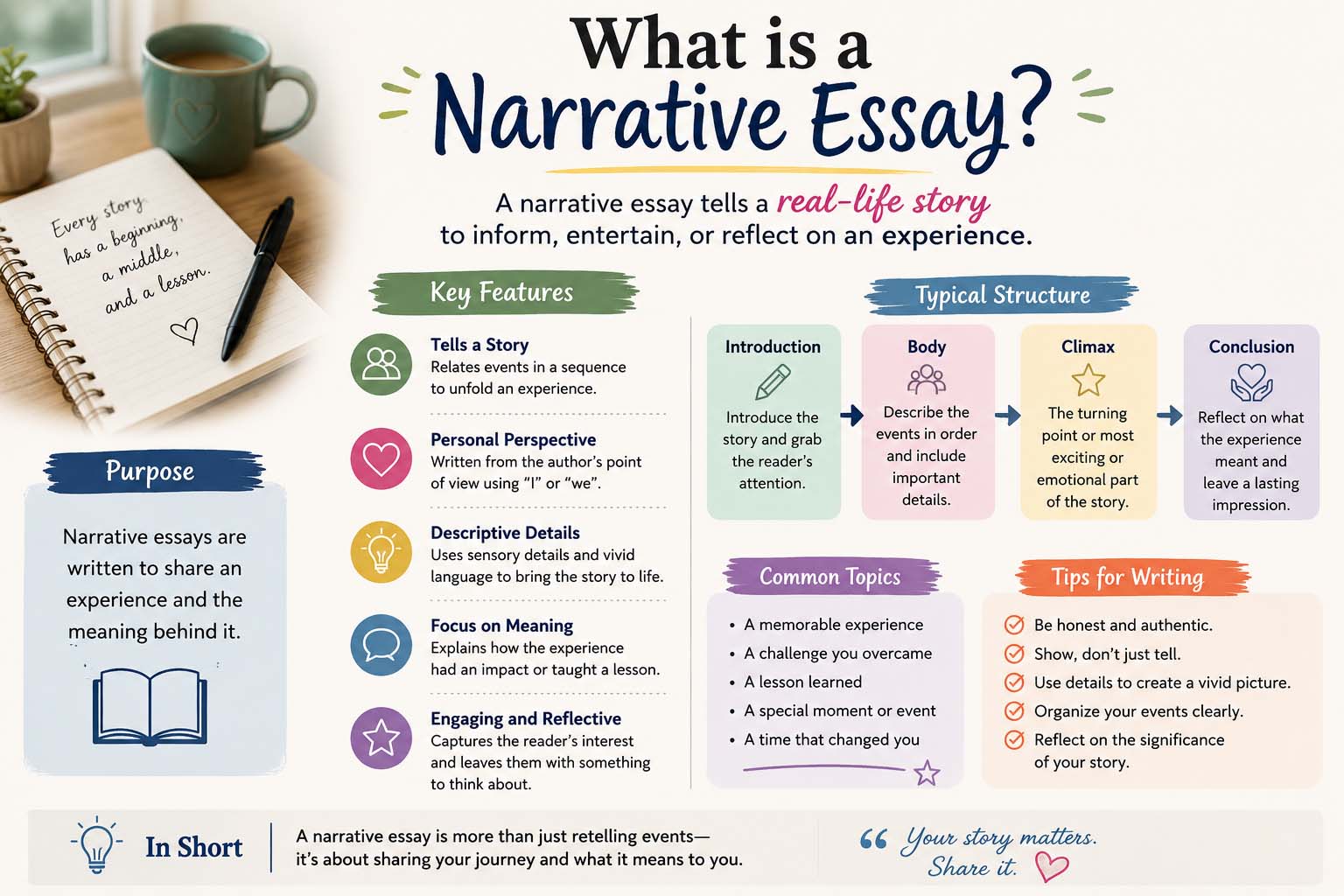
Basically, it is a form of academic writing that tells a story. The story can be based on a personal experience, an observed event, or a meaningful memory. Writers often use descriptive language, sensory details, and a clear sequence of events.
Its purpose is to engage readers while communicating a message or lesson. Unlike fictional stories, most of these essays are based on real experiences.
Why Narrative Essays Are Important in Education
Story-based essays help students improve several valuable skills.
First, they encourage critical thinking by requiring students to reflect on experiences and identify lessons learned. In addition, they strengthen communication skills by teaching writers how to organize ideas effectively.
Understanding story structure also improves reading comprehension, helping students identify concepts such as What Is a Central Idea when analyzing texts in school.
What Is a Personal Narrative Essay?
One common question students ask is, what is a personal narrative essay?
This kind of essay focuses specifically on the writer’s own experiences. The writer becomes the main character of the story and describes events from a first-person perspective using words such as “I,” “me,” and “my.”
Common topics include:
- Important life lessons
- Memorable achievements
- Challenges overcome
- Travel experiences
- Educational milestones
- Family events
For example, a student may write about their first day at a new school, a sports competition, or a volunteer experience that changed their perspective on life.
The emphasis is not only on the event itself but also on what the writer learned from the experience.
What Is a Narrative Essay Example?
Many learners understand concepts better when they see examples. Therefore, students frequently ask, what is a narrative essay example?
Imagine a student writing about overcoming stage fright before delivering a school presentation.
First, the essay might describe feelings of nervousness before speaking. Next, the middle section would explain the preparation and the actual presentation. Finally, the conclusion would discuss how completing the presentation increased the student’s confidence.
This type of essay tells a story while demonstrating personal growth and reflection.
Other good topics include:
- A memorable vacation
- A challenging obstacle
- A meaningful friendship
- Learning a new skill
- A life-changing experience
The key is to focus on a specific event rather than trying to tell an entire life story.
What Is a Literacy Narrative Essay?
Another related topic is what is a literacy narrative essay?
This type of essay focuses on experiences related to reading, writing, language, communication, or education. It explores how literacy has influenced a person’s life.
For example, a literacy narrative may discuss:
- Learning to read as a child
- Discovering a favorite book
- Overcoming reading difficulties
- Learning a second language
- Developing writing skills
These essays help students reflect on how communication and education have shaped their personal development.
Literacy narratives are particularly common in college composition courses because they encourage self-reflection and critical thinking.
What Is the Structure of a Narrative Essay?
One of the most important questions students ask is, what is the structure of a narrative essay?
A well-organized essay of this kind usually follows a simple structure.
Introduction
The introduction captures the reader’s attention and introduces the story.
A strong introduction may include:
- A surprising statement
- A vivid description
- A question
- A brief overview of the event
The introduction should establish the setting and create interest.
Body Paragraphs
The body contains the main events of the story.
Events should be presented in chronological order whenever possible. Each paragraph should focus on a specific stage of the narrative.
Writers should use descriptive language and sensory details to help readers visualize the experience. Learning about Types of Writing can also help writers choose the most effective style for telling their stories.
Conclusion
The conclusion explains the significance of the experience.
Rather than simply ending the story, the writer should reflect on what was learned and why the event mattered.
This final reflection gives meaning to the narrative and leaves a lasting impression on readers.
Step-by-Step Guide to Writing a Narrative Essay
Writing your story becomes easier when you follow a clear process.
Step 1: Choose a Meaningful Topic
Select an experience that had a personal impact or taught an important lesson.
Step 2: Create an Outline
Plan the introduction, key events, and conclusion before writing. A simple outline keeps your story focused and well organized.
Step 3: Write the First Draft
Focus on telling the story naturally without worrying too much about perfection.
Step 4: Add Descriptive Details
Use sensory descriptions to make the story more engaging.
Step 5: Include Reflection
Explain what the experience taught you and why it matters.
Step 6: Revise and Edit
Review grammar, organization, clarity, and sentence structure before submitting the essay.
Common Mistakes Students Should Avoid
Many students make similar mistakes when writing stories. For example, some try to cover too many events instead of one clear moment.
Another mistake is including unnecessary details that distract from the main message.
Students should also avoid simply listing events without reflecting on their significance.
In the end, the most effective essays combine storytelling with thoughtful reflection.
Tips for Writing an Outstanding Narrative Essay
A successful story essay should feel authentic and engaging. Purdue OWL also offers a helpful guide to writing narrative essays with clear tips.
Write in your own voice and focus on genuine experiences. Use clear transitions between events so readers can easily follow the story.
Adding dialogue, vivid descriptions, and emotional details can make the narrative more interesting. Using examples of adverbs naturally can also improve descriptions by showing how actions happen without making the writing feel repetitive.
Most importantly, explain how the experience influenced your thoughts, feelings, or future decisions.
Frequently Asked Questions
What is a narrative essay?
It is a type of essay that tells a story, usually based on a personal experience, while conveying a lesson or meaningful message.
What is a personal narrative essay?
It focuses on the writer’s own experiences and is written from a first-person perspective.
What is the structure of a narrative essay?
The typical structure includes an introduction, body paragraphs describing events, and a conclusion with reflection and lessons learned.
What is a literacy narrative essay?
It explores experiences related to reading, writing, language, communication, or education.
How long should a narrative essay be?
The length varies depending on assignment requirements, but most academic ones range from 500 to 1,500 words.
Conclusion
Understanding what is a narrative essay is essential for students who want to improve their writing skills and express personal experiences effectively. These essays combine storytelling with reflection, allowing writers to share meaningful events while demonstrating growth and learning.