
What Should I Major In? A Complete Student Guide to Choosing the Right College Major
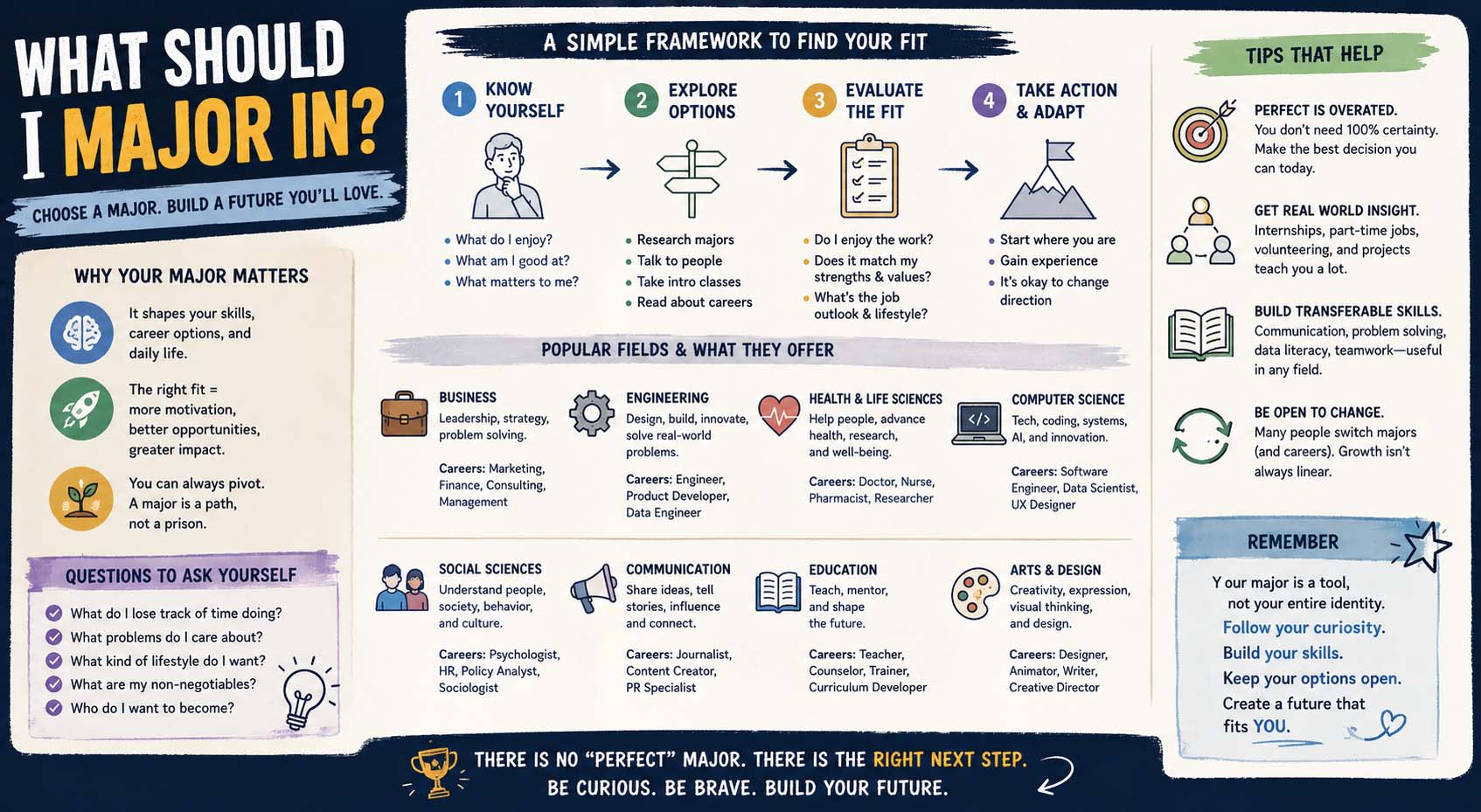
What Should I Major In? A Complete Student Guide to Choosing the Right College Major
Choosing a college major is one of the biggest decisions students make during their educational journey. Many students feel confused when thinking about future careers, personal interests, and academic strengths at the same time. This is why the question “what should I major in” is one of the most searched education topics online.
The good news is that choosing a major does not have to feel overwhelming. With the right strategy, students can identify subjects they enjoy while also exploring strong career opportunities.
Why Choosing the Right Major Matters
A college major influences the classes students take, the skills they develop, and the career paths available after graduation. While a major does not completely determine someone’s future, it can shape important opportunities.
Students who choose majors that match their interests and abilities often feel more motivated and confident in school. They may also perform better academically because they enjoy the subjects they study.
How to Start Choosing a Major
The first step is self-evaluation. Students should think carefully about what subjects they enjoy and what activities naturally interest them.
Questions to consider include:
- What classes do I enjoy most?
- What skills come naturally to me?
- Do I prefer creative or analytical work?
- What careers sound exciting?
- What kind of lifestyle do I want in the future?
These questions help students identify patterns in their interests and strengths.
Research is also important. Learning about different industries, salaries, and career growth opportunities can provide useful direction.
What Should I Major In Quiz Options
Many students use online tools such as a “what should I major in quiz” to explore possible academic paths. These quizzes ask questions about personality, interests, hobbies, and career preferences.
While quizzes are not perfect, they can help students discover majors they may not have considered before.
Some quizzes focus on personality compatibility, while others emphasize job market trends and salary potential.
What Should I Major In College Quiz Free Resources
There are many websites offering a “what should I major in college quiz free” experience for students exploring career options.
Free quizzes are especially useful for high school students who are just beginning the college planning process. They provide quick insights into areas such as:
- Technology
- Business
- Healthcare
- Education
- Engineering
- Arts and design
- Science
- Communication
Career counselors and teachers often recommend combining quiz results with personal conversations about goals and interests.
Students should also remember that majors can lead to multiple career paths, not just one specific job.
Popular College Majors in 2026
Career trends continue changing every year. In 2026, several majors remain highly popular because of strong job demand and career flexibility.
Business
Business majors learn management, marketing, finance, and entrepreneurship skills. This major offers broad career opportunities in many industries.
Computer Science
Technology careers continue growing rapidly. Computer science majors study programming, cybersecurity, artificial intelligence, and software development.
Healthcare
Healthcare-related majors remain popular due to increasing medical demand worldwide.
Engineering
Engineering provides strong salaries and technical career paths in industries such as construction, robotics, and renewable energy.
Psychology
Psychology helps students understand human behavior and communication. Many students combine psychology with counseling, education, or business careers.
What Should I Major In to Become an Ultrasound Technician?
Students often ask “what should I major in to become an ultrasound technician” because healthcare careers continue growing in popularity.
Most ultrasound technicians study diagnostic medical sonography or related healthcare programs. These programs teach students how to operate imaging equipment and assist doctors with medical diagnoses.
Courses usually include anatomy, patient care, medical terminology, and ultrasound imaging techniques.
Many colleges offer associate or bachelor degree programs specifically designed for sonography careers. Certification and clinical training are often required as well.
Healthcare technology careers remain attractive because they combine stable employment opportunities with meaningful patient interaction.
Step-by-Step Guide to Choosing a Major
Students who feel uncertain can follow a simple step-by-step process.
Step 1: Identify Interests
Write down favorite subjects, hobbies, and activities.
Step 2: Explore Career Paths
Research jobs connected to those interests and learn about salaries and work environments.
Step 3: Take Career or Major Quizzes
Use quizzes to discover additional academic options.
Step 4: Talk to Advisors
Teachers, counselors, and college advisors can provide useful guidance.
Step 5: Consider Job Demand
Research industries with strong future growth and career stability.
Step 6: Stay Flexible
Remember that many careers value transferable skills, not only specific majors.
Common Mistakes Students Make
One common mistake is choosing a major only because friends or family recommend it. Personal interest and motivation are important for long-term success.
Another issue is focusing only on salary without considering work satisfaction. A high-paying career may still feel stressful or unfulfilling if it does not match personal strengths.
Some students also panic if they feel undecided. In reality, many college students change majors after gaining more experience.
Exploration is a normal part of education.
How Colleges Support Undecided Students
Many colleges offer “undeclared” or “exploratory” programs for students who are unsure about majors.
These programs allow students to complete general education courses while exploring different subjects before making a final decision.
Career centers, academic advisors, internships, and mentorship programs also help students learn more about potential career paths.
Modern universities increasingly encourage flexibility and interdisciplinary learning.
Balancing Passion and Career Opportunities
Students often wonder whether they should follow passion or choose a practical career path. The best approach is usually finding balance between the two.
For example, someone who enjoys creativity and technology might explore graphic design, digital marketing, or game development.
A student who likes helping others and science may consider nursing, healthcare administration, or sonography.
Successful careers often develop when personal interest and market demand work together.
FAQ About What Should I Major In
What should I major in if I do not know what career I want?
Start by exploring your interests, strengths, and favorite subjects. General majors like business or communication can also provide flexibility.
Are major quizzes accurate?
Quizzes can provide helpful suggestions, but they should not be the only factor in your decision.
What should I major in to become an ultrasound technician?
Most students study diagnostic medical sonography or related healthcare programs.
Is it okay to change majors?
Yes. Many students change majors during college after discovering new interests or career goals.
Do employers care about your major?
Some careers require specific majors, but many employers also value skills, internships, and experience.
Conclusion
The question “what should I major in” is important, but it does not need to create fear or pressure. Choosing a major is a process of learning about yourself, exploring opportunities, and developing long-term goals.
By researching careers, taking major quizzes, talking with advisors, and staying open to new experiences, students can make more confident academic decisions. Whether someone chooses business, healthcare, technology, or creative studies, the best major is often the one that combines personal interest with future opportunity.