
What Is a Good GPA? A Complete Student Guide
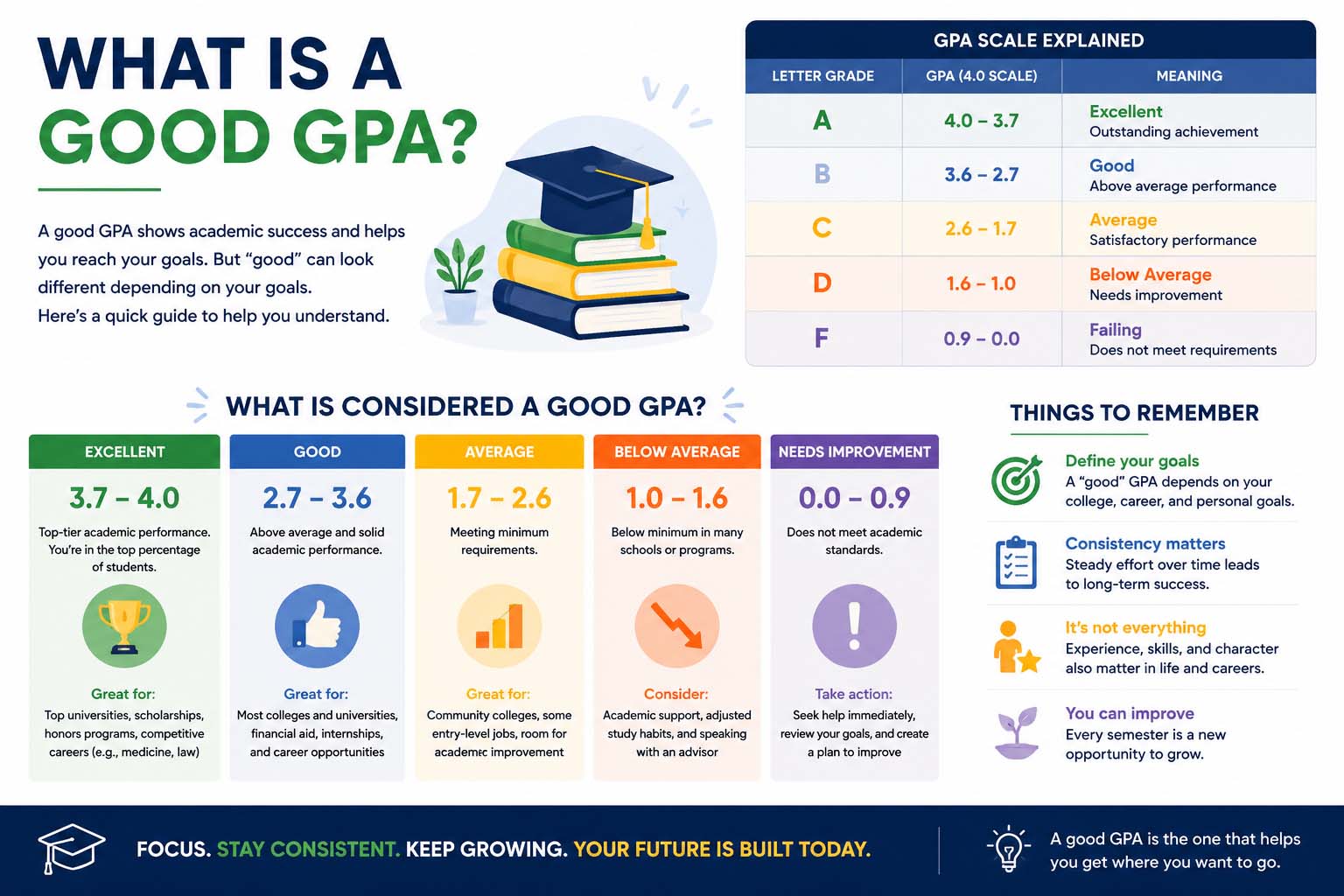
What Is a Good GPA? A Complete Student Guide
Many students ask the question, “what is a good GPA?” because grades play an important role in education, college admissions, scholarships, and future career opportunities.
GPA, which stands for Grade Point Average, measures academic performance using a numerical scale. Schools and colleges use to evaluate how well students perform in their classes over time.
A good depends on several factors, including academic goals, school requirements, scholarship expectations, and career plans. In general, higher GPAs create more opportunities for students applying to colleges, internships, or competitive programs.
What Is GPA?
GPA is a number that represents a student’s average grades across subjects.
| Letter Grade | GPA Value |
|---|---|
| A | 4.0 |
| B | 3.0 |
| C | 2.0 |
| D | 1.0 |
| F | 0.0 |
For example, a student earning mostly A grades will usually have a GPA close to 4.0.
Some schools also use weighted GPAs, which give additional points for advanced or honors classes.
Understanding helps students track academic progress and set realistic goals. If you’re unsure how grades are calculated across multiple classes, learning How to Find the Average can also make calculations easier to understand.
What Is Considered a Good GPA?
When students ask “what is considered a good GPA,” the answer often depends on the situation.
Generally:
- 4.0 GPA = Excellent
- 3.5 GPA or higher = Very good
- 3.0 GPA = Good
- 2.5 GPA = Average
- Below 2.0 = Needs improvement
Many colleges and scholarship programs consider a above 3.0 to be competitive.
However, highly selective universities may expect GPAs closer to 3.7 or 4.0.
A good is not only about perfect grades. It also reflects consistency, effort, and academic growth.
What Is a Good GPA in High School?
One of the most common student questions is: What is a good GPA in high school?
In high school, a between 3.0 and 3.5 is generally considered good. Students with GPAs above 3.7 are often viewed as highly competitive for college admissions.
High school matters because colleges use it to evaluate academic ability.
GPA Expectations by Goal
| Goal | Recommended GPA |
|---|---|
| Basic college admission | 2.5–3.0 |
| Competitive universities | 3.5+ |
| Scholarships | 3.5–4.0 |
| Honors programs | 3.7+ |
Students should also remember that colleges often review:
- Course difficulty
- Extracurricular activities
- Test scores
- Personal essays
- Leadership experience
A strong combined with well-rounded activities creates better opportunities. Understanding What Is a Passing Grade can also help students set realistic academic targets throughout high school.
What Is a Good GPA in College?
Another important question is: “what is a good GPA in college?”
College expectations vary by major, university, and career goals.
Generally:
- 3.0 GPA = Solid performance
- 3.5 GPA = Strong academic achievement
- 3.7+ GPA = Excellent for graduate school or internships
Some industries, such as medicine, law, engineering, and finance, may expect higher GPAs.
For example:
- Medical schools often prefer GPAs above 3.6.
- Competitive internships may require 3.5+.
- Graduate programs frequently look for 3.0 or higher.
A good college can help students qualify for internships, scholarships, and future job opportunities. Students planning to continue their education may also benefit from understanding What Is a Master’s Degree and its admission requirements.
What Is a Good College GPA for Jobs?
Students often worry about when applying for jobs after graduation.
Many employers focus more on:
- Skills
- Experience
- Communication
- Leadership
- Problem-solving ability
However, some companies still ask for during hiring, especially for entry-level positions.
A GPA above 3.0 is usually considered strong enough for most employers.
For highly competitive industries, a above 3.5 may provide an advantage.
Over time, work experience becomes more important than GPA.
How GPA Is Calculated
Understanding calculation helps students manage their academic goals.
Step 1: Convert Grades to Points
Each letter grade receives a numerical value.
Step 2: Multiply by Credit Hours
Classes with more credit hours affect more heavily.
Step 3: Add All Grade Points
Combine total grade points from all classes.
Step 4: Divide by Total Credit Hours
The result becomes the GPA.
Schools often provide calculators to help students monitor progress.
Weighted GPA vs Unweighted GPA
Students sometimes feel confused about weighted and unweighted GPAs.
Unweighted GPA
An unweighted GPA uses the standard 4.0 grading scale regardless of course difficulty.
Weighted GPA
A weighted GPA adds extra points for advanced courses such as:
- Honors classes
- AP classes
- IB programs
For example, an A in an honors class may equal 4.5 instead of 4.0.
Weighted GPAs reward students for taking more challenging coursework.
How to Improve Your GPA
Students who want a stronger can improve gradually with better study habits.
Attend Classes Regularly
Missing classes often leads to lower grades and confusion.
Create a Study Schedule
Consistent study routines improve memory and understanding. Learning How to Make a Study Guide can help students organize notes and prepare more effectively for exams.
Ask for Help Early
Teachers, tutors, and classmates can provide support before problems grow larger.
Focus on Weak Subjects
Improving low grades can significantly increase over time.
Complete Assignments on Time
Late work often reduces grades unnecessarily.
Limit Distractions
Reducing phone and social media distractions can improve focus.
Small improvements each semester can create major long-term results.
Common Mistakes Students Make
Many students unintentionally damage their through poor academic habits.
Ignoring Difficult Classes
Avoiding weak subjects usually creates bigger problems later.
Poor Time Management
Waiting until the last minute increases stress and lowers performance.
Taking Too Many Difficult Courses
Balancing challenging courses with manageable workloads is important.
Not Monitoring Progress
Students should regularly check grades instead of waiting until final exams.
Avoiding these mistakes helps students stay academically organized.
Does GPA Matter More Than Skills?
GPA is important, but it is not everything.
Colleges and employers also value:
- Communication skills
- Creativity
- Leadership
- Teamwork
- Real-world experience
Students should aim for strong grades while also developing practical skills and personal growth. Choosing a field that matches your interests is equally important, so exploring What Should I Major In can help you make informed academic decisions.
A balanced academic and personal profile often creates the best opportunities.
FAQ About GPA
What is a good GPA?
A good GPA is generally considered 3.0 or higher, although competitive schools may expect higher scores.
What is considered a good GPA in high school?
In high school, a between 3.0 and 3.5 is usually considered good.
What is a good GPA in college?
A college GPA above 3.0 is strong, while 3.5 or higher is excellent for many programs.
What is a good college GPA for scholarships?
Many scholarships prefer students with GPAs between 3.5 and 4.0.
Can you succeed with a low GPA?
Yes. Skills, experience, networking, and personal growth also play important roles in success.
Is a 4.0 necessary?
No. While a 4.0 is excellent, many successful students and professionals have lower GPAs.
Conclusion
Understanding what is a good GPA helps students set realistic academic goals and reduce unnecessary stress. A strong can improve college admissions, scholarship opportunities, internships, and future career options. By maintaining consistent study habits, seeking academic support, and staying focused on long-term goals, students can steadily improve their performance and create more opportunities for future success.