
Tennessee Permit Test Study Guide 2026: Complete Guide for New Drivers
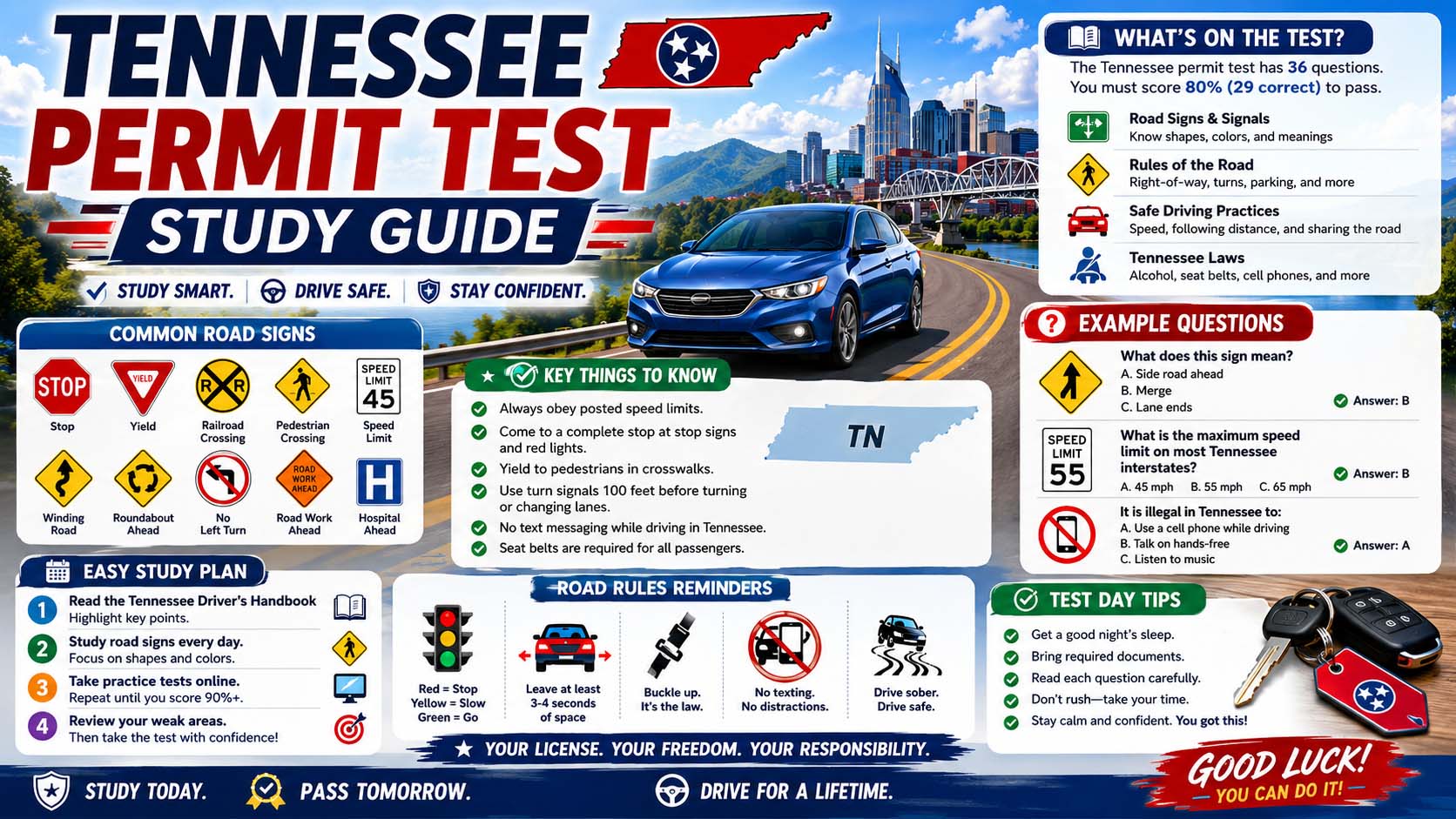
Tennessee Permit Test Study Guide 2026: Complete Guide for New Drivers
Getting a learner permit is one of the first steps toward becoming a licensed driver in Tennessee. While the process may seem challenging at first, proper preparation can significantly improve your chances of passing the exam on the first attempt. This Tennessee permit test study guide is designed to help students understand key concepts, develop effective study habits, and gain confidence before test day.
The Tennessee permit test evaluates a driver’s understanding of traffic laws, road signs, safe driving practices, and vehicle operation. By studying the right material and following a structured plan, learners can approach the exam with confidence.
What Is the Tennessee Permit Test?
The Tennessee permit test is a written knowledge examination that measures a driver’s understanding of state driving rules and safe driving practices.
The exam typically covers:
- Traffic laws
- Road signs
- Driving safety
- Right-of-way rules
- Speed regulations
- Alcohol and drug laws
- Defensive driving concepts
Passing the test allows eligible applicants to obtain a learner permit and begin supervised driving practice.
The exact requirements may change over time, so applicants should always verify the latest information with Tennessee licensing authorities.
Why Use a Tennessee Permit Test Study Guide?
A structured study guide helps learners focus on the most important topics likely to appear on the exam.
Benefits include:
- Better understanding of traffic laws
- Increased test confidence
- Improved retention of information
- Reduced test anxiety
- Higher likelihood of passing
Students who study consistently often perform much better than those who rely solely on last-minute preparation.
Tennessee Permit Test Study Guide 2026 Overview
Many students search for a Tennessee permit test study guide 2026 to prepare using the most current information available.
Although driving fundamentals remain relatively stable, learners should review updated materials annually because regulations, penalties, and testing procedures may occasionally change.
The most important topics typically include:
Road Signs
Examples include:
- Stop signs
- Yield signs
- School zone signs
- Railroad crossing signs
- Construction warning signs
Students should recognize both the appearance and meaning of each sign.
Traffic Signals
Drivers must understand:
- Red lights
- Yellow lights
- Green lights
- Flashing signals
- Arrow signals
Knowing when to stop, yield, or proceed safely is essential.
Right-of-Way Rules
Questions frequently cover:
- Four-way stops
- Pedestrian crossings
- Emergency vehicles
- Intersections
- Roundabouts
Right-of-way mistakes can lead to accidents and traffic violations.
Study Guide for Tennessee Permit Test: Key Topics
A successful study guide for Tennessee permit test preparation should focus on several major subject areas.
Speed Limits
Drivers must know:
- Residential speed limits
- School zone limits
- Highway speed limits
- Interstate regulations
Safe driving always requires adjusting speed for weather and traffic conditions.
Defensive Driving
Defensive driving involves:
- Staying alert
- Anticipating hazards
- Maintaining safe following distances
- Avoiding distractions
Many permit test questions evaluate your understanding of defensive driving principles.
Alcohol and Drug Awareness
Students should understand:
- Legal consequences
- Impaired driving risks
- Blood alcohol concentration limits
- Penalties for violations
These topics are commonly included on permit exams.
Tennessee DMV Permit Test Study Guide: Road Signs Section
A Tennessee DMV permit test study guide should include extensive road sign review.
Road signs generally fall into three categories:
Regulatory Signs
Examples:
- Stop
- Yield
- No entry
- Speed limit
Warning Signs
Warning signs alert drivers to potential hazards.
Examples:
- Curves
- Intersections
- Deer crossings
- School zones
Guide Signs
Guide signs provide information and directions.
Examples:
- Exit signs
- Route markers
- Destination signs
- Service signs
Learning these categories makes studying easier and improves recall during testing.
Step-by-Step Study Plan
Step 1: Read the Driver Handbook
Start by reading the entire Tennessee Driver Handbook carefully.
Step 2: Review Road Signs Daily
Spend time identifying signs and understanding their meanings.
Step 3: Take Practice Tests
Practice exams help identify weak areas.
Step 4: Focus on Difficult Topics
Spend extra time studying challenging sections.
Step 5: Review Before Test Day
A final review helps reinforce important information.
Consistency is usually more effective than cramming.
Common Permit Test Questions
While exact questions vary, common topics include:
- What should you do at a flashing red light?
- When should you yield to pedestrians?
- What does a diamond-shaped sign indicate?
Understanding concepts rather than memorizing answers is the best strategy.
Tennessee CDL Permit Test Study Guide
Commercial drivers often search for a Tennessee CDL permit test study guide.
A Commercial Driver’s License (CDL) permit test includes additional material beyond the standard permit exam.
Topics may include:
- Air brake systems
- Vehicle inspections
- Cargo management
- Hazard awareness
- Commercial driving regulations
CDL applicants should study specialized materials designed specifically for commercial vehicle operation.
The complexity of CDL testing is generally greater than that of a standard learner permit examination.
Common Mistakes Students Make
Avoiding these mistakes can improve test performance.
Skipping the Handbook
Many students rely only on practice questions.
The handbook remains the primary study resource.
Ignoring Road Signs
Road sign questions often represent a significant portion of the exam.
Memorizing Instead of Understanding
Understanding concepts improves performance on unfamiliar questions.
Studying Only Once
Regular study sessions are more effective than last-minute preparation.
Good study habits often make the difference between passing and failing.
Test Day Tips
Following simple strategies can help reduce stress.
Get Enough Sleep
A rested mind processes information more effectively.
Arrive Early
Allow extra time for check-in procedures.
Read Questions Carefully
Many mistakes occur because students rush.
Stay Calm
Confidence improves concentration and decision-making.
Use Logic
If uncertain, eliminate obviously incorrect answers first.
A calm and focused approach increases your chances of success.
Benefits of Passing the Permit Test
Obtaining a learner permit opens the door to valuable driving experience.
Benefits include:
- Supervised driving practice
- Improved driving skills
- Increased independence
- Preparation for the road skills test
- Greater confidence behind the wheel
The permit stage is an important part of becoming a safe and responsible driver.
Frequently Asked Questions
What is the Tennessee permit test?
It is a written knowledge exam that measures understanding of driving laws, road signs, and safe driving practices.
How should I prepare using a Tennessee permit test study guide?
Study the driver handbook, review road signs, and complete multiple practice tests.
Is the Tennessee permit test difficult?
Most students pass when they prepare consistently and understand the material.
What topics are covered on the test?
Road signs, traffic laws, right-of-way rules, speed limits, and safe driving practices.
What is included in a Tennessee CDL permit test study guide?
CDL study materials cover commercial vehicle operation, inspections, air brakes, and transportation regulations.
How many times should I take practice tests?
Many successful students complete several practice exams before taking the actual test.
Conclusion
This Tennessee permit test study guide provides a strong foundation for learners preparing to take the exam. By understanding road signs, traffic laws, defensive driving principles, and right-of-way rules, students can significantly improve their chances of success.