
What Is a POA? Understanding POA Meaning and Uses
What Is a POA? Understanding POA Meaning and Uses
Many people ask, “what is a POA?” because the term shows up in legal papers, real estate deals, and neighborhood communities. The letters can mean different things, but they most often stand for Power of Attorney or Property Owners Association. Knowing the right meaning matters, because each one serves a very different purpose.
In legal and money matters, the term usually means a Power of Attorney, a document that lets one person act for another. In housing communities, however, it may mean a Property Owners Association that manages shared neighborhood duties. Understanding both meanings helps homeowners, investors, and families make smart decisions.
What Is a POA in Real Estate
People involved in property deals often search “what is a POA in real estate.” In this industry, the term can mean a Power of Attorney that lets someone handle property tasks for another person. This helps when an owner cannot attend meetings, sign papers, or manage a sale in person.
For example, someone living overseas may give a trusted relative the authority to sell a home in the United States. That person can then sign contracts, talk with agents, and handle documents within the limits the agreement sets. As a result, sales and purchases become much easier when travel or health issues get in the way.
Usually, the owner must write this kind of agreement clearly and sign it according to state law. It may cover just one sale or one property. Because real estate deals involve large sums of money, accuracy and legal care are extremely important.
Basic Commercial Awareness also helps buyers and sellers see how contracts and money decisions shape property deals and business relationships.
In some communities, the same letters may refer to a Property Owners Association instead. These groups manage neighborhood rules, upkeep, and shared amenities. Owners in the community often pay fees that support landscaping, security, and improvements.
Therefore, checking which meaning applies helps buyers and sellers avoid confusion. Since the term can describe both legal authority and community groups, review each situation carefully.
What Is a POA Document
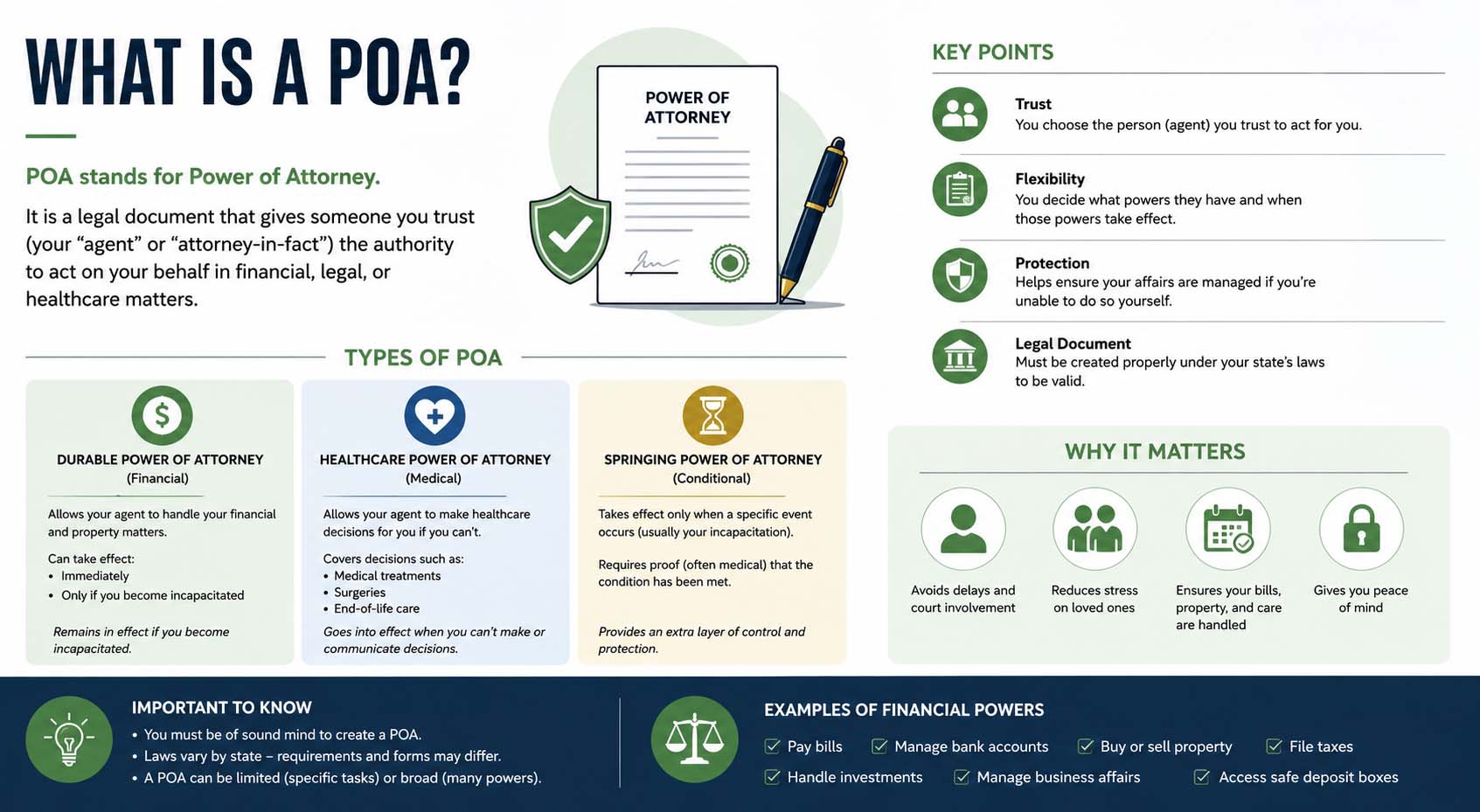
Many people also ask, “what is a POA document?” In most cases, it is a legal agreement called a Power of Attorney. It gives one person, called the agent or attorney-in-fact, the right to act for another person, called the principal.
This document can cover money, legal, medical, or personal matters. Some people create one so trusted relatives can manage their affairs if illness, injury, or aging stops them from deciding on their own. Others use it for a short time while they travel or live abroad.
The Consumer Financial Protection Bureau also gives a clear explanation of what a power of attorney is and how to choose an agent.
Main Types of Power of Attorney
There are several types. A general version gives broad authority over money and legal matters, while a limited version only covers certain tasks. In addition, a durable version stays active even if the principal loses mental capacity, so many people choose it for long-term planning.
Medical versions matter too. They let someone make healthcare choices if the principal cannot speak or decide for themselves. For this reason, many families include them in estate planning to avoid confusion during emergencies.
People who create this kind of document often want to know Who Can Override a Power of Attorney, especially when family disputes or changes to the agreement come up.
What Is a POA?
The question “what is a POA?” has different answers depending on the context. Most often, the letters stand for Power of Attorney. This legal arrangement lets one person make decisions or take actions for someone else.
People use it widely in financial planning, healthcare, and legal matters. For instance, it can help older adults handle banking, pay bills, or watch over investments when they can no longer do so alone. Likewise, business owners may appoint representatives to sign contracts or complete deals.
In legal discussions, people sometimes compare different documents and government actions. For example, understanding What Is a Pardon helps readers see the difference between executive legal powers and private agreements like a Power of Attorney.
These arrangements can be temporary or permanent. Some last only a short time, while others continue until the principal cancels them or passes away. Because they can give significant legal authority, many people work with attorneys to make sure their documents are accurate and valid.
In another context, the letters stand for Property Owners Association. This type of group exists in residential neighborhoods and planned communities. It manages shared spaces, enforces community rules, and collects fees for upkeep and improvements.
What Is a POA in a Neighborhood
The phrase “what is a POA in a neighborhood” usually refers to a Property Owners Association. This organization manages and maintains a residential community. Homeowners in the neighborhood often must follow its rules and pay fees that support shared services.
Such a group may oversee landscaping, road repairs, security, parks, pools, or recreation areas. As a result, it helps protect the community’s look and property values. In many neighborhoods, it also sets rules about home upkeep, parking, fences, and exterior changes.
These groups differ slightly from homeowners associations, although people often use the terms interchangeably. A Property Owners Association may handle broader duties, especially in planned or resort communities. Its exact structure depends on local laws and community agreements.
Living in such a neighborhood can bring benefits like cleaner shared spaces and organized maintenance. However, homeowners generally need to follow community standards and pay regular dues.
Tips Before You Sign
First, if you plan to give someone legal authority, choose a person you fully trust and set clear limits on what they can do. Next, ask a lawyer to check that the document meets your state’s rules.
Similarly, before you buy a home in an association-managed community, read the rules, fee schedule, and financial reports carefully. That way, you will know exactly what you are agreeing to.
Conclusion
Understanding “what is a POA” matters because the term applies to both legal and housing situations. In many cases, it stands for Power of Attorney, a legal document that lets one person act for another in money, legal, or medical matters. In neighborhoods, however, it often means Property Owners Association, a group that maintains shared areas and enforces community standards.