Morning Meeting Questions Guide
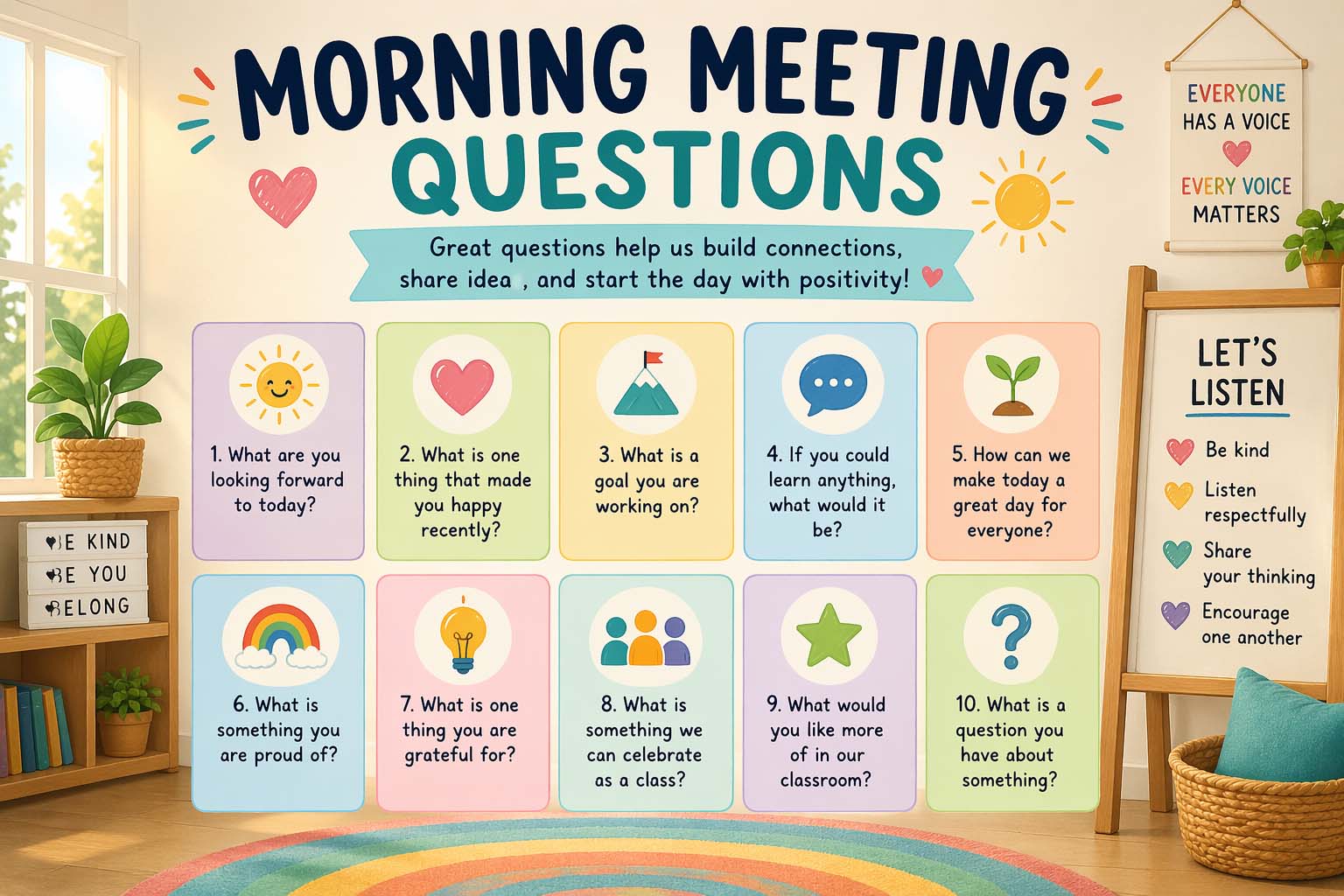
Morning Meeting Questions Guide
Morning meeting questions are a simple but powerful way to start the day with energy, connection, and positive communication. Whether used in classrooms, virtual learning spaces, offices, or family routines, these questions help people engage, share ideas, and build relationships. Morning meetings create a welcoming environment where everyone feels seen and heard.
Teachers often use to help students practice speaking, listening, and social skills. Team leaders use them to encourage participation and set a positive tone for the day. With the right questions, mornings become more interactive and meaningful.
What Are Morning Meeting Questions?
Morning meeting questions are prompts asked at the start of the day to encourage conversation and reflection. They can be lighthearted, thoughtful, creative, or educational depending on the group.
Examples include:
- What are you excited about today?
- What is your favorite season?
- If you could visit anywhere, where would you go?
- What made you smile recently?
These simple prompts help people connect and warm up before beginning tasks or lessons.
Why Morning Meetings Matter
Morning meetings create routine and structure. They can help children feel safe and ready to learn, while adults may feel more motivated and connected.
Benefits of using include:
- Building classroom community
- Improving communication skills
- Encouraging confidence
- Creating positive energy
- Strengthening relationships
- Supporting emotional well-being
When people begin the day with conversation and kindness, productivity often improves.
Morning Meeting Questions for Kids
Using morning meeting questions for kids is a great way to help children express themselves. Kids often enjoy imaginative and playful prompts that invite them to talk.
Examples include:
- If you could have any superpower, what would it be?
- What is your favorite animal and why?
- If you could invent a toy, what would it do?
- What is the best snack ever made?
- What makes a good friend?
These questions encourage creativity while helping children practice speaking in front of others.
Morning Meeting Share Questions
Morning meeting share are designed to help students or team members talk about experiences, feelings, or ideas. Sharing builds confidence and teaches respectful listening.
Examples include:
- What is something kind someone did for you?
- What is one goal you have this week?
- What is something new you learned recently?
- What is your favorite family tradition?
- What helps you stay calm when stressed?
Share questions are ideal for building trust and understanding among group members.
Morning Meeting Questions for Kindergarten
Young learners benefit from short, simple prompts. Morning meeting questions for kindergarten should be fun, easy to understand, and age appropriate.
Examples include:
- What color do you like most?
- Do you like cats or dogs?
- What is your favorite fruit?
- What game do you like to play?
- What makes you happy?
Kindergarten questions should encourage participation without pressure. Teachers can allow students to answer with words, gestures, or pictures.
Fun Morning Meeting Questions
Sometimes the best way to energize a group is with laughter and creativity. ns can make mornings exciting and memorable.
Examples include:
- If animals could talk, which would be funniest?
- Would you rather fly or be invisible?
- If you made an ice cream flavor, what would it be?
- If your backpack could talk, what would it say?
- If you were a cartoon character, who would you be?
Fun questions reduce stress and help shy participants feel more comfortable.
Questions for Older Students
Middle school and high school students may enjoy deeper or more thought-provoking prompts.
Examples include:
- What motivates you to succeed?
- What skill would you like to learn this year?
- What does leadership mean to you?
- What is one thing schools could improve?
- If you could solve one world problem, what would it be?
Older students often respond well when questions feel meaningful and relevant.
Morning Meeting Questions for Work Teams
Morning meetings are not only for classrooms. Workplaces also use them to improve communication and morale.
Examples include:
- What is your top priority today?
- What is one recent success you are proud of?
- What challenge can the team help with?
- What is one thing you appreciate today?
- What goal should we focus on this week?
These prompts help teams stay aligned and connected.
Tips for Leading a Great Morning Meeting
To make meetings successful, keep the environment positive and respectful. Encourage everyone to participate, but never force someone to speak if they feel uncomfortable.
Helpful tips include:
- Keep questions short and clear
- Rotate who answers first
- Celebrate different opinions
- Use encouraging body language
- Keep meetings consistent
- Mix serious and fun prompts
A welcoming routine helps participants look forward to the meeting each day.
How Often Should You Change Questions?
Variety keeps morning meetings interesting. Using different themes throughout the week can help maintain excitement.
Example schedule:
- Monday: Goals and motivation
- Tuesday: Favorites and preferences
- Wednesday: Creative imagination
- Thursday: Gratitude and kindness
- Friday: Fun and silly questions
Changing question styles prevents repetition and keeps energy fresh.
Benefits for Social and Emotional Growth
Morning meeting questions also support emotional intelligence. Participants learn how to listen, respond respectfully, and understand others.
Children especially benefit from practicing:
- Taking turns
- Speaking clearly
- Building empathy
- Sharing ideas
- Respecting differences
These life skills are valuable both inside and outside the classroom.
Conclusion
Morning meeting questions are an easy and effective way to create positive daily connections. Whether using morning meeting questions for kids, morning meeting share questions, morning meeting questions for kindergarten, or fun morning meeting questions, the goal is the same: helping people feel welcome and engaged.
Starting the day with thoughtful conversation can improve confidence, communication, and community. With the right questions, every morning becomes an opportunity to connect and grow.