
Who Can Override a Power of Attorney?
Who Can Override a Power of Attorney?
in financial, legal, or medical matters. The individual granting authority is often called the principal, while the person receiving authority is known as the agent or attorney-in-fact. Many people wonder who can override a power of attorney when disputes arise between family members, caregivers, or legal representatives.
Understanding the legal rules surrounding power of attorney is essential because these documents can impact major financial decisions, healthcare choices, and property management. In some situations, courts, principals, or other legal authorities may have the ability to cancel or challenge a power of attorney. The rules can vary depending on the country or state involved.
Learning who can override a power of attorney helps families avoid confusion while protecting vulnerable individuals from abuse or misuse of authority.
Understanding How a Power of Attorney Works
Before discussing who can override a power of attorney, it is important to understand how the document functions. A power of attorney gives an agent the authority to make decisions on behalf of the principal. The powers granted may be broad or limited depending on the wording of the agreement.
Some power of attorney documents only apply to financial matters, while others may cover healthcare decisions or property transactions. A durable power of attorney often remains active even if the principal becomes mentally incapacitated.
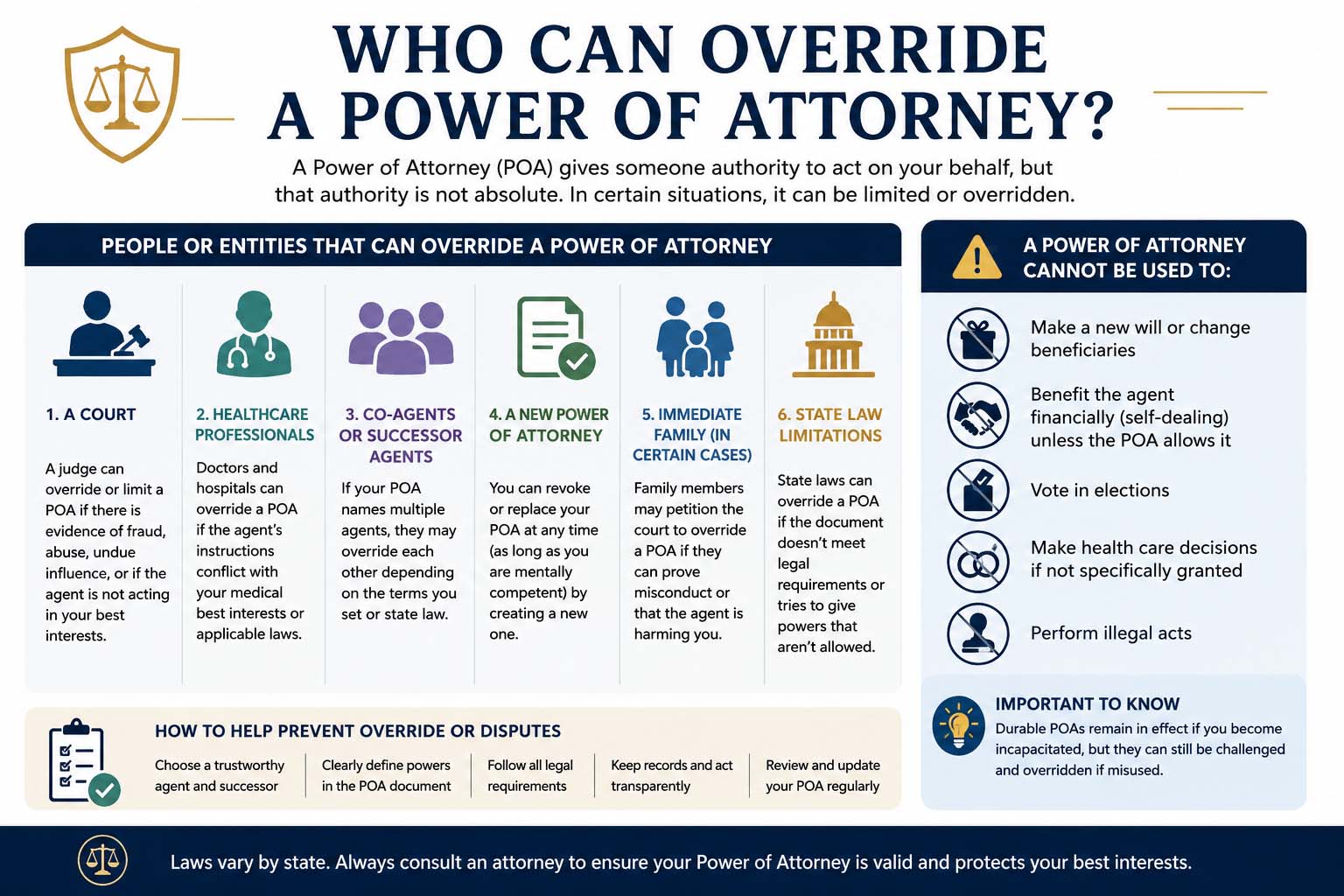
However, a power of attorney does not give unlimited control. Agents are legally required to act in the best interests of the principal. If abuse, fraud, or negligence occurs, courts may intervene and restrict the agent’s authority.
In many cases, the principal still has the right to make their own decisions as long as they remain mentally competent. This means the principal themselves can often override or revoke the power of attorney at any time.
Who Can Override a Power of Attorney in Texas
One of the most common legal questions is In Texas, the principal generally has the strongest authority over the document. If the principal remains mentally competent, they can revoke the power of attorney whenever they choose.
Texas courts may also intervene if there is evidence that the agent is abusing their authority or failing to act responsibly. Family members who suspect financial exploitation or misconduct may petition the court for legal review. A judge may remove the agent and appoint a guardian if necessary.
Another situation where a power of attorney can be overridden in Texas involves conflicts with guardianship proceedings. If a court appoints a legal guardian for the principal, the guardian’s authority may replace or limit the powers granted under the original document.
Who Can Override a Power of Attorney California
Many residents also search for answers regarding laws recognize. Similar to Texas, California allows mentally competent principals to revoke their power of attorney at any time.
California courts have the authority to override a power of attorney if there is proof of fraud, coercion, elder abuse, or financial misconduct. Family members concerned about an agent’s actions may file legal petitions requesting judicial intervention.
Healthcare providers and financial institutions in California may also challenge a power of attorney if they believe the document is invalid or incomplete. In some situations, institutions request updated paperwork before accepting an agent’s authority.
Who Can Override a Power of Attorney in Florida
Another important topic is who can override a power of attorney in Florida. Florida law provides several situations where a power of attorney may be revoked or limited.
The principal can revoke the document while mentally competent by providing written notice to the agent and any relevant institutions. Divorce may also affect the validity of certain powers granted to spouses under Florida law.
Florida courts can override a power of attorney if evidence shows the agent is acting dishonestly, abusing authority, or failing to fulfill fiduciary duties. Relatives, caregivers, or interested parties may ask the court to investigate suspicious behavior involving finances or healthcare decisions.
Guardianship proceedings can also impact who can override a power of attorney in Florida. If a court appoints a guardian for the incapacitated principal, the guardian may receive authority that supersedes the existing power of attorney arrangement.
Who Can Override a Power of Attorney UK
The legal system in the United Kingdom handles these matters differently, leading many people to ask who can override a power of attorney UK laws recognize. In the UK, powers of attorney are commonly referred to as Lasting Powers of Attorney, also known as LPAs.
The donor, who is the person granting authority, can cancel the arrangement while they still have mental capacity. The Court of Protection also has the power to investigate attorneys accused of misconduct or abuse.
The Office of the Public Guardian plays an important role in supervising attorneys and handling complaints. If concerns arise regarding financial abuse or poor decision-making, investigations may occur. The court can remove the attorney and appoint a deputy if necessary.
Common Reasons a Power of Attorney Is Challenged
Many legal disputes arise because family members disagree about how the agent handles responsibilities. Financial abuse is one of the most common reasons people seek to override a power of attorney. Unauthorized withdrawals, property transfers, or suspicious spending patterns can trigger investigations.
Mental competency concerns also play a major role. If someone believes the principal lacked mental capacity when signing the document, courts may declare the power of attorney invalid.
Conclusion
Understanding who can override a power of attorney is important for protecting both the principal and their loved ones. Although a power of attorney grants significant authority, it does not provide unlimited control. Courts, guardians, conservators, and mentally competent principals may all have the ability to revoke or limit the document under certain circumstances.