
Monopolistic Competition Consumer Choice: Explained
Monopolistic Competition Consumer Choice: Explained
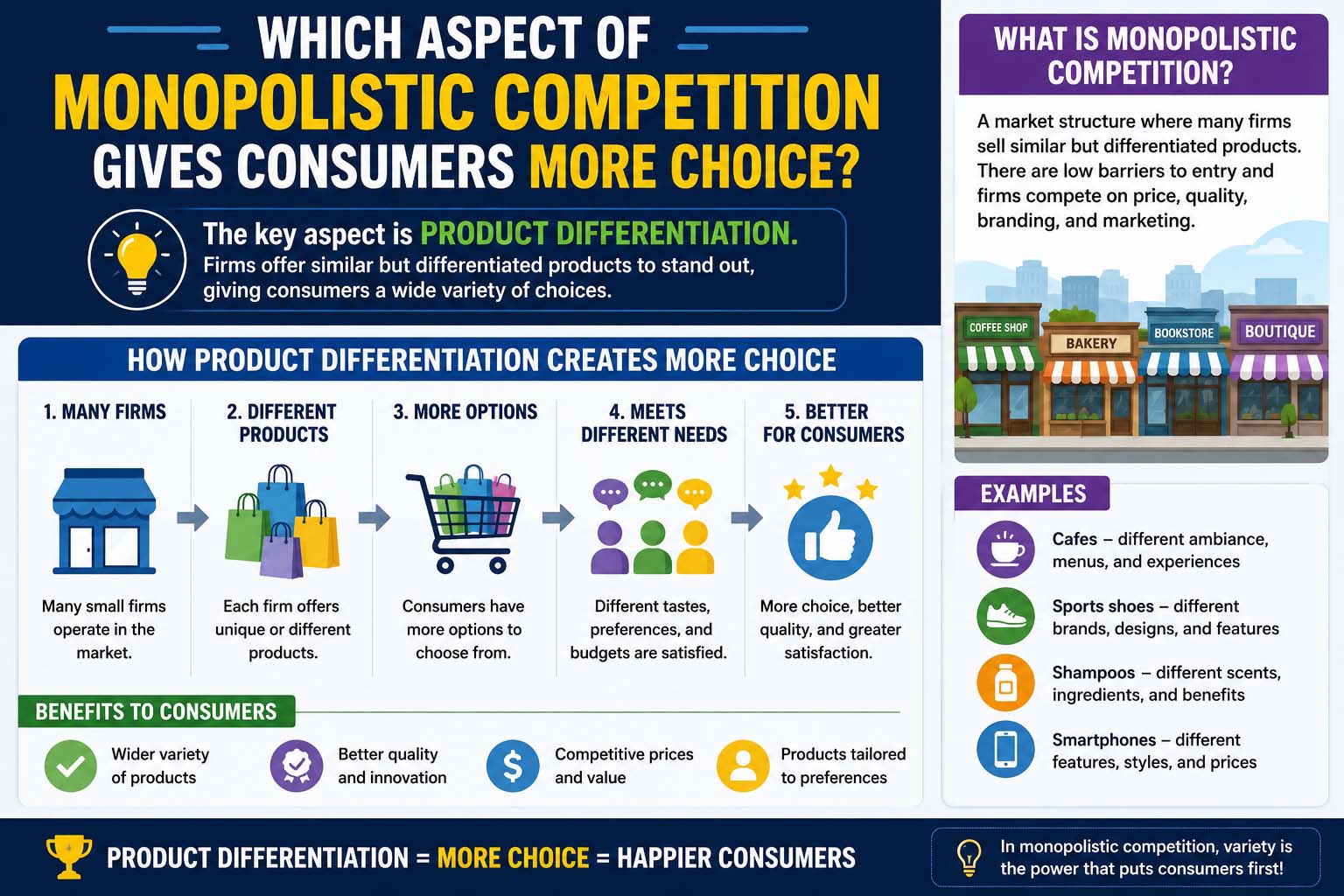
Monopolistic competition consumer choice largely depends on product differentiation. In this market structure, businesses sell similar products with different features, designs, prices, and customer experiences. As a result, consumers can choose products that match their preferences, needs, and budgets.
The main aspect of monopolistic competition that gives consumers more choice is product differentiation. Businesses distinguish their offerings through branding, quality, design, convenience, and service. Consequently, buyers can compare different options rather than purchasing identical products from every company.
This market structure also encourages innovation and customer service improvements. However, greater variety does not always mean lower prices because differentiated products give businesses some control over pricing.
Monopolistic Competition Consumer Choice: Understanding the Market
Monopolistic competition is a market structure in which many businesses sell similar but differentiated products. Unlike firms in perfect competition, these businesses make their offerings distinctive through branding, quality, design, features, or customer service.
Restaurants, coffee shops, clothing brands, and salons often illustrate this market structure. Although these businesses offer comparable products or services, each company attempts to attract customers through a particular combination of features and experiences.
For example, two restaurants may serve similar meals but compete through atmosphere, ingredients, location, or service quality. Consequently, customers have several reasons to choose one business over another.
Product differentiation also gives firms some control over pricing. Nevertheless, competition remains important because customers can switch to alternatives when prices or service quality become less attractive.
Developing Commercial Awareness helps students understand how businesses compete, respond to customer demand, and differentiate their products in real-world markets.
How Product Differentiation Creates Consumer Choice
The most important factor connecting monopolistic competition consumer choice is product differentiation. This feature allows businesses to sell products that meet the same general need while offering different characteristics.
According to OpenStax’s explanation of monopolistic competition, firms in this market structure compete by offering differentiated products rather than identical goods.
For instance, two coffee shops may sell similar beverages. However, one might focus on premium beans and a comfortable atmosphere, while another emphasizes affordable prices and quick service.
As a result, consumers can select the experience that suits them best. Neither coffee shop needs to offer an identical product to compete for customers.
Product Differentiation and Monopolistic Competition Consumer Choice
Businesses can differentiate their products in several ways:
- Quality: Different materials, ingredients, or performance standards.
- Design: Distinctive styles, packaging, colors, or appearances.
- Features: Additional functions or customization options.
- Branding: A recognizable identity and customer experience.
- Customer service: Different levels of assistance, convenience, or after-sales support.
- Location: Easier access to stores or service providers.
Because customers value these characteristics differently, product differentiation creates meaningful choices beyond price alone.
Why Product Variety Matters to Consumers
Consumers do not always want identical products. Instead, they have different tastes, expectations, and spending priorities.
For example, one buyer may prefer affordable clothing, while another values premium materials or a distinctive design. Both customers can find suitable options when businesses offer differentiated products.
Therefore, variety helps markets serve a wider range of consumer preferences.
Monopolistic Competition Consumer Choice and Branding
Branding is another important feature of monopolistic competition. Businesses develop recognizable identities to distinguish themselves from competitors.
A strong brand may represent particular values, product qualities, or customer experiences. Consequently, consumers can use brand information to compare available alternatives.
For example, coffee brands may emphasize convenience, specialty ingredients, ethical sourcing, or a premium atmosphere. Although they compete in the same broad market, each brand appeals to different customer priorities.
Brand competition can also encourage businesses to maintain consistent quality. However, advertising and brand loyalty may sometimes lead consumers to pay more for products that offer only small practical differences.
How Branding Influences Consumer Choice
Branding helps customers identify familiar products and understand what a company promises to deliver.
In addition, customer reviews and previous experiences can influence purchasing decisions. Buyers may return to a brand because they trust its quality or service.
Still, consumers benefit most when they compare actual features and prices rather than relying entirely on brand recognition.
Innovation and Monopolistic Competition Consumer Choice
Innovation can increase product variety because businesses continually search for ways to stand out.
For instance, restaurants may introduce new menu items, while clothing brands experiment with materials, fits, and seasonal styles. Similarly, software providers may offer different features or subscription packages.
These improvements can attract customers who want something different from existing options.
Product Improvement Through Competition
When businesses compete for customers, they have incentives to improve their offerings.
For example, a restaurant might expand its menu after noticing demand for vegetarian meals. Another business may introduce online ordering to improve convenience.
As a result, consumers gain access to new choices that better reflect changing preferences.
However, innovation is not automatic. Some companies may focus more on advertising or minor product changes than meaningful improvements.
Pricing and Monopolistic Competition Consumer Choice
Product differentiation allows businesses to offer different combinations of quality, features, and price.
Some companies target customers seeking affordable products. Meanwhile, others focus on premium experiences or specialized services.
For example, two salons may offer similar haircuts but charge different prices because of their locations, service levels, or customer experiences.
Consequently, consumers can compare options according to both their budgets and preferences.
Does Monopolistic Competition Lower Prices?
Monopolistic competition does not always produce the lowest possible prices.
Because businesses sell differentiated products, customers may willingly pay more for a preferred brand or feature. Therefore, firms can have some pricing power.
At the same time, competing alternatives limit how much businesses can charge without risking customer losses.
This balance creates price variety, although consumers should still compare the value offered by different businesses.
Understanding the Kinked Demand Curve can also introduce students to pricing behavior in a different market structure: oligopoly. However, the kinked demand curve is not the standard pricing model for monopolistic competition.
Advertising and Monopolistic Competition Consumer Choice
Advertising plays an important role because businesses must explain how their offerings differ from competing products.
For example, a company may promote product quality, convenience, distinctive features, or customer service. As a result, potential buyers can learn about alternatives they might not otherwise discover.
Businesses use websites, social media, television, and other channels to communicate these differences.
Benefits and Limitations of Advertising
Advertising can help consumers compare products and discover new brands.
However, promotional messages do not always provide complete or objective information. Therefore, customers should also examine product specifications, independent reviews, and prices before making decisions.
Businesses must also adjust their marketing as products mature. Understanding the Product Life Cycle helps explain how companies change their strategies as products move through different market stages.
How Competition Encourages Better Product Quality
Businesses in monopolistic competition must attract customers while competing with many alternatives.
Because consumers can switch between providers, companies have incentives to maintain satisfactory product quality and service.
For example, restaurants may improve food preparation, cleanliness, or customer support to encourage repeat visits. Likewise, salons may invest in staff training and better appointment systems.
These improvements can benefit customers by making services more reliable and convenient.
Nevertheless, quality varies between businesses. Consumers should compare actual performance rather than assume that competition guarantees excellent service.
Monopolistic Competition Consumer Choice: Real-World Examples
Real-world examples help explain why differentiated products increase consumer choice.
Restaurants and Coffee Shops
Restaurants offer different cuisines, menus, prices, locations, and dining experiences.
For instance, customers may choose between a family restaurant, a specialty café, and a quick-service establishment.
Although these businesses compete for food spending, they provide different experiences that appeal to different preferences.
Clothing and Fashion Brands
Fashion businesses differentiate products through style, materials, sizing, quality, and brand identity.
Some brands emphasize affordability, while others focus on premium fabrics or distinctive designs.
Consequently, consumers can select clothing that reflects their personal tastes and budgets.
Beauty and Skincare Businesses
Beauty and skincare companies offer products with different formulations, packaging, textures, and intended uses.
For example, customers may choose fragrance-free products, lightweight moisturizers, or premium skincare ranges.
However, buyers should evaluate ingredient information and suitability rather than assume that higher prices indicate better results.
Hair Salons and Personal Care Services
Salons compete through location, staff expertise, appointment convenience, pricing, and customer experience.
Therefore, consumers can select providers based on their preferred combination of service quality, accessibility, and cost.
Entrepreneurs entering these markets can benefit from developing Commercial Awareness. Understanding competitors and customer expectations helps businesses identify opportunities for meaningful differentiation.
Advantages of Monopolistic Competition for Consumers
Product differentiation creates several potential benefits for consumers.
First, greater variety allows buyers to find products that match their preferences. In addition, businesses may introduce new features and services to attract customers.
Competition can also encourage better customer service because businesses want to retain existing buyers.
Meanwhile, different pricing and quality levels allow customers to compare products according to their budgets.
However, these benefits depend on how effectively businesses compete and whether consumers can access reliable information.
Limitations of Consumer Choice in Monopolistic Competition
Although monopolistic competition offers variety, it also has limitations.
For example, some brands charge higher prices because customers value their identity or reputation. In other cases, companies spend heavily on advertising rather than improving product quality.
In addition, too many similar options can make purchasing decisions more complicated.
Consumers may also struggle to distinguish meaningful differences from cosmetic changes.
Therefore, product variety is valuable, but buyers still need to evaluate quality, price, and usefulness.
Conclusion
The answer to which aspect of monopolistic competition gives consumers more choice? is product differentiation. Businesses create distinctive products through branding, quality, design, features, and customer experiences.
As a result, consumers can choose among alternatives that suit their tastes, needs, and budgets. Competition may also encourage innovation, better service, and product improvement.
However, greater variety does not necessarily mean lower prices or better quality in every case. The main advantage is that differentiated products give consumers more ways to satisfy their individual preferences.