Which Aspect of Monopolistic Competition Gives Consumers More Choice?
Which Aspect of Monopolistic Competition Gives Consumers More Choice?
Monopolistic competition is one of the most common market structures in modern economies. Many businesses operate under this system because it combines competition with product differentiation. Students and business learners often ask which aspect of monopolistic competition gives consumers more choice because this market structure is known for offering a wide variety of products and services.
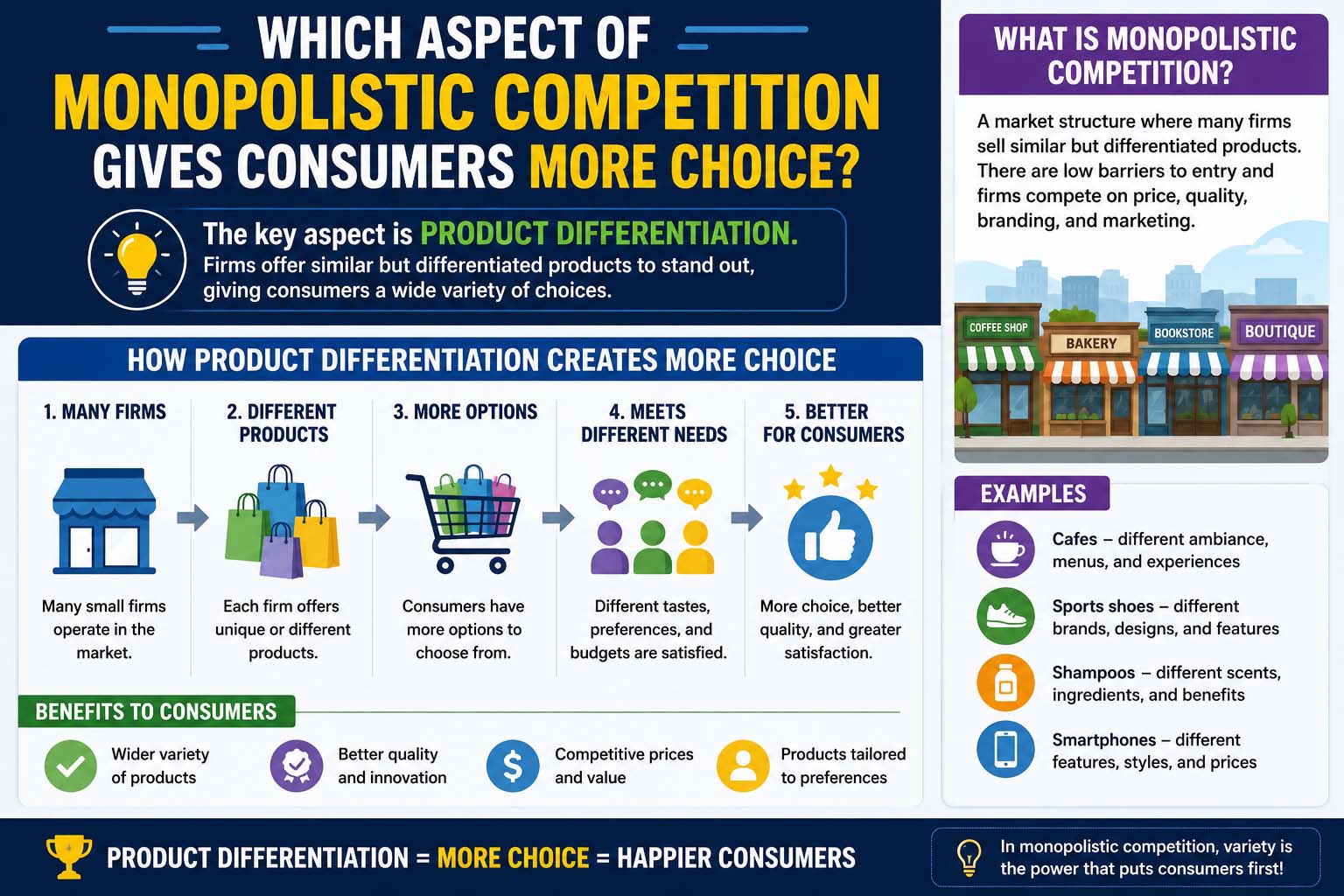
The main aspect of monopolistic competition that gives consumers more choice is product differentiation. Companies create products that are slightly different from those of competitors, allowing buyers to select options that best match their preferences, needs, and budgets. This variety benefits consumers by increasing competition, encouraging innovation, and improving product quality.
Understanding Monopolistic Competition
Monopolistic competition is a market structure where many businesses compete while selling products that are similar but not identical. Unlike perfect competition, firms in monopolistic competition differentiate their products through branding, quality, design, features, or customer service.
Restaurants, clothing brands, coffee shops, salons, and smartphone companies are common examples of monopolistic competition. Although businesses may sell similar products, each company attempts to make its offerings unique.
This market structure gives businesses some control over pricing because consumers may prefer one brand over another. At the same time, strong competition exists because many alternatives are available in the market.
Product Differentiation Creates More Consumer Choice
The most important answer to which aspect of monopolistic competition gives consumers more choice is product differentiation. Companies compete by making their products stand out from competitors.
For example, two coffee shops may both sell coffee, but one may focus on premium organic beans while another offers lower prices and faster service. Consumers can choose the option that best matches their tastes and preferences.
Product differentiation may include packaging, quality, design, flavor, technology, advertising, or customer experience. Because companies continuously try to appear unique, consumers enjoy a wide range of options.
This variety is one of the biggest advantages of monopolistic competition compared to markets with fewer choices.
Brand Competition Benefits Consumers
Branding is another major feature of monopolistic competition. Businesses spend significant time and money building strong brand identities to attract customers.
Popular brands often create customer loyalty through advertising, quality products, and positive experiences. As brands compete for attention, consumers gain access to many different products with unique features and pricing levels.
For example, smartphone manufacturers offer devices with different camera systems, battery life, software features, and designs. This competition allows consumers to select products based on personal priorities.
Brand competition also encourages companies to improve customer service and product quality to maintain customer satisfaction.
Innovation and Product Improvement
Innovation is another reason monopolistic competition provides more consumer choice. Businesses constantly introduce new features and updated products to stay ahead of competitors.
Companies may launch improved designs, better technology, or unique services to attract customers. This continuous innovation creates a dynamic market where consumers benefit from modern and advanced products.
For instance, fast-food chains regularly introduce new menu items to appeal to changing consumer tastes. Clothing brands release seasonal styles to match fashion trends. Technology companies frequently upgrade software and hardware features.
Innovation keeps markets competitive and increases the number of choices available to consumers.
Flexible Pricing Options
Another aspect that increases consumer choice is flexible pricing. In monopolistic competition, companies offer products at different price levels to target various customer groups.
Some consumers may prefer premium products with higher quality, while others focus on affordability. Businesses respond by creating products for different budgets and lifestyles.
For example, airlines provide economy, business, and first-class options. Cosmetic brands may sell both luxury and budget-friendly products. This pricing diversity allows consumers to select products that fit their financial situation.
Advertising and Consumer Awareness
Advertising plays an important role in monopolistic competition because businesses must communicate how their products differ from competitors. Marketing campaigns help consumers learn about available options in the market.
Through advertising, consumers discover new products, compare features, and make informed purchasing decisions. Companies use television, social media, websites, and online reviews to attract customers and build brand recognition.
Competition Improves Product Quality
Strong competition encourages businesses to maintain high product quality. Since many alternatives exist, companies risk losing customers if their products fail to meet expectations.
Businesses often improve durability, customer support, packaging, and product performance to remain competitive. This focus on quality benefits consumers because they receive better products and services.
For example, restaurants compete by improving food quality, customer service, and dining experiences. Streaming services compete by offering exclusive content and better user interfaces.
Examples of Monopolistic Competition
Many industries demonstrate which aspect of monopolistic competition gives consumers more choice. The restaurant industry is one of the best examples because businesses offer different cuisines, pricing, and dining experiences.
The fashion industry also operates under monopolistic competition. Clothing brands create unique styles, materials, and brand images to attract different customer groups.
The beauty and skincare industry provides another example. Companies sell similar products but differentiate them through ingredients, packaging, fragrance, and marketing strategies.
Advantages for Consumers
Monopolistic competition offers several advantages to consumers. Product variety allows individuals to find products that match their personal preferences. Businesses also have incentives to improve quality and innovate regularly.
Competition often leads to better customer service because companies want to build loyalty and attract repeat buyers. Consumers can also compare prices across brands and select products within their budgets.
Conclusion
When asking which aspect of monopolistic competition gives consumers more choice, the primary answer is product differentiation. Businesses create unique products through branding, quality, design, innovation, and pricing strategies. This differentiation allows consumers to choose products that best fit their preferences, lifestyles, and budgets.
Monopolistic competition benefits consumers by increasing variety, encouraging innovation, improving quality, and supporting competitive pricing. Industries such as restaurants, fashion, technology, and beauty products all demonstrate how this market structure creates diverse options for buyers.