
What Is Figurative Language: A Complete Guide to Understanding Creative Expression
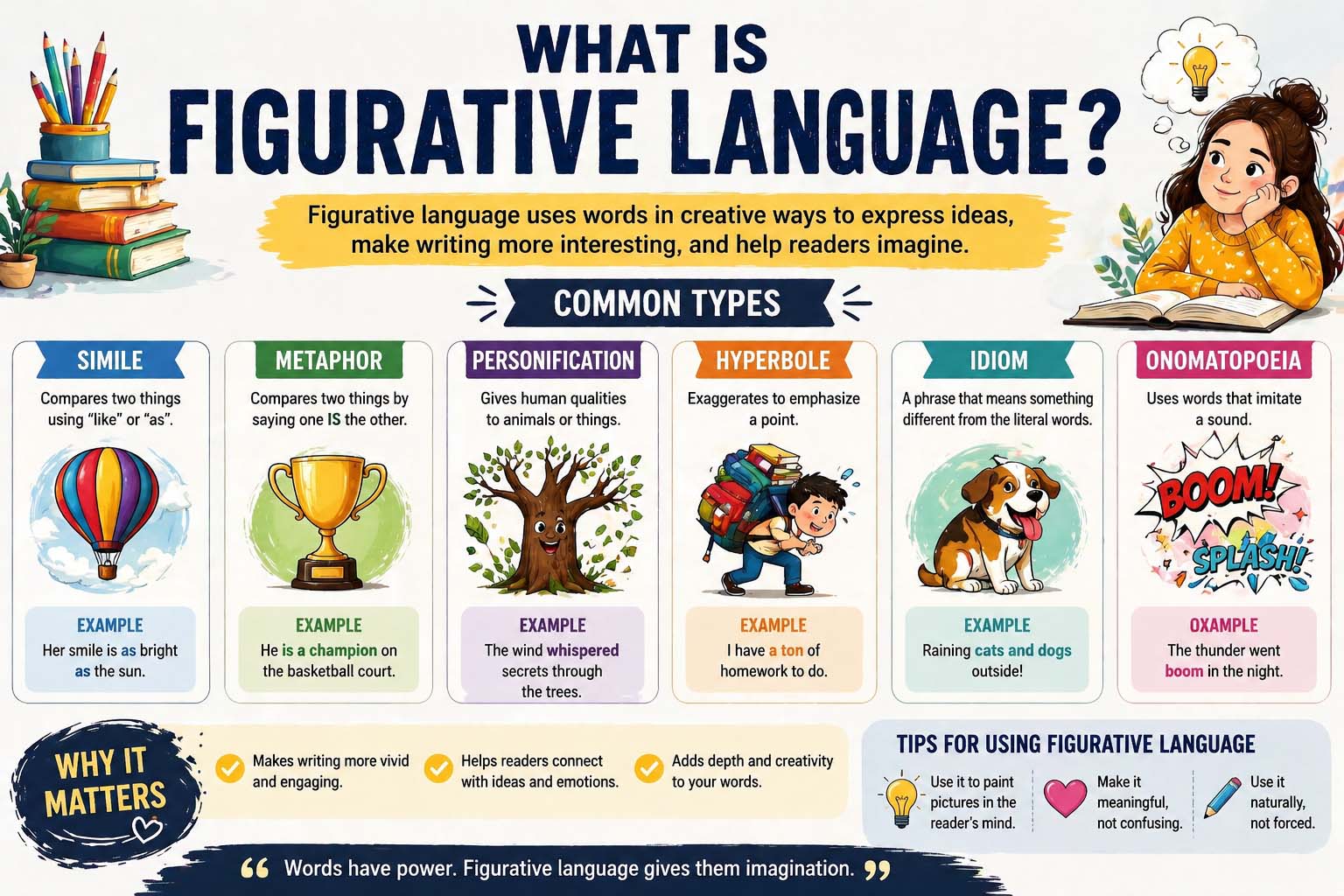
Understanding what is figurative language is essential for anyone who wants to improve their reading, writing, and communication skills. Figurative language adds depth, color, and imagination to words, making language more engaging and expressive. Instead of using literal meanings, it relies on comparisons, symbolism, and creative expressions to convey ideas in a more impactful way. In this article, you will explore the meaning, types, and uses of figurative language while gaining a deeper appreciation of how it shapes everyday communication.
What Figurative Language Is This Sentence
When someone asks, “whate is this sentence,” they are usually trying to identify the type of expression used beyond literal meaning. For example, if someone says, “The classroom was a zoo,” they are not saying animals are present. Instead, they are comparing the noisy, chaotic environment of the classroom to a zoo. This is known as a metaphor, a common form of .
Figurative language often appears in everyday speech, literature, poetry, and even advertising. Recognizing it requires understanding that the words are not meant to be taken literally. Instead, they create imagery or emotional impact. Other examples include similes, such as “as brave as a lion,” or personification, where human traits are given to non-human objects, like “the wind whispered through the trees.”
By identifying what figurative language is used in a sentence, readers can better interpret the writer’s intention and uncover deeper meanings. This skill is especially useful when analyzing literature or creative writing, where figurative language is widely used to evoke emotions and paint vivid pictures in the reader’s mind.
What Is a Figurative Language
To fully grasp what is, it helps to define it clearly. Figurative language refers to the use of words or phrases that go beyond their literal meaning to create a more powerful or imaginative effect. It is a tool that writers and speakers use to express ideas in creative and memorable ways.
There are many types of figurative , each serving a unique purpose. Similes compare two things using “like” or “as,” while metaphors make direct comparisons without those words. Hyperbole exaggerates for emphasis, such as “I’ve told you a million times.” On the other hand, idioms are phrases with meanings different from the literal interpretation, like “break the ice,” which means to start a conversation.
Figurative language is not limited to literature. It appears in daily conversations, songs, movies, and even social media. When someone says, “I’m drowning in work,” they are not literally underwater but expressing that they are overwhelmed. This shows how figurative language helps people communicate feelings more effectively than literal language alone.
Understanding what is figurative language also enhances creativity. Writers use it to make their stories more engaging, while speakers use it to make their messages more persuasive and relatable. It allows communication to go beyond simple facts and enter the realm of imagination and emotion.
What Is Figurative Language?
When asking what is figurative language?, the question often points to its broader purpose and importance. Figurative language is a way of expressing ideas that makes language more vivid and meaningful. It transforms ordinary statements into something more interesting and impactful.
For instance, instead of saying “The sun is very hot,” someone might say, “The sun is a blazing fire in the sky.” This creates a stronger image and evokes a sensory experience. language works by appealing to the reader’s imagination, helping them visualize or feel what is being described.
In education, figurative is an important part of learning how to read and write effectively. Students are taught to identify and use it to improve comprehension and creativity. It also plays a major role in poetry, where writers rely on figurative expressions to convey complex emotions in a compact form.
Another key aspect of language is its ability to make communication more memorable. Advertisements often use it to create catchy slogans, while public speakers use it to emphasize key points. By understanding what is figurative language, individuals can become better communicators and more critical readers.
What Is the Figurative Language
Exploring what is the language involves looking at its different forms and how they function. Figurative language is not just one concept but a collection of techniques that enhance communication. Each type has its own characteristics and purpose.
Metaphors and similes are among the most common forms, helping to create comparisons that clarify meaning or add depth. Personification brings objects or ideas to life, making descriptions more relatable. Alliteration uses repetition of sounds to create rhythm, while symbolism uses objects or actions to represent larger ideas.
These techniques are widely used in storytelling, allowing writers to create immersive experiences for their readers. For example, describing fear as “a shadow creeping closer” uses language to make the emotion more tangible. This not only enhances the reader’s understanding but also makes the writing more engaging.
Figurative language also plays a role in cultural expression. Many idioms and expressions are rooted in cultural traditions, giving insight into how different societies communicate. By studying what is figurative language, individuals can gain a deeper understanding of as both a creative and cultural tool.
In addition, helps simplify complex ideas. Abstract concepts can be difficult to explain literally, but figurative expressions make them easier to understand. For instance, saying “time is money” conveys the value of time in a simple yet powerful way.
Conclusion
In conclusion, understanding what is opens the door to more expressive and meaningful communication. It allows speakers and writers to go beyond literal meanings and create vivid, imaginative expressions that resonate with their audience. From metaphors and similes to idioms and hyperbole, enriches both everyday conversation and creative writing.