
What Is a Pardon?
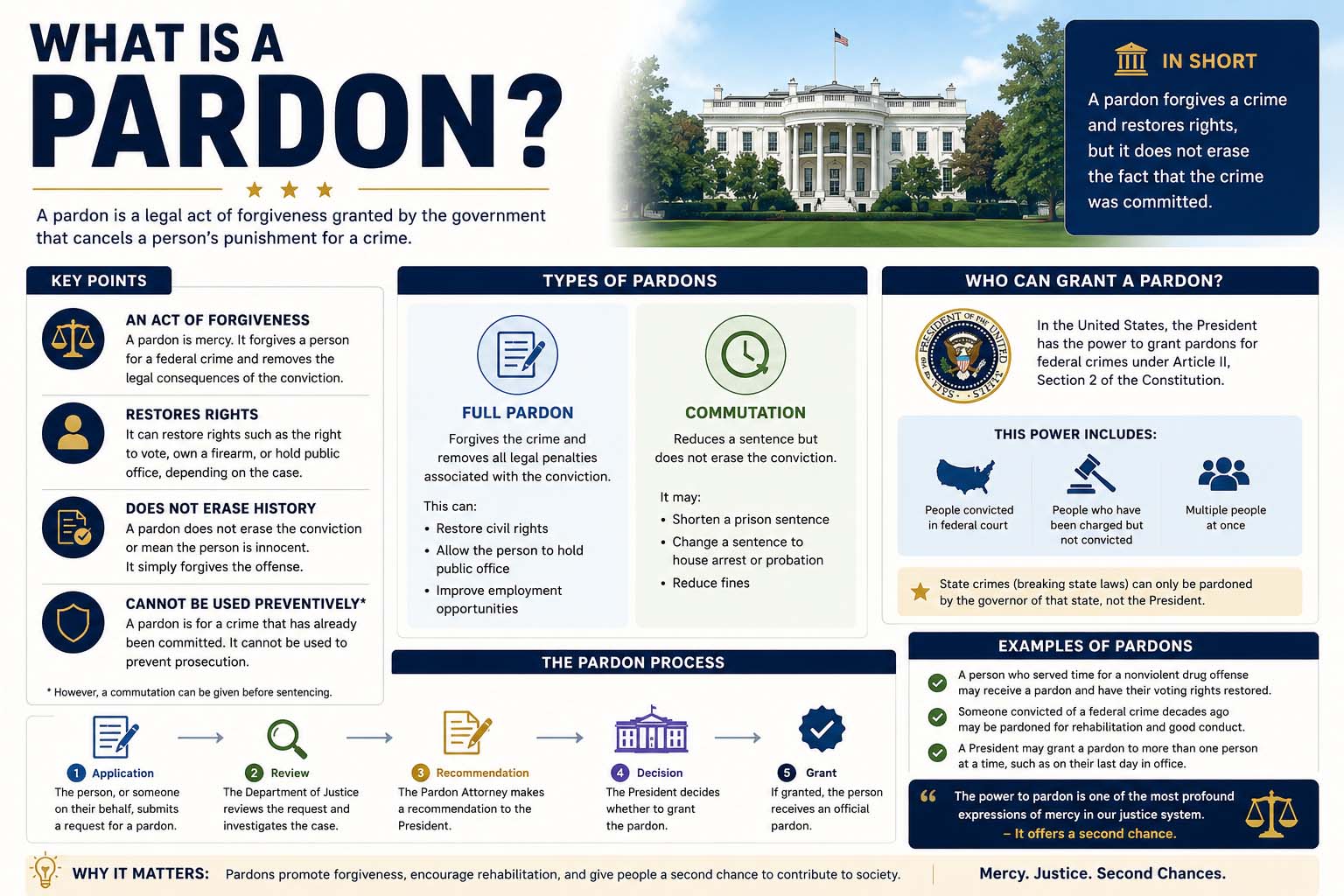
What Is a Pardon?
The phrase “what is a pardon” is often discussed in politics, law, and government systems around the world. Many people hear about pardons during major political events or legal controversies, but they may not fully understand what the term means. In simple words, a pardon is an official act of forgiveness granted by a government authority, usually a president or governor, to someone convicted of a crime. Understanding what is a pardon can help people better understand how legal systems work and why pardons remain important in modern governments.
A pardon does not always mean a person is innocent. Instead, it is often used to forgive legal penalties connected to a conviction. In many countries, pardons are considered powerful legal tools because they can reduce punishments, restore rights, or even erase certain legal consequences. The discussion around what is a pardon continues to attract public attention because presidential pardons frequently become major political news stories.
What Is a Presidential Pardon
One of the most common questions people ask is, what is a presidential ? A presidential is a special legal power granted to the president of a country, especially in the United States, allowing them to forgive federal crimes committed by individuals. The president can issue pardons to reduce or remove penalties connected to federal criminal convictions.
When discussing what is a , presidential pardons are usually the first example people think about. A presidential pardon may restore rights such as voting rights, firearm ownership rights, or eligibility for public office depending on local laws. However, a presidential generally does not erase the fact that the conviction occurred.
The power of presidential pardons comes from constitutional authority. In the United States, the Constitution gives the president the ability to grant pardons for federal offenses except in cases involving impeachment. Because of this authority, presidential pardons are sometimes controversial, especially when granted to political allies or public figures.
People often debate whether presidential pardons should have limits. Some believe pardons are necessary for justice and mercy, while others argue they can be abused for political reasons. Despite the debate, understanding what is a presidential remains important because it reflects the balance between justice and executive power.
The History Behind Pardons
The idea behind what is a has existed for centuries. Kings, queens, and rulers in ancient societies often had the power to forgive crimes. This tradition eventually became part of modern legal systems and democratic governments.
Historically, pardons were used to show mercy or correct unfair punishments. Leaders sometimes granted pardons after wars or political conflicts to encourage peace and national unity. In some situations, pardons helped individuals rebuild their lives after serving time for crimes.
Today, pardons continue to serve several purposes. Governments may use pardons to recognize rehabilitation, correct legal mistakes, or reduce harsh punishments. The topic of what is a remains relevant because societies continue debating fairness, justice, and forgiveness.
Modern legal systems usually include formal procedures for applications. Lawyers, government officials, and review boards often examine requests before a final decision is made. This process is intended to ensure pardons are granted responsibly.
What Is a Full Pardon
Another important legal question is, what is a full ? A full pardon completely forgives a person for a crime and removes many legal consequences associated with the conviction. Although the conviction may still appear in historical records, the individual is officially forgiven by the government.
When understanding what is a , it is important to recognize that a full pardon can restore important civil rights. In some cases, it may help individuals find employment, regain professional licenses, or rebuild their reputations after serving criminal sentences.
A full pardon is often granted after a person demonstrates rehabilitation and good behavior. Governments may review factors such as community involvement, time passed since the conviction, and evidence of positive personal change before granting .
Public opinion on full pardons varies widely. Some people believe full pardons offer deserving individuals a second chance, while others believe serious crimes should never be forgiven completely. The debate surrounding what is a full pardon reflects larger discussions about punishment, forgiveness, and rehabilitation in society.
Full pardons are generally considered one of the strongest forms of executive clemency because they can significantly reduce the long-term impact of criminal convictions.
What Is a Preemptive Pardon
Another commonly discussed topic is, what is a preemptive ? A preemptive pardon is granted before a person is formally charged or convicted of a crime. This type of pardon is controversial because it protects someone from future prosecution before legal proceedings are completed.
When exploring what is a pardon, preemptive pardons often generate political and legal debates. Supporters argue that preemptive pardons can protect individuals from politically motivated investigations or unfair prosecutions. Critics, however, believe such pardons may weaken accountability and justice.
One of the most famous examples connected to what is a preemptive pardon occurred in U.S. political history when former President Gerald Ford pardoned Richard Nixon after the Watergate scandal. Nixon had not yet been convicted, making it one of the most well-known preemptive pardons ever issued.
What Is a Pardon From the President
Many people also ask, what is a pardon from the president? A pardon from the president is an official act that forgives a federal crime and may reduce or eliminate penalties related to that offense. Presidential pardons are usually issued after careful review by legal advisors and government officials.
When discussing what is a pardon from the president, it is important to understand that presidents often consider several factors before making decisions.
Conclusion
Understanding what is a pardon is essential for anyone interested in law, government, and politics. A pardon represents an official act of forgiveness that can reduce legal penalties and restore rights after criminal convictions. Whether discussing what is a presidential pardon, what is a full pardon, what is a preemptive pardon, or what is a pardon from the president, each type reflects the power of executive authority within legal systems.